Nana Banana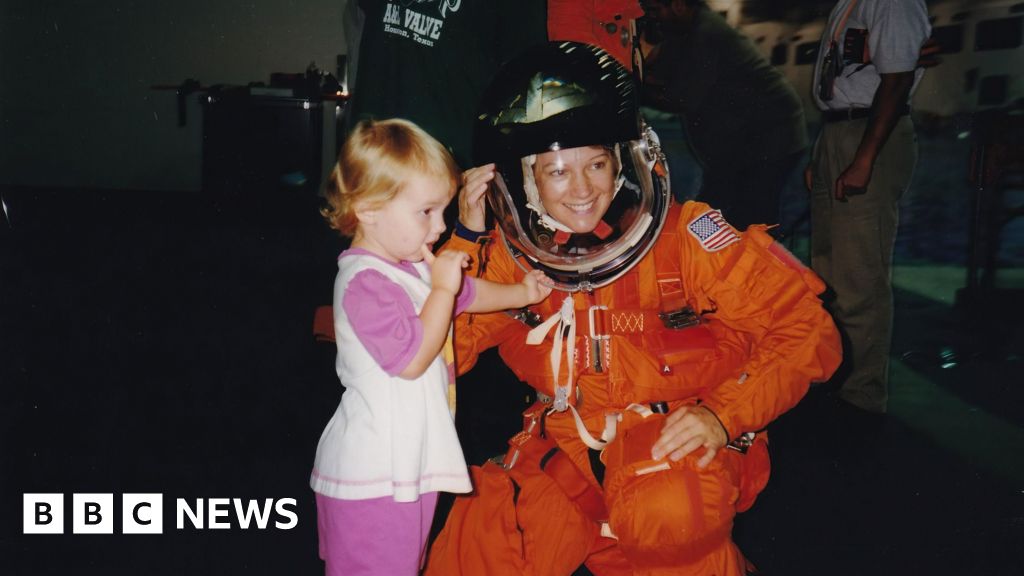
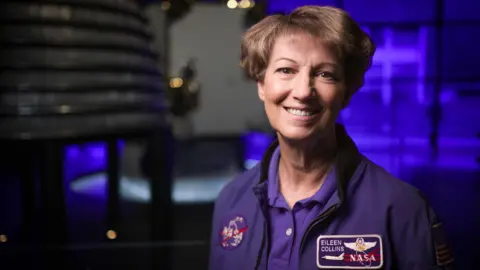
Meeting Collins at London’s Science Museum, one is immediately struck by her unassuming demeanor. Softly spoken, warm, and remarkably down to earth, she belies the incredible feats of courage and skill that define her professional life. Yet, beneath the calm exterior, an undeniable inner steel and laser-like focus are palpable – qualities that undoubtedly propelled her to the very pinnacle of an intensely demanding field. Her journey into the cosmos began with a childhood dream, ignited at the tender age of nine. "I was reading a magazine article on the Gemini astronauts," she recalls, her eyes twinkling with the memory. "I thought that’s the coolest thing. That’s what I want to do." In an era when the very concept of a woman astronaut seemed like science fiction, she harbored a quiet but resolute ambition: "Of course, there were no women astronauts back then. But I just thought, I’ll be a lady astronaut."
This "little girl" with big dreams didn’t just aspire to be an astronaut; she set her sights even higher, determined to be at the controls of a spacecraft. At the time, the only viable pathway for such an ambition was through military service, specifically becoming a test pilot. It was a rigorous and male-dominated world, but Collins was undeterred. She embarked on a distinguished career in the US Air Force, where her exceptional piloting skills and unwavering dedication quickly made her stand out from the crowd. Her talent was undeniable, and it led to her selection for the highly competitive astronaut program, where she would eventually pilot NASA’s reusable Space Shuttles, revolutionary "space planes" designed to ferry humans and cargo to orbit.
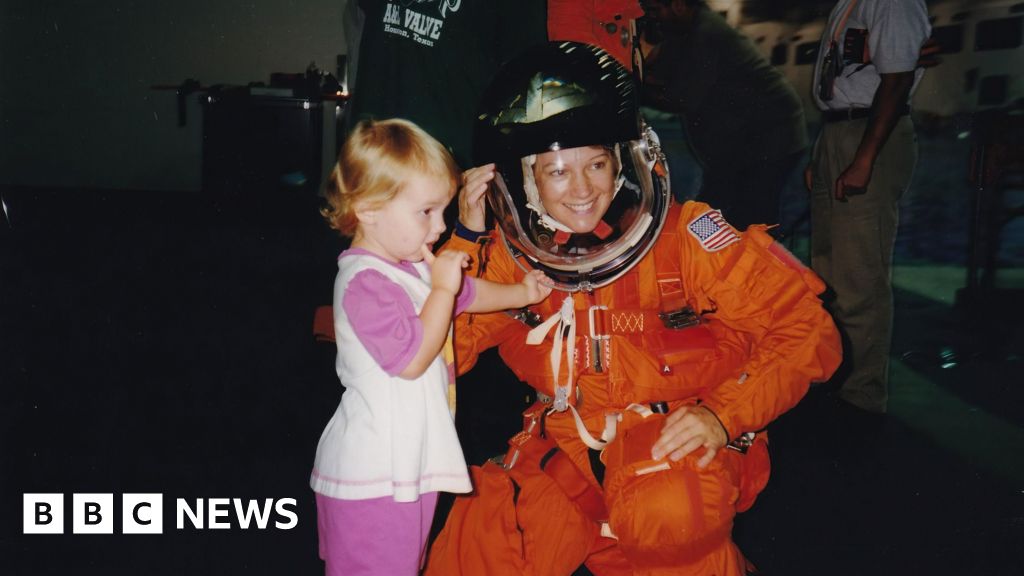
Her first mission, STS-63 in 1995, marked a pivotal moment not just for Collins, but for women everywhere. As the first woman to pilot the Space Shuttle, she understood the immense weight of expectation resting on her shoulders. "I knew the eyes of the world were on me when my first mission launched," she reflects. The pressure was immense, not merely to perform, but to excel flawlessly. "I worked very hard at that because I didn’t want people to say, ‘Oh look, the woman has made a mistake.’ Because it wasn’t just about me, it was about the women to follow me," she emphasizes. "And I wanted there to be a reputation for women pilots that was: ‘Hey, they’re really good’." Her performance was nothing short of exemplary, solidifying her reputation as a highly capable and reliable pilot.
Her exceptional skills and leadership qualities were swiftly recognized, leading to another groundbreaking promotion. In 1999, Eileen Collins made history once again, becoming the first woman to command a Space Shuttle mission, STS-93. This elevated role placed her in charge of the entire crew and mission operations, a testament to her mastery of complex flight systems, her ability to make critical decisions under pressure, and her natural leadership. Her command mission successfully deployed the Chandra X-ray Observatory, a powerful telescope that continues to contribute significantly to our understanding of the universe.
Beyond her professional accolades, Collins was also a parent to two young children during her most active years as an astronaut. The juxtaposition of her groundbreaking career with her role as a working wife and mother frequently became a point of fascination for the press. Journalists, often seemingly astonished, would question how she managed such demanding responsibilities. Collins, however, viewed both roles with equal reverence, affectionately calling them "the two best jobs in the world." With a chuckle, she adds a profound insight: "But I’m going to tell you it is harder to be a parent than to be a space shuttle commander. The best training I ever had for being a commander was being a parent – because you have to learn how to say no to people." This perspective highlights not only her grounded nature but also the immense organizational skills, patience, and firm decision-making required in both realms, demonstrating how her life experiences uniquely prepared her for leadership in space.
NASA’s Space Shuttle program, which spanned three decades, was an era of both breathtaking triumph and profound tragedy. While it pushed the boundaries of human ingenuity and space exploration, it also carried inherent and often catastrophic risks. Collins’ career unfolded against this backdrop. She was a young pilot when the Challenger spacecraft disintegrated just seconds after launch in 1986, killing all seven crew members. This disaster, a stark reminder of the dangers of spaceflight, undoubtedly cast a long shadow over the aspirations of many. Yet, it failed to deter Collins, who, like many astronauts, understood and accepted the calculated risks involved in humanity’s quest to explore the unknown.
Then came 2003, and another devastating blow: the Columbia shuttle broke apart during re-entry over Texas, claiming the lives of its seven-person crew. The cause was a piece of insulating foam from the external fuel tank that had broken loose during launch, striking and damaging the shuttle’s heat shield. Unprotected, Columbia was unable to withstand the fiery inferno of re-entry into Earth’s atmosphere, disintegrating as the world watched in horror. The memory of the disaster, and the loss of her friends and colleagues, still brings a shake of the head and a quiet solemnity to Collins. It was a moment that tested the resolve of every individual at NASA.
In the wake of this tragedy, with the entire Shuttle program grounded and under intense scrutiny, Collins found herself in an unenviable position. She was slated to command the next flight, the critical "Return to Flight" mission (STS-114). The pressure to ensure the safety of her crew and to restore confidence in the program was immense. Did she consider quitting at that point, given the fresh memory of the Columbia disaster? "People throughout the shuttle programme were counting on the commander to stick with it," she states quietly, her voice imbued with a sense of unwavering duty. "I think quitting the mission would have been the opposite of brave… and I wanted to be a brave leader. I wanted to be a confident leader. I wanted to instill that confidence in other people." Her decision to press on was a testament to her profound commitment to exploration, her crew, and the future of human spaceflight.
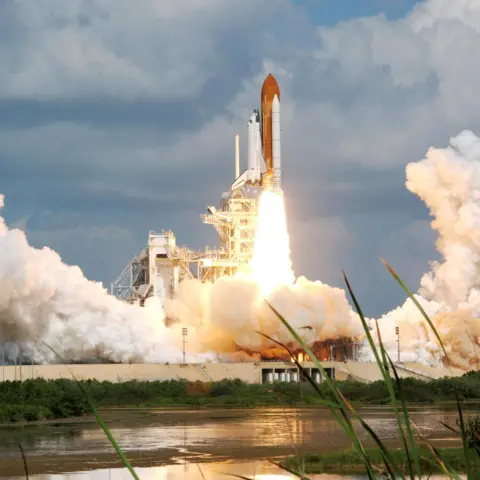
When her mission, STS-114, finally lifted off in July 2005, the world held its breath. And then, the nightmare scenario: a chunk of foam again broke away during launch. The chilling echo of Columbia was undeniable. This time, however, a plan was in place to assess potential damage. What followed was one of the riskiest maneuvers in space history, a testament to Collins’s exceptional piloting skills and calm leadership. She had to pilot the shuttle through a precisely executed 360-degree flip while flying beneath the International Space Station. This unprecedented maneuver allowed her colleagues on the orbiting lab to photograph the craft’s underside and meticulously check for any breaches in the heat shield.
The proposal for such a daring feat was met with significant skepticism. "There were engineers and managers saying it couldn’t be done, all these reasons why it was too dangerous," she recounts. Yet, after carefully listening to all arguments and assessing the risks, Commander Collins made the definitive call. "I listened to the discussion, they knew I was the commander, and I said: ‘It sounds like we can do it’." With steady hands at the controls and her voice remaining remarkably calm as she communicated with mission control, Collins guided the shuttle through a slow, graceful somersault. The images captured by the ISS crew quickly revealed the damage, prompting an urgent spacewalk to repair the compromised areas. Thanks to this audacious maneuver and the subsequent repairs, Collins and her crew made it safely home, marking a triumphant and vital return to flight for NASA.
This monumental mission, her fourth, also marked the conclusion of Eileen Collins’s astronaut career. She had always planned to retire after four flights, believing it was essential to "give others a chance to go to space." Her decision, made with characteristic foresight and generosity, paved the way for future generations of astronauts, many of whom have undoubtedly drawn inspiration from her pioneering path. Her advice for those dreaming of the stars is simple, yet profoundly practical, mirroring the disciplined approach that defined her own journey: "Do your homework, listen to your teacher, pay attention in class and read books, and that will give you something to focus on."
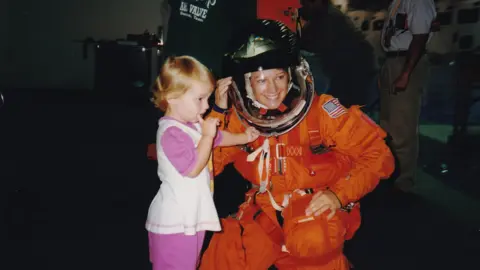
Collins has watched countless astronauts follow in her footsteps, but her place in history is uniquely etched. She has no regrets about ending her astronaut career, having made her decision and never looking back. Yet, when asked if she would be tempted by an unexpected seat on a spacecraft, a wistful look momentarily crosses her face. "Yes, I would love to go on a mission someday. When I’m an old lady, maybe I’ll get a chance to go back in space."
Those who now venture into the vastness of space owe a debt to Eileen Collins. Her legacy extends far beyond her gender; she is revered as a formidable pilot and an exemplary commander, a leader whose resilience, skill, and unwavering determination redefined what was possible. "Spacewoman," now in selected cinemas, promises to bring her remarkable story to the wider audience it so richly deserves, ensuring that the trailblazer who soared through the glass ceiling into the cosmos is remembered not just as NASA’s first woman commander, but as one of its greatest.

 atisusanti
 Nakalama John
 George Anjay