
 Nana Banana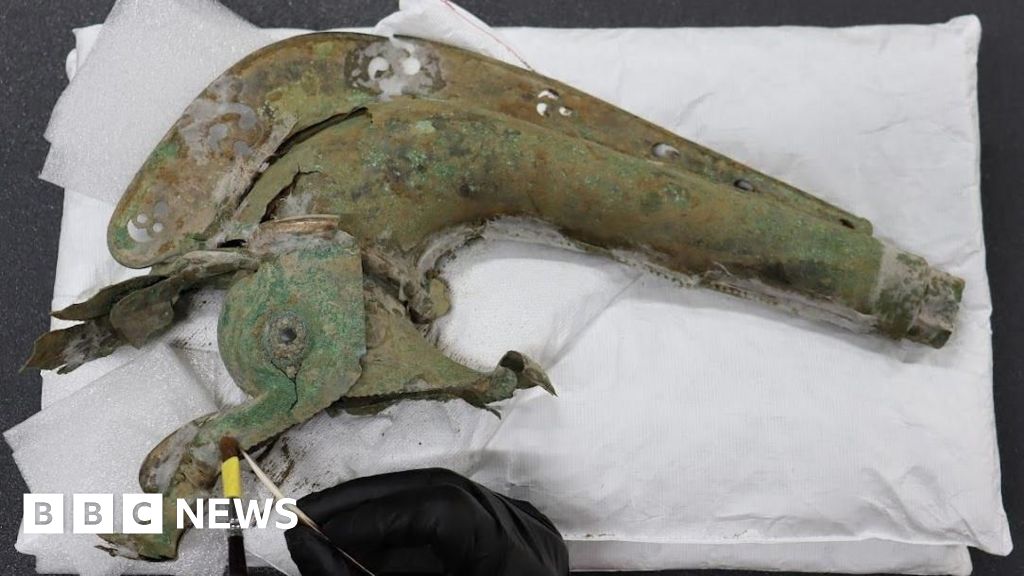
These artifacts, dating to a pivotal period between approximately 50 BC and AD 50, offer an unparalleled window into the martial culture, artistry, and belief systems of Iron Age Britain, particularly in a region historically associated with the powerful Iceni tribe. Senior project officer Gary Trimble, speaking on BBC Two’s Digging for Britain, underscored the immense significance of the find, stating that carnyces "are extraordinarily rare… a boar standard, that’s even rarer." The combination of these two incredibly scarce items in a single context amplifies the hoard’s importance, suggesting a deliberate deposition of high-status military and ceremonial equipment.
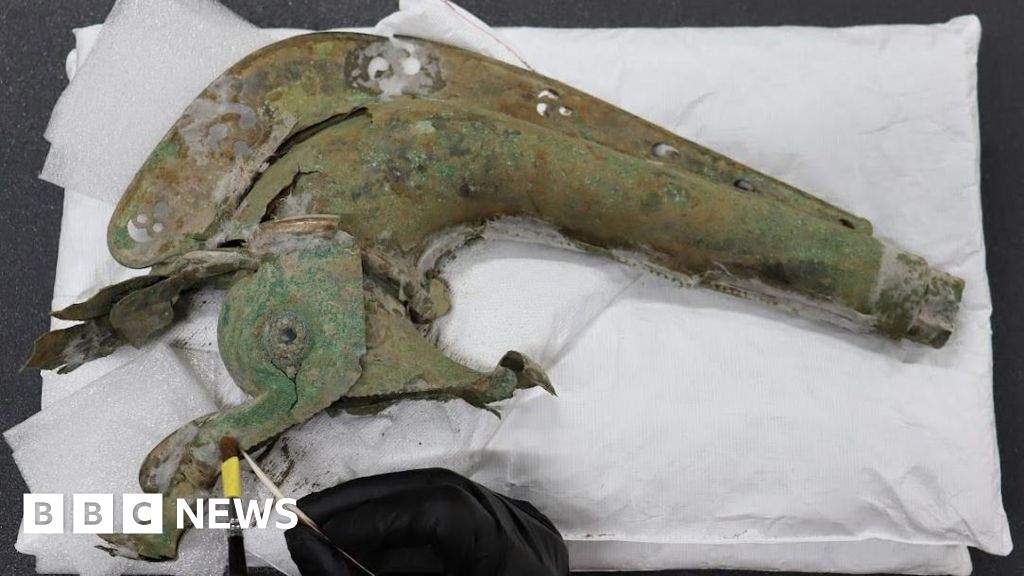
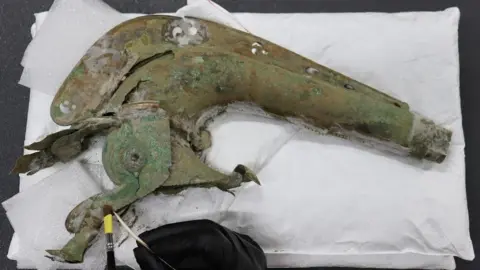
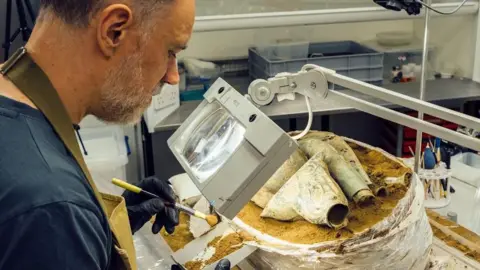
The carnyx itself is a masterpiece of Iron Age craftsmanship. These distinctive bronze wind instruments, typically measuring around two meters in length, were a formidable psychological weapon employed by Celtic tribes across Europe. Their primary purpose was to terrify enemies with a deep, guttural, and often terrifying sound, as well as to inspire and direct warriors amidst the chaos of battle. The instrument’s bell, usually fashioned into the head of an animal – frequently a boar, wolf, or serpent – would amplify the sound, creating an imposing visual and auditory spectacle. The Thetford carnyx, with its remarkably preserved animal head, features what conservator Jonathan Carr affectionately described as "a wonderful little eye, which is a remarkable survivor and you can’t help but be impressed and charmed by it." This level of detail speaks volumes about the skill of its creators and the cultural value placed upon such objects.
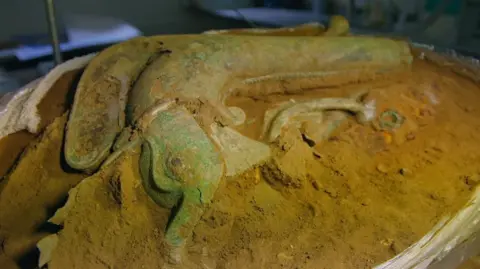
Conservator Jonathan Carr faced an immense challenge in preserving these delicate finds. The carnyx, like the boar standard, was crafted from "extremely thin sheets of metal which have become extremely brittle after 2,000 years in the ground." This fragility necessitated a painstaking and meticulous conservation process, where every brushstroke and removal of soil carried inherent risks. The careful extraction of the entire hoard in a soil block, followed by advanced scanning techniques to map the precise location of each item, was critical to ensuring their survival and enabling future research without disturbing their original context.
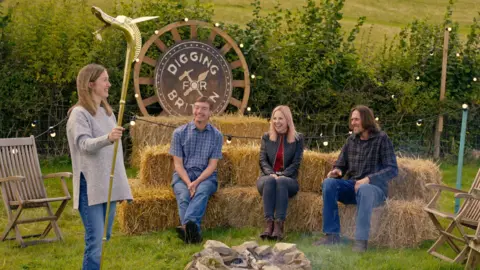
Dr. Fraser Hunter, the esteemed Iron Age and Roman curator at National Museums Scotland, highlighted the profound academic implications of the carnyx. "I’ve looked at carnyces from around Europe, and the full research and conservation of these incredibly fragile remains will reshape our view of sound and music in the Iron Age," he noted. The opportunity to study such a complete example promises to unlock new understanding of the acoustics, construction, and cultural role of these instruments, which were so potent that even the Romans, their frequent adversaries, were fascinated by them, often depicting them as formidable war trophies in their art and sculpture. Indeed, the sight and sound of multiple carnyces blaring before a Celtic charge would have been a truly terrifying experience for any opposing force. Musician Letty Stott, playing a replica of a carnyx during filming for Digging for Britain, offered a modern audience a glimpse into the powerful sonic landscape of Iron Age warfare.
Even rarer than the carnyx is the boar’s head standard, also meticulously crafted from thin sheets of bronze. These standards served as crucial rallying points for troops during battle, symbols of tribal identity, and powerful totemic emblems. The boar held immense significance in Celtic mythology and culture, embodying qualities such as ferocity, courage, strength, and protection. Dr. Hunter explained the symbolism, stating, "They were very fierce animals to face in the hunt, so the symbolism of the boar is a lot about the strength of it – a very appropriate adversary in battle." To carry such a standard into combat was to invoke the spirit of the wild boar, instilling fear in enemies and bolstering the morale of one’s own warriors. The discovery of this standard, the first of its kind in Britain, provides direct archaeological evidence for the use of such iconic symbols by Iron Age Britons.
The initial discovery on the Thetford building site was preceded by an almost intuitive sense from the excavation team. Dig leader Peter Crawley confessed to a "gut feeling" about the site even before the full excavation began, suggesting an experienced archaeologist’s premonition of something extraordinary lying beneath the surface. This intuition was profoundly vindicated by the subsequent unearthing of the hoard. In addition to the carnyx and the boar standard, the assemblage included five shield bosses – the central, protective metal domes of shields – and an iron object whose original purpose remains a mystery. The presence of multiple shield bosses further reinforces the martial nature of the hoard, implying a collection of high-value military equipment, possibly belonging to a group of elite warriors or even a chieftain.
The dating of the hoard, placing it around the cusp of the Roman invasion of Britain, adds another layer of historical intrigue. Was it a votive offering to deities during a time of great upheaval? Was it deliberately concealed from advancing Roman forces, a desperate attempt to safeguard treasured symbols of indigenous power and identity? Or perhaps it was part of a funerary rite for a significant individual or group. These questions will undoubtedly fuel years of dedicated research and scholarly debate.
Following its delicate extraction, the find was duly reported to the coroner, initiating the legal process to determine if it meets the criteria for "treasure" under British law. Its long-term future, including its eventual home and display, has yet to be formally decided. However, the collaborative efforts already underway are extensive, involving Historic England, Pre-Construct Archaeology, Norfolk Museums Service, and the National Museum of Scotland. This multidisciplinary approach ensures that the artifacts will receive the highest level of conservation, research, and interpretation.
Dr. Tim Pestell, senior curator of archaeology for Norfolk Museums Service, emphasized the local and national importance of the discovery. "This find is a powerful reminder of Norfolk’s Iron Age past which, through the story of Boudica and the Iceni people, still retains its capacity to fascinate the British public," he remarked. He added that "The Norfolk Carnyx Hoard will provide archaeologists with an unparalleled opportunity to investigate a number of rare objects and ultimately, to tell the story of how these came to be buried in the county 2,000 years ago." Claudia Kenyatta CBE and Emma Squire CBE, co-CEOs of Historic England, echoed this sentiment, calling it a "remarkable discovery" and expressing their eagerness "to uncovering and sharing the story of the Norfolk community that owned and used these items."
The public will soon have an opportunity to delve deeper into this extraordinary archaeological saga. The captivating story of the discovery, the meticulous excavation, and the initial conservation efforts will be featured on BBC Two’s Digging for Britain on 14 January at 21:00 GMT, with the episode also available for streaming on BBC iPlayer. This broadcast will bring the thrill of archaeological discovery and the profound historical significance of these Iron Age treasures to a wide audience, further cementing their place as some of the most important finds in recent British history.



 Ramos Leo
 Nakalama John

 atisusanti

 George Anjay