Nana Banana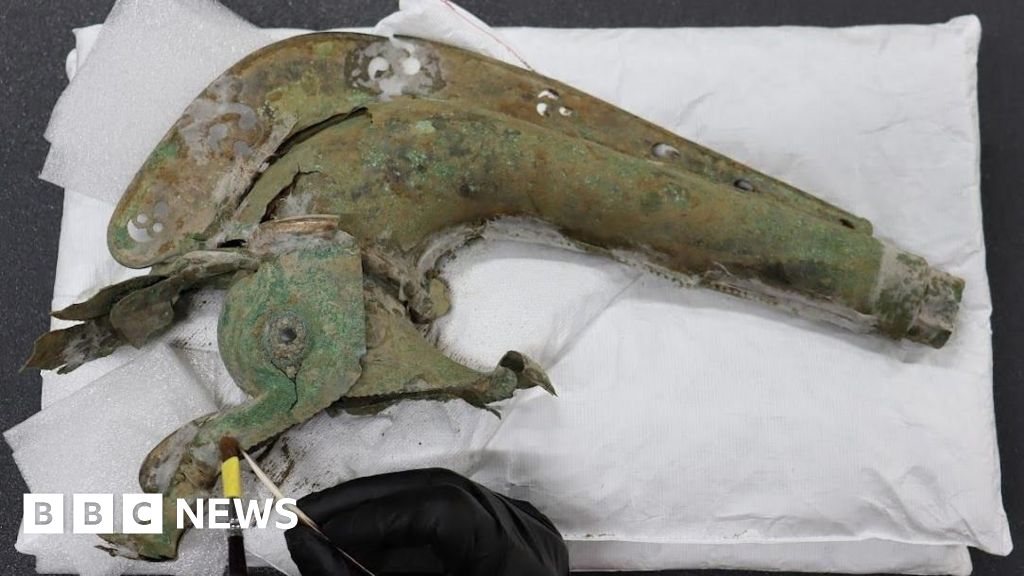
The remarkable find emerged last year from a building site a few miles from the historic market town of Thetford. A team from Pre-Construct Archaeology, undertaking routine pre-construction surveys, stumbled upon the buried treasures. Dig leader Peter Crawley recounted having a strong premonition about the site, a "gut feeling" that it was "one of those special sites that you do get every so often," a sentiment that proved profoundly accurate. The sheer rarity of both items, particularly found in conjunction, has elevated this discovery to international significance within the archaeological community.
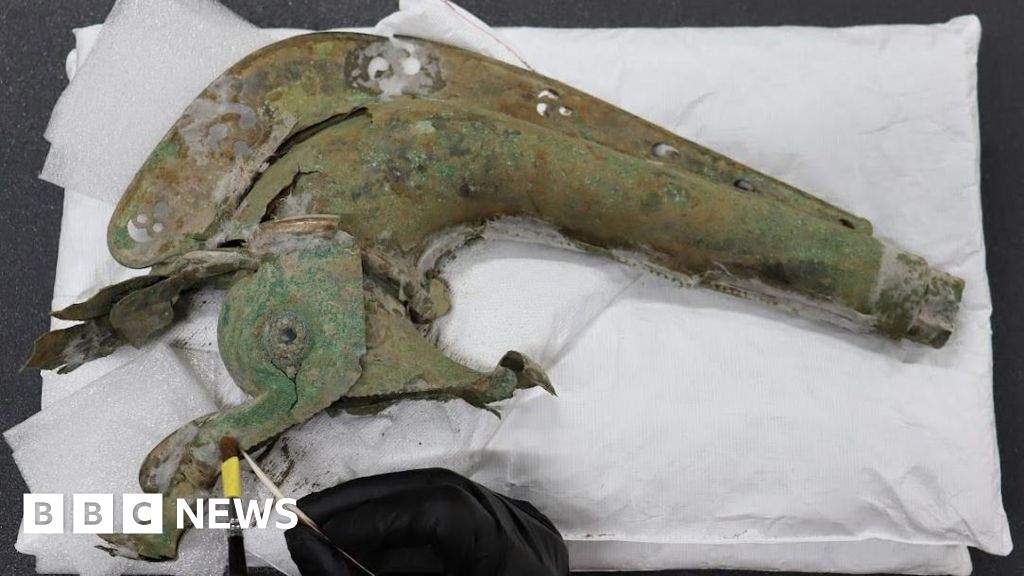
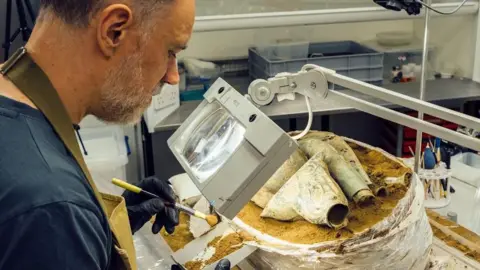
At the heart of the hoard lay the carnyx, an ancient wind instrument crafted from bronze, distinct for its animalistic head often featuring a gaping mouth and a distinctive crest. This particular carnyx is celebrated as the most complete example ever found across Europe, offering unparalleled insights into its construction and appearance. Conservator Jonathan Carr, who has painstakingly worked on the delicate artefact, noted its "wonderful little eye, which is a remarkable survivor and you can’t help but be impressed and charmed by it," hinting at the intricate craftsmanship involved. Crafted from extremely thin sheets of metal, the instrument has become incredibly brittle after two millennia entombed in the ground, making its excavation and conservation a monumental challenge.
The carnyx served a crucial, multi-faceted role for Celtic tribes throughout Europe. Its unique, often terrifying sound, described by ancient Roman writers as harsh and guttural, was primarily used to intimidate enemies before and during battle. Beyond psychological warfare, the loud, distinctive blasts of the carnyx would have inspired and directed warriors amidst the chaos of combat, acting as an acoustic command system. The instrument’s striking visual presence, often rearing high above the battle lines, would have further amplified its impact. Its cultural significance was not lost on the Romans, who frequently depicted carnyces as potent symbols of Celtic defiance and as prized war trophies, underscoring their importance. Senior project officer Gary Trimble emphasized the rarity of such finds, stating that carnyces "are extraordinarily rare," a sentiment echoed by Dr. Fraser Hunter, Iron Age and Roman curator at National Museums Scotland, who believes the full research and conservation of these fragile remains "will reshape our view of sound and music in the Iron Age."
Equally astounding is the accompanying boar’s head flag standard, the first of its kind ever unearthed in Britain. Fashioned from sheet bronze, this standard would have been mounted atop a pole and carried into battle, functioning as a powerful rallying point for troops. The symbolism of the boar in Celtic culture was profound. Boars were revered for their ferocity, intelligence, and courage, embodying strength, prowess, and often divine power. Dr. Hunter explained: "They were very fierce animals to face in the hunt, so the symbolism of the boar is a lot about the strength of it – a very appropriate adversary in battle." To bear a boar standard was to invoke these qualities, instilling fear in opponents while galvanizing one’s own warriors. Trimble noted that a "boar standard, that’s even rarer" than a carnyx, highlighting the exceptional nature of finding both together.
The hoard, which dates to the tumultuous period between approximately 50BC and AD50, also included five distinctive shield bosses and an iron object whose original purpose remains a mystery. This timeframe is particularly significant, as it encompasses the decades leading up to and immediately following the Roman invasion of Britain in AD43. The careful deposition of such valuable and culturally important military regalia suggests a deliberate act, possibly a ritualistic offering to the gods, a tactical burial to prevent these symbols of resistance from falling into Roman hands, or perhaps a memorial following a significant battle or defeat. The proximity to the heartland of the Iceni tribe, renowned for their fierce independence and the later revolt led by Queen Boudica, adds another layer of historical intrigue. These objects could very well represent the treasured instruments of war belonging to an Iceni chieftain or a tribal warrior group, hidden during a period of immense upheaval.
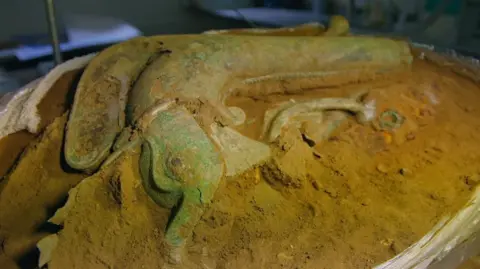
Following its initial discovery, the hoard was meticulously lifted from the earth within a large block of soil. This painstaking process allowed for its integrity to be maintained as it was transported to a specialist laboratory. There, advanced scanning techniques were employed to map the precise positions of each item within the soil matrix before the delicate process of conservation could begin. Conservator Jonathan Carr and his team faced immense challenges in carefully removing the millennia of accumulated soil from the extremely thin and fragile metal components, a testament to their skill and dedication.
The long-term future of this unparalleled discovery has yet to be determined, pending an inquest to legally establish whether it qualifies as treasure under UK law. However, its research and conservation are already being coordinated through a collaborative effort involving Historic England, Pre-Construct Archaeology, Norfolk Museums Service, and the National Museum of Scotland. This partnership ensures that the full scientific and historical potential of the find can be realised.
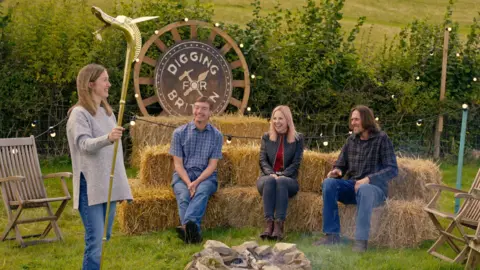
Dr. Tim Pestell, a senior curator of archaeology for Norfolk Museums Service, eloquently captured the profound impact of the discovery: "This find is a powerful reminder of Norfolk’s Iron Age past which, through the story of Boudica and the Iceni people, still retains its capacity to fascinate the British public." He stressed that "The Norfolk Carnyx Hoard will provide archaeologists with an unparalleled opportunity to investigate a number of rare objects and ultimately, to tell the story of how these came to be buried in the county 2,000 years ago." Claudia Kenyatta CBE and Emma Squire CBE, co-CEOs of Historic England, hailed it as a "remarkable discovery," expressing their eagerness to "uncovering and sharing the story of the Norfolk community that owned and used these items."
The combination of a well-preserved carnyx and a unique boar standard offers an extraordinary glimpse into the martial and cultural landscape of Iron Age Britain, providing tangible links to the fearsome warriors who once roamed these lands. It enriches our understanding of their artistic prowess, their military strategies, and their deeply symbolic relationship with the natural world, particularly at a time when their way of life was under existential threat from the encroaching Roman Empire. This hoard is not merely a collection of ancient objects; it is a resonant echo of a powerful, proud, and ultimately resilient culture.
The fascinating story of this groundbreaking discovery, its meticulous excavation, and the ongoing conservation efforts will be brought to a wider audience. Viewers can delve deeper into the secrets of the Thetford hoard on BBC Two’s acclaimed series, Digging for Britain, scheduled for broadcast on 14 January at 21:00 GMT, with catch-up available on BBC iPlayer.



 atisusanti
 Nakalama John
 George Anjay