Nana Banana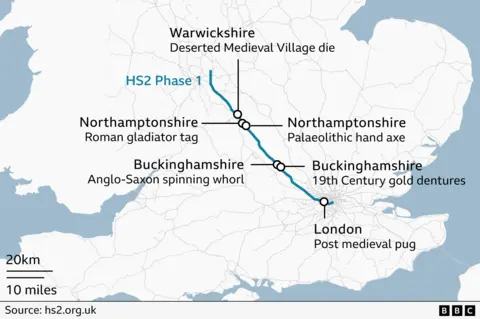
Major construction projects in the UK, such as HS2, are legally required to undertake archaeological assessments of their land to safeguard historical sites. Since 2018, approximately 1,000 archaeologists have diligently conducted around 60 excavations along the planned HS2 route from London to Birmingham. While the railway’s completion faces significant delays, now projected beyond 2033, the intensive fieldwork phase for these archaeological teams is largely complete, bringing a wealth of history to light.
The precise location of the storage facility remains a closely guarded secret, crucial for the security and preservation of these invaluable items. Inside, thousands of pallets are stacked with approximately 7,300 boxes, each containing fragments of Britain’s heritage awaiting further research, cleaning, and conservation. The ultimate fate of these objects – whether they will be permanently displayed, remain in storage, or even their final ownership – is still under discussion.
The archaeological undertaking has been widely commended, with Historic England praising the team for uncovering "new and exciting sites spanning over 10,000 years of our past." However, the HS2 project itself remains a deeply divisive issue. Critics, like Mid Buckinghamshire MP Greg Smith, argue that the soaring costs, chronic delays, disruption to communities, and environmental impact make the railway an unworthy endeavour. "It should not have cost the taxpayer tens of billions of pounds to build a railway that no-one wants and brings so much destruction," Smith stated. In response, HS2 Chief Executive Mark Wild acknowledged that the overall delivery has been "unacceptable" and expressed commitment to curbing cost increases and delays, while assuring that their "specialist archaeology team and contractors have carefully excavated numerous sites and have shown care and respect throughout this work." Historian Graham Evans, who chairs the Northamptonshire Battlefields Society, offered a balanced perspective: "Whether HS2 is a good or bad thing is debatable, but I tell you what, if they built the railway and they didn’t do the archaeology that would be more tragic."
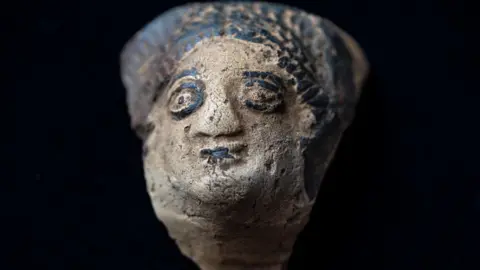
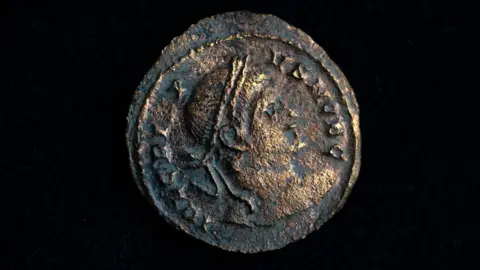
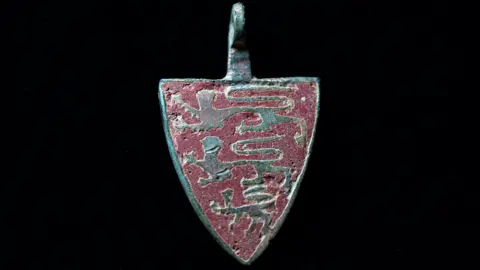
Beyond the sheer volume, the collection boasts several "showstoppers," including intricate Roman statue heads and a remarkably preserved gold ‘three lions’ pendant from the 13th-14th century, a potential heraldic device. Elsewhere in the warehouse, bubble-wrapped coffins, one dating to 1799, serve as poignant reminders that these are not merely objects, but snapshots of real lives once lived. The BBC was granted exclusive access to six previously unseen items, offering a glimpse into the diverse history uncovered.
Palaeolithic hand axe
Discovered in the Edgcote area of Northamptonshire, this hand axe is estimated to be more than 40,000 years old, a testament to Britain’s earliest human inhabitants. Experts believe it was crafted by Neanderthals or an even earlier human species from flint, expertly flaked to create a sharp edge, likely for butchering animals. Unlike later hafted tools, this axe was designed to be held directly in the palm, a feature that still resonates with Dr. Sara Machin, the finds lead for Access +, the archaeological consortium. "There is something tactile about it when you hold it," she remarked, noting how it "fits snugly in my hand," connecting us directly to its ancient user. It provides crucial evidence of early human tool-making and survival strategies in prehistoric Britain.
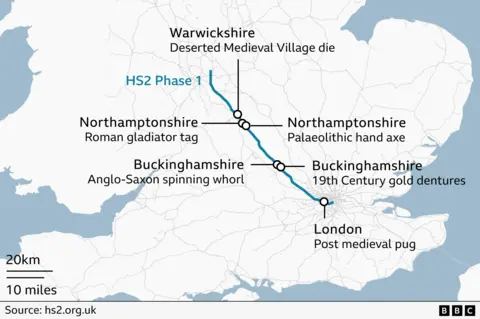
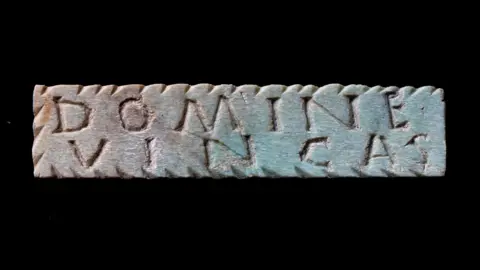
Roman gladiator tag
A small, enigmatic fragment of carved bone, unearthed in Northamptonshire, bears an inscription that, if complete, would likely read: "DOMINE VICTOR VINCAS FELIX" – "Lord Victor, may you win and be lucky." This fascinating piece has been tentatively identified as a Roman gladiator’s tag. Dr. Machin suggests it could have belonged to an active gladiator, a veteran, or even a spectator’s souvenir, despite the absence of known Roman arenas or circuses in the immediate vicinity. The tag was recovered from a large pottery vessel containing cremated human remains, marked with an ‘X’ on its lid, adding layers of mystery. Dr. John Pearce, Reader in Archaeology at King’s College University, acknowledged the gladiator link as possible but cautioned that "with more forensic analysis of the burial, a different story may come to light," highlighting the ongoing interpretative work.
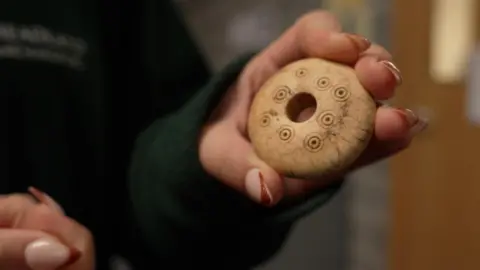
Anglo-Saxon spindle whorl
From farmland near Bishopstone, Buckinghamshire, emerged a decorated Anglo-Saxon spindle whorl, crafted from what is believed to be a cattle femur. This small, weighted tool was essential for spinning raw fibres into yarn, a fundamental domestic activity in Anglo-Saxon society. Willow Major, a post-excavation assistant, highlighted its significance as "a very interesting piece of evidence of textile advancements in the Anglo-Saxon period." The whorl’s polished surface suggests extensive use, indicating it was a cherished and vital item for its owner. Intriguingly, the ring and dot motif adorning it has also been observed on spinning tools from the much earlier Iron Age, suggesting a remarkable continuity of decorative traditions and craft over millennia.
Medieval die
A tiny, polished bone die, recovered from a deserted medieval village in Lower Radbourne, Warwickshire, offers a charming glimpse into the leisure activities of medieval inhabitants. While resembling modern dice in its cubic form, its numbering format differs, and its imperfections – with one side subtly longer than the others – stand in stark contrast to today’s mass-produced, geometrically perfect versions. This hand-crafted object speaks to the artisanal skills of the period and the common human desire for games of chance. Its presence in a deserted village site helps archaeologists reconstruct the social fabric and daily pastimes of a community that has long since vanished.
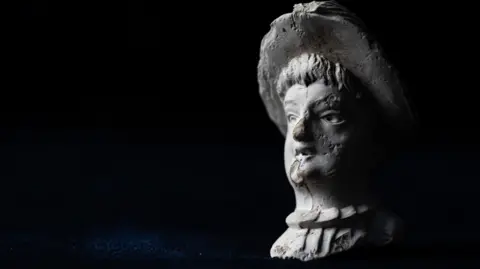
Pug found in a grave
Among the numerous burials excavated at St James’ Gardens in Euston, London, a complete figurine of a seated pug dog was discovered in the grave of an unnamed female. Made from plain white-glazed porcelain with black details, the figurine is thought to have been produced by the Derby porcelain factory between 1770 and 1800. This poignant find offers a rare insight into personal attachments and social customs of the post-medieval period. The inclusion of a beloved pet figurine in a burial suggests not only the individual’s affection for the animal but also the status or sentimental value placed on such objects during that era, reflecting evolving attitudes towards companion animals.

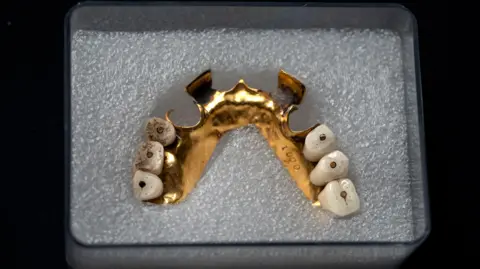
19th Century gold dentures
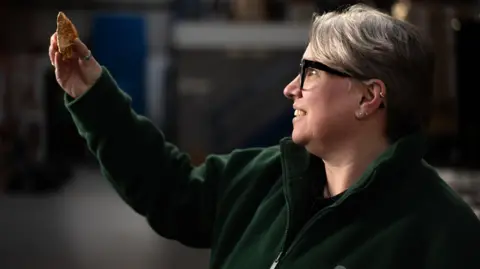
Perhaps one of the most unexpected and bizarre discoveries is a set of lower gold dentures, believed to be from the 19th century, found at St Mary’s Old Church in Stoke Mandeville. Dr. Machin, unwrapping the item, aptly noted, "Every box has a surprise." The dentures contain six teeth and bear a stamped number on the inside, possibly indicating a manufacturer or a patient’s record. This extraordinary find provides a rare glimpse into early dental prosthetics, showcasing advanced craftsmanship and the use of precious materials for what would have been a high-status medical intervention. "These are objects, but they all relate to people," Machin reflected. "It’s all about the people who lived in these areas going back thousands of years and we can start writing the stories about their lives and what they can tell us."

Neil Redfern from the Council for British Archaeology underscored the immense significance of these discoveries. "The scale is what makes it so extraordinary," he remarked, drawing comparisons to other major development projects. "But it is the length of the scheme and the landscapes and places that HS2 passed through that make the collection of sites and material so interesting. The research potential from this material is remarkable." He believes these finds will contribute significantly to understanding broader landscape changes, both historically and in the present day.
Archaeologists are now moving into the second phase of work, focusing on further condition assessments, cleaning, and conservation checks for the vast collection. Plans are also underway to share these treasures with the public. Artefacts from the Wendover Saxon cemetery, where 122 graves were meticulously unearthed, are soon to be displayed for the first time at a Discover Bucks Museum exhibition. However, the future of many other items remains less certain. An HS2 spokesperson clarified that, under English property law, ownership of archaeological and historical objects found during the works typically falls to either the government or the landowners. "Occasionally landowners may wish to retain title to objects, in which case they will be returned to their care," the spokesperson stated. Charlotte Self, the project’s archive manager, expressed her hope that landowners would donate the items where possible, enabling wider public enjoyment. "I would love to see the majority of these items deposited with the local museums from near where they were found," she concluded, ensuring these fragments of history can continue to tell their stories for generations to come, a lasting legacy carved from the controversial path of HS2.


 George Anjay
 Ramos Leo
 Nakalama John