
 Nakalama John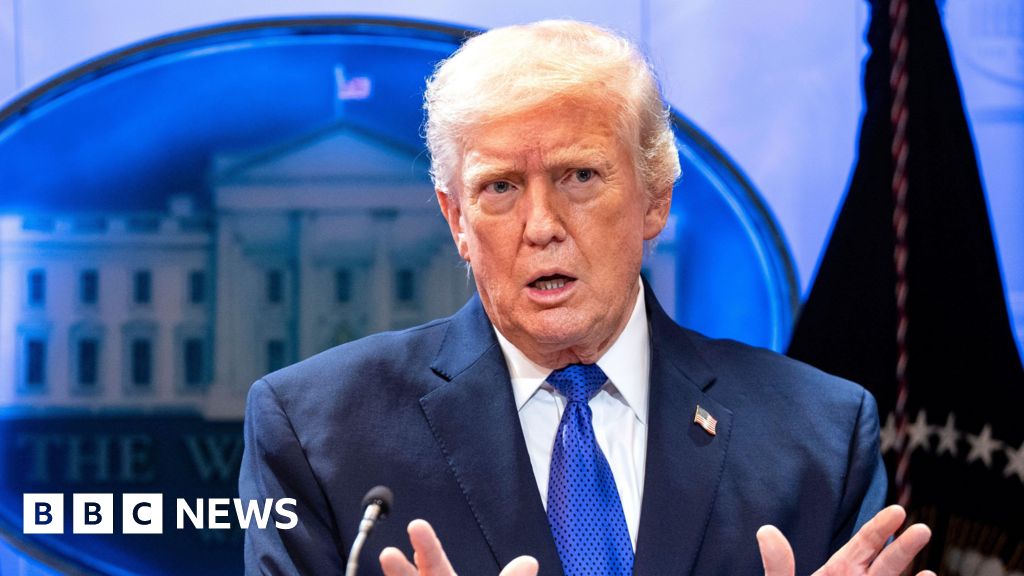
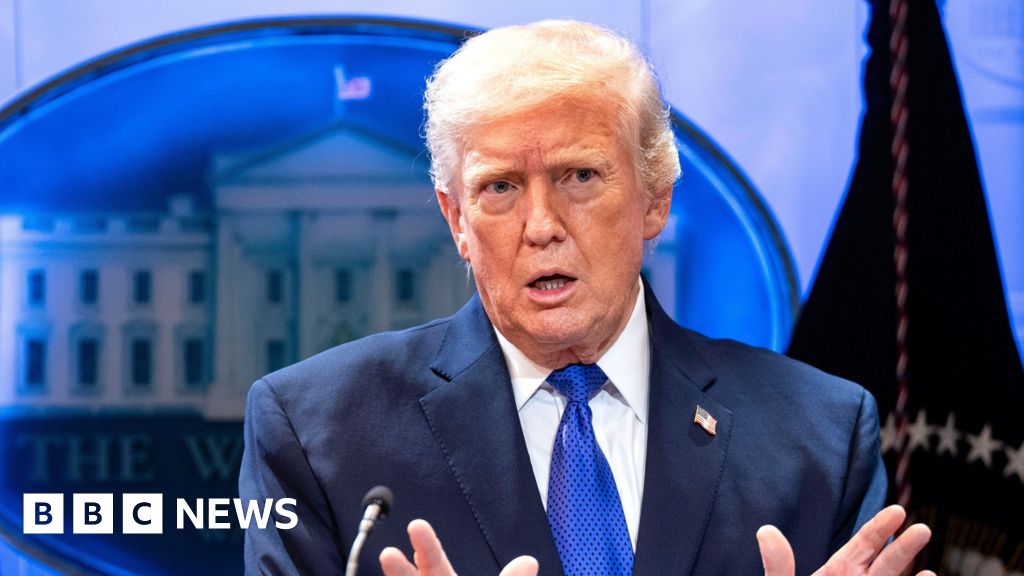
Initially, on Friday, President Trump had stated he would replace the tariffs nullified by the Supreme Court with a 10% levy on all goods entering the United States. However, in a swift reversal announced on Saturday via his preferred social media platform, Truth Social, he declared that this rate would be increased to the maximum allowed under a previously dormant trade law. This new 15% rate is expected to be a temporary measure, permitted under Section 122 of the 1974 Trade Act, and can remain in effect for approximately five months before requiring congressional approval. The initial 10% tariffs were slated to commence on Tuesday, 24 February; the exact implementation date for the increased 15% rate remains unclear, with the White House yet to provide clarification to inquiries from news organizations like the BBC.
The decision to escalate the tariff rate followed what Trump described as a "ridiculous, poorly written, and extraordinarily anti-American decision on Tariffs issued yesterday" by the Supreme Court. In a 6-3 ruling, the highest court in the United States found that the president had overstepped his constitutional authority when he implemented sweeping global tariffs last year. These previous tariffs were levied using the International Emergency Economic Powers Act (IEEPA) of 1977, a law intended for national emergencies. The justices concluded that the president’s broad application of IEEPA for general economic policy constituted an overreach of executive power. This ruling effectively opened the door for businesses and consumers to potentially seek refunds for the estimated $130 billion (£96.4 billion) already collected under the invalidated IEEPA tariffs, according to the latest government data.
President Trump reacted with strong condemnation immediately after the Supreme Court’s decision, expressing his profound disappointment and stating he was "ashamed of certain members of the court." He further derided the justices who rejected his trade policy as "fools," underscoring his deep-seated belief in the necessity of tariffs to protect American industries and reduce the nation’s persistent trade deficit. Trump has consistently argued that tariffs are a vital tool to rebalance trade relationships, yet the US trade deficit continued to widen, reaching a fresh high of approximately $1.2 trillion (£890 billion) this week, a 2.1% increase compared to 2024, despite the existing tariffs.
The immediate impact of the new 15% tariff rate under Section 122 of the 1974 Trade Act raises significant questions, particularly for countries like the UK and Australia, which had previously negotiated specific 10% tariff deals with the US. A White House official indicated on Friday that these countries would now face the broader global tariff under Section 122, superseding their prior agreements for most goods. However, certain sectors, including steel, aluminum, pharmaceuticals, autos, and aerospace, which constitute the bulk of the UK’s trade with the US, remain subject to separate tariffs introduced under different US laws and were not affected by the Supreme Court’s ruling.
Reactions to the president’s latest announcement have been varied and strong. Drew Greenblatt, owner of Marlin Steel Wire Products, a steel fabrication plant in Baltimore, voiced his profound disappointment with the Supreme Court’s decision. He viewed it as "a setback for poor people in America that had a chance to climb into the middle class with great manufacturing jobs," reflecting the perspective of domestic manufacturers who believe tariffs protect local industries and employment. Conversely, John Boyd, a soybean farmer from Virginia and founder of the National Black Farmers Association, hailed the ruling as "a huge win for me and a big loss for the president," indicating the agricultural sector’s suffering from retaliatory tariffs imposed by other nations in response to US trade policies.
Allie Renison, a former UK government trade adviser and director at SEC Newgate, observed that while the ruling might appear to favor free trade, "trade actually just got a lot messier." She highlighted that businesses now face a "much more of a patchwork approach" to tariffs under the Trump administration, leading to increased complexity, uncertainty, and potentially higher compliance costs for importers. This new scenario means most goods imported into the US will incur a 15% tariff, although some critical products, such as certain minerals, metals, and pharmaceuticals, may be exempted.
Internationally, the new tariffs have sparked alarm. The UK government, while stating it expects Britain’s "privileged trading position with the US" to continue, acknowledged it is "a matter for the US to determine" whether existing deals still stand. William Bain, head of trade policy at the British Chambers of Commerce, expressed concerns that the president’s response "could be worse for British businesses," calling the new 15% import tariffs "bad for trade, bad for US consumers and businesses," and warning they would "weaken global economic growth." In Europe, Bernd Lange, the chairman of the European Parliament International Trade Committee, announced he would call for a pause in ratifying a trade deal between the EU and the US. The committee was scheduled to vote on the deal on Tuesday, but Lange, a German Social Democrat MEP, stated that the fresh tariffs raised "several issues" requiring clarification.
The question of refunds for the unlawfully collected IEEPA tariffs remains a contentious issue. While the Supreme Court’s ruling did not explicitly mandate reimbursements, it did open the door for consumers and businesses to pursue them. President Trump, on Friday, indicated that any refunds would not come without a protracted legal battle that could span years. Despite this, companies and trade groups have already vowed to seek such reimbursements. Neil Bradley, chief policy officer at the US Chamber of Commerce, stressed that "swift refunds of the impermissible tariffs will be meaningful for the more than 200,000 small business importers in this country and will help support stronger economic growth this year." Similarly, the National Retail Federation, representing millions of American businesses, urged the courts "to ensure a seamless process to refund the tariffs to US importers."
US Senator Maria Cantwell, a Democrat from Washington state, has taken a proactive stance, writing a letter to US Treasury Secretary Scott Bessent to inquire about the administration’s plan for refunding businesses. She emphasized the urgency, stating, "Given this Administration has illegally collected hundreds of billions of dollars from American businesses, that now must be refunded, I am requesting detailed information about how the Administration plans to fairly and expeditiously reimburse the payors of those tariffs." However, Senator John Kennedy, a Republican from Louisiana, offered a counter-narrative, suggesting that if Democrats push for refunds, it could inadvertently benefit Republicans in the upcoming election cycle. He argued that a significant influx of refunds could act as a boon for the US business community, making the economy "roar" just ahead of the midterm elections in November, thereby bolstering the Republican platform.
The implications of this tariff escalation are far-reaching. Beyond the immediate economic impact on businesses and consumers through potentially higher prices and disrupted supply chains, there is the lingering political uncertainty surrounding executive power, judicial oversight, and the future direction of US trade policy. The temporary nature of the Section 122 tariffs also sets up a potential showdown with Congress in five months, ensuring that trade remains a central and volatile issue in both domestic and international arenas.

 Ramos Leo
 Roy Suryo
 atisusanti

 Nana Banana