
 Nana Banana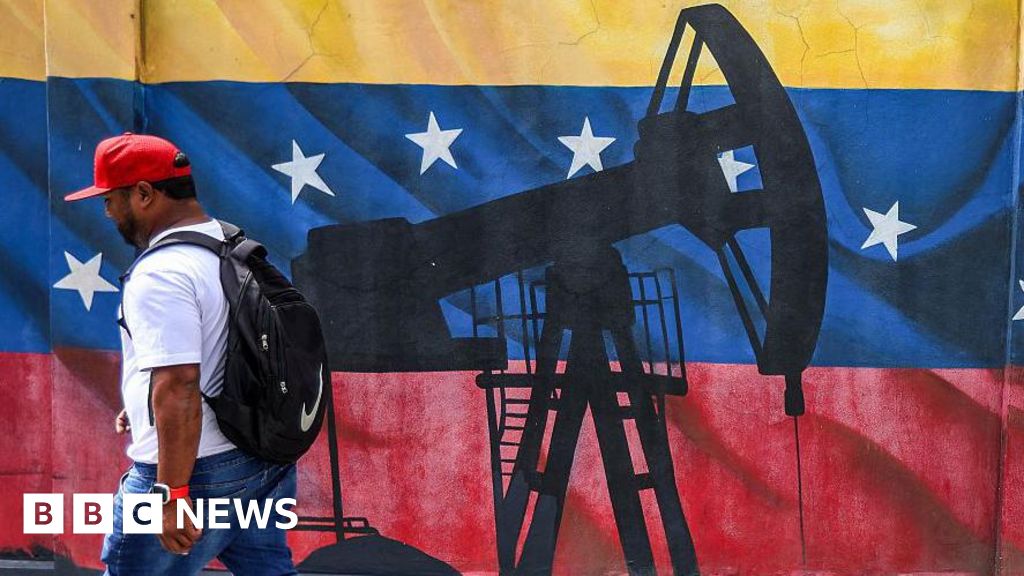
After US President Donald Trump oversaw significant political pressure against his Venezuelan counterpart Nicolás Maduro last month, he publicly vowed to tap into the country’s immense oil reserves – the largest in the world. This assertive stance, part of a broader strategy to influence Venezuelan politics and secure energy interests, has now evolved with Trump indicating plans for a personal visit to the South American nation, though a specific date remains conspicuously absent. His comments, delivered last Friday, followed a crucial two-day trip by US Energy Secretary Chris Wright to Venezuela. Wright’s mission was to assess firsthand the initial steps taken by the nation to cautiously reopen its vital oil sector to American companies, signaling a potential, albeit complex, shift in US-Venezuelan relations.
Secretary Wright’s visit coincided with a landmark legislative development in Venezuela. The National Assembly recently passed a new law designed to permit both private and foreign investment in its long-suffering oil industry. This represents a monumental departure from two decades of stringent state control under the socialist governments of Hugo Chávez and Nicolás Maduro, a period characterized by nationalization and the marginalization of international partners. For Trump, this policy pivot presents an unparalleled business opportunity for the US oil sector, aligning with his stated goal of energy independence and economic leverage. "We’re going to be extracting numbers in terms of oil like few people have seen," he declared at a White House news conference in mid-January, following a high-level meeting with leading energy executives.
However, the ambitious vision articulated by the US president faces a stark reality when confronted with the intricate calculations of the American oil firms he hopes to entice. For these companies, the fundamental question remains: do the numbers truly add up? William Jackson, chief emerging markets economist at Capital Economics, posits that the US president’s ultimate aim is multifaceted: "to revive Venezuela’s oil sector and use that energy to increase supply and reduce costs to the consumer, possibly providing a source of revenue for a more friendly Venezuelan government to rebuild the economy after years of mismanagement." This objective underscores both economic and geopolitical motivations. Yet, for US energy companies, the path to achieving this is fraught with immense practical and political difficulties.
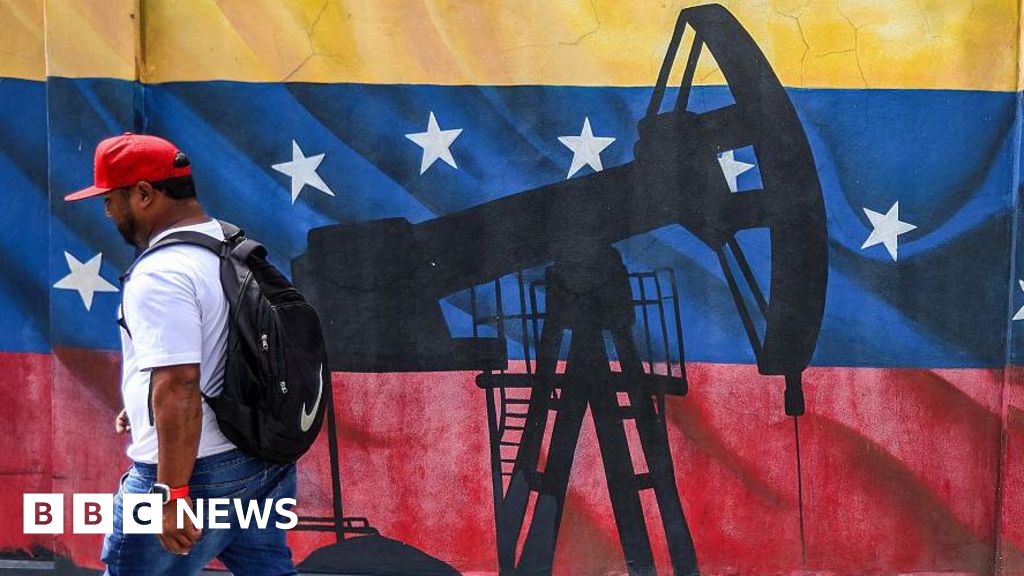
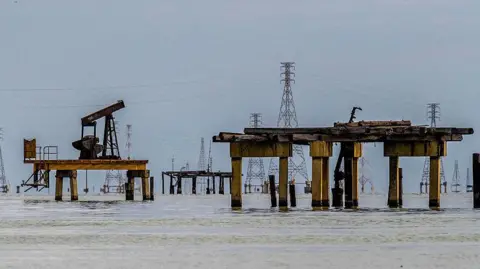
Venezuela’s state-owned oil company, Petróleos de Venezuela S.A. (PDVSA), once a powerhouse of global energy, is now a mere shadow of its former self. Under the successive administrations of Maduro and his predecessor, Hugo Chávez, the firm was systematically "milked" for its revenues, with vast sums diverted to finance ambitious social spending programs on housing, healthcare, and transport. While these initiatives aimed to alleviate poverty and garner popular support, they came at the catastrophic expense of crucial investment in maintaining and modernizing oil production infrastructure. Consequently, Venezuela’s oil output has plummeted dramatically in recent years, a decline exacerbated by, but not solely attributable to, stringent US sanctions. Years of neglect have left the industry’s equipment degraded, pipelines corroded, and refineries operating far below capacity. "In Venezuela, you’re dealing with equipment that’s been degraded by many years of neglect," notes Jackson, highlighting the scale of the challenge. "Ten to 15 years ago, Venezuela was producing 1.5 million barrels a day more than it does today," illustrating the precipitous drop.
Monica de Bolle, a senior fellow at the Peterson Institute for International Economics, concurs with this grim assessment, describing PDVSA’s state as parlous. "A lot of things have to be scrapped completely and rebuilt from the ground up," she tells the BBC, emphasizing the comprehensive overhaul required. However, she also points to a significant political impediment: "In fact, if political constraints did not matter, the best thing to do would be to scrap PDVSA, but that isn’t going to happen. It’s a big nationalist symbol, it’s attached to sovereignty. Would the Venezuelans be willing to do whatever the US says and roll over? I don’t think so." This highlights the deep-seated nationalistic sentiment surrounding PDVSA, making any radical restructuring a politically perilous undertaking for any Venezuelan government.
President Trump has challenged US oil firms to commit at least $100 billion (£75 billion) to restore Venezuela’s battered oil infrastructure. This monumental investment is an absolute prerequisite before his ambitious plan to ramp up oil sales can even begin to materialize. Officially, Venezuela boasts an astonishing 300 billion barrels of oil reserves, making it the world’s leader. Yet, in 2023, the country managed to export a mere 211.6 million barrels, generating approximately $4 billion. This figure stands in stark contrast to Saudi Arabia, which, with 267 billion barrels of reserves (second globally), commanded exports worth $181 billion in the same period. On paper, this disparity suggests immense untapped potential for improvement.
However, Jackson raises critical doubts about the true size and economic viability of Venezuela’s stated oil reserves. During the presidency of Hugo Chávez, Venezuela controversially reclassified its reserves. Prior to this, estimates suggested around 80 billion barrels of extractable oil. By 2011, this reported figure had nearly quadrupled, a statistical revision largely made possible by the exceptionally high oil prices of the time, which rendered previously unviable, heavy oil projects economically feasible. "There was a big step – jump – that people have questioned," Jackson explains. "But now the world is awash with oil and it’s not clear that the same calculations still apply." When Chávez assumed power in 1999, oil prices were indeed on an upward trajectory, frequently hitting $100 per barrel in the early 2010s, providing ample funds for social programs. With current prices hovering around the $65 mark, the economic calculus for investing in Venezuela’s challenging oil fields looks considerably less attractive.
Furthermore, the quality of Venezuelan oil presents another significant hurdle. Its crude is predominantly sour and heavy, making it inherently more difficult and expensive to extract and refine compared to the lighter, sweeter crude typically found in Saudi Arabia. Its high sulfur content also renders it corrosive to pipelines and processing equipment, necessitating specialized infrastructure and higher maintenance costs. While a resurgence of Venezuela’s industry could theoretically pose competitive problems for Canada, which also produces similarly viscous oil and exports much of it to the US, analysts believe this risk is minor. Research by Capital Economics suggests that Canadian oil should remain competitively priced, even if Venezuelan production experiences a significant increase, due to existing infrastructure, established trade routes, and relatively stable political conditions.
The country’s profound economic crisis has also triggered a massive exodus, with nearly eight million people fleeing in search of a better life. This mass migration includes a significant portion of the skilled workforce, particularly the engineers and technical experts formerly on PDVSA’s payroll. Their departure has stripped the industry of vital expertise, leaving a skeleton staff to limp on, further compounding operational inefficiencies and making any large-scale revival effort incredibly difficult.
Thomas Watters, managing director and sector lead for oil and gas at research firm S&P Global Ratings, acknowledges that US firms possess the technical capacity to repair Venezuela’s infrastructure, but he stresses that such endeavors must make sound economic sense. "At the end of the day, oil and gas companies have to deliver value to shareholders," he states. "They have very good managers. You can build anything, as long as you can pay for it. But you need an oil price that makes that worthwhile. Unless you can generate sufficient money to justify that, it’s very difficult to see the industry coming back."
Beyond the technical and economic challenges, US oil firms have been burned by Venezuela before, leading to deep-seated skepticism. In 2007, major US companies, including ExxonMobil and ConocoPhillips, had their assets seized when they refused to cede majority control to PDVSA as mandated by the Chávez government. These companies pursued their claims in international courts and were awarded colossal sums in damages – notably, $8.3 billion in the case of ConocoPhillips – none of which have ever been fully paid. Given that the current Venezuelan regime, with former Vice-President Delcy Rodríguez now serving as interim leader in a contested political landscape, largely remains intact, dispelling fears of renewed expropriation or arbitrary policy changes will require substantial assurances.
Adding to these concerns, US Energy Secretary Chris Wright has explicitly stated that the Trump administration has no plans to offer security guarantees to oil companies operating in Venezuela. This omission is particularly worrying in a country where state-sanctioned paramilitary groups, known as "colectivos," often operate with impunity and are frequently implicated in criminal activities, posing significant risks to personnel and assets. Without stronger government incentives and robust security assurances, oil firms will be profoundly reluctant to take what is perceived as an extremely expensive and high-risk plunge. It is hardly surprising, then, that ExxonMobil boss Darren Woods has publicly labeled Venezuela "uninvestable" in its current volatile state.
Tellingly, Trump’s approach has not included an offer of "sweeteners" or incentives to promote investment. Instead, he has reportedly resorted to threats, indicating he might block ExxonMobil investment in Venezuela if they do not comply with his vision. This policy, characterized by de Bolle of the Peterson Institute as "all stick, no carrot," suggests a fundamental misunderstanding of how private sector investment operates. "And it doesn’t seem like they understand that they do need carrots," she observes.
In de Bolle’s view, the Trump administration’s approach smacks of an "imperialist vision" of Latin America, leading it to perceive the region’s vast natural resources as inherently its own property. From her perspective, the private oil firms’ understandable aversion to investing in Venezuela acts as a crucial barrier to this kind of "resource grab." "This is a time when you think, ‘Thank God the US doesn’t have a state-owned oil company,’" she says, underscoring the role of the private sector in resisting politically driven, economically unsound ventures. "They need the private sector, but for the moment, the private sector isn’t budging. And what company in their right mind is going to put money into Venezuela?"
Ultimately, the question of whether Venezuela’s oil output could eventually surge and subsequently impact global oil prices remains highly speculative. Analysts are hesitant to offer definitive predictions. "It depends on the scale at which it happens," says Jackson of Capital Economics. "The situation is very fluid, very opaque, and there’s a big geopolitical angle. We’re in the early stages where Venezuelan production is concerned." The path to revitalizing Venezuela’s oil industry is fraught with immense technical, economic, political, and security challenges, making any large-scale, profitable investment by US firms a distant and uncertain prospect.



 Nakalama John
 George Anjay
 Ramos Leo

 atisusanti