
 George Anjay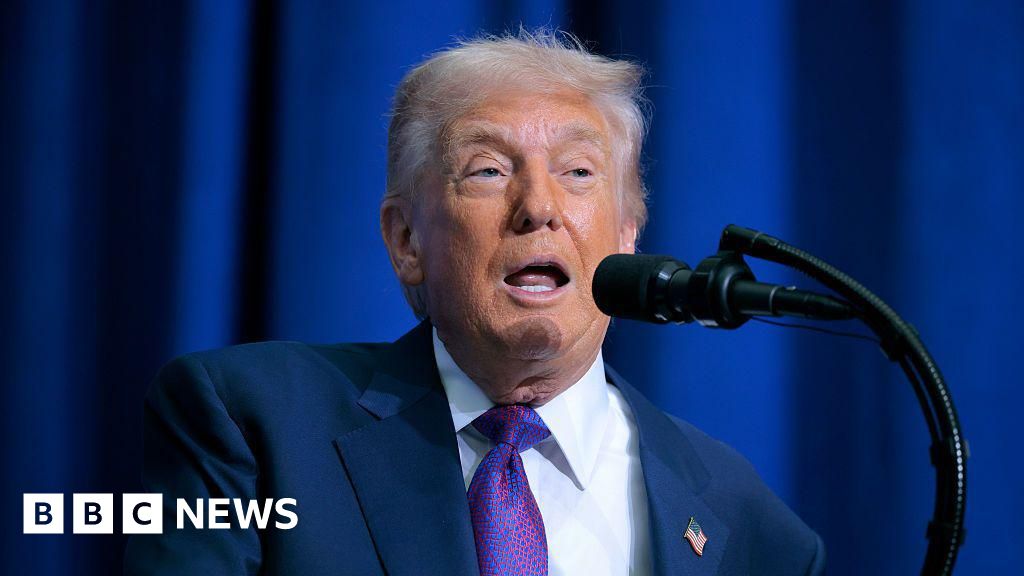
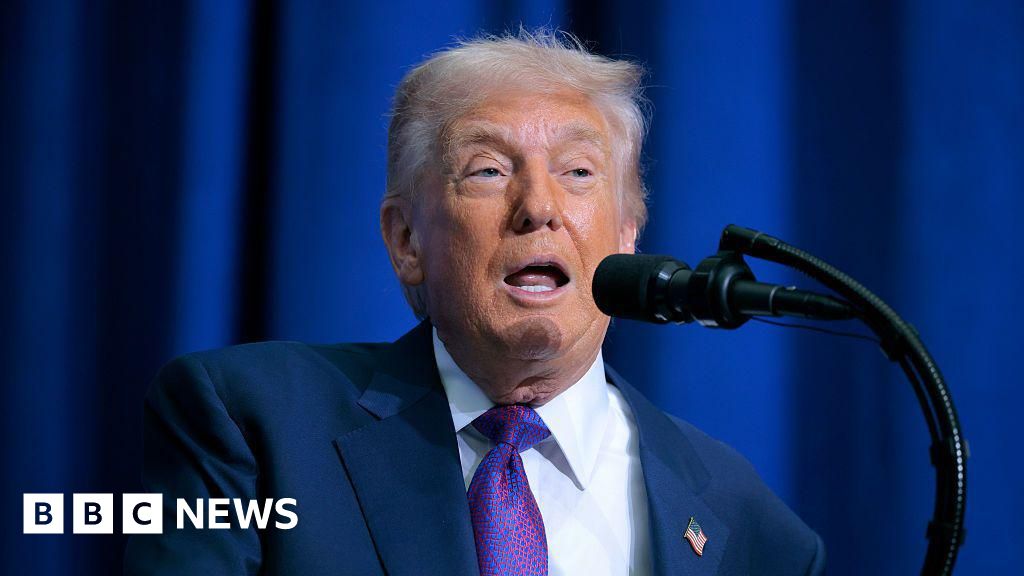
President Donald Trump has issued a stark ultimatum, stating that the world will know within "the next, probably, ten days" whether a diplomatic breakthrough with Iran is imminent or if the United States will escalate its confrontation with the Islamic Republic. The President’s declaration, made during the inaugural meeting of his newly formed "Board of Peace" in Washington D.C., signaled a critical juncture in the ongoing tensions surrounding Iran’s nuclear program. "We have some work to do" in forging an agreement, Trump stated, but ominously added, "we may have to take it a step further," a phrase widely interpreted as a veiled threat of military action. This statement comes amidst a significant surge in U.S. military assets deployed to the Middle East, juxtaposed with reported progress in delicate talks between American and Iranian negotiators in Switzerland.
The President’s remarks have ignited considerable debate and concern among both Democratic and some Republican lawmakers, many of whom have voiced strong opposition to any potential military intervention in Iran without explicit congressional authorization. During the Board of Peace meeting, Trump highlighted the involvement of Special Envoys Steve Witkoff and Jared Kushner, his son-in-law, noting that they had engaged in "very good meetings" with Iranian representatives. However, Trump tempered this optimism with a dose of historical reality, acknowledging the long-standing difficulty in achieving a "meaningful deal with Iran," a failure he attributed to the subsequent occurrence of "bad things."
This sentiment was echoed by White House Press Secretary Karoline Leavitt the previous day, who cautioned that Iran would be "very wise" to pursue a negotiated settlement with the U.S. Leavitt reiterated the administration’s continued hope for a diplomatic resolution to the complex issue of Tehran’s nuclear ambitions. The Board of Peace, initially conceived to mediate an end to the protracted conflict between Israel and Hamas in Gaza and to oversee reconstruction efforts, has seemingly expanded its mandate in recent weeks. This broadened scope has led to speculation that the board, comprising representatives from approximately two dozen nations and chaired by Trump, might be intended to diminish the influence of the United Nations on international peace and security matters.
The specter of military action against Iran has loomed larger in recent times. Last July, U.S. missiles and aircraft reportedly struck three Iranian nuclear facilities, and reports this week indicated that the White House was actively considering new offensive strategies. In a tangible demonstration of this heightened readiness, American forces have been substantially increasing their presence in the region. This includes the deployment of the USS Abraham Lincoln aircraft carrier, a formidable symbol of naval power, to the Persian Gulf.
Furthermore, satellite imagery has revealed that Iran has been actively reinforcing its military installations, a move that appears to be a direct response to the escalating tensions. The country’s Supreme Leader, Ayatollah Ali Khamenei, has also engaged in a war of words, leveraging social media to issue thinly veiled threats against U.S. forces. One particularly pointed post from Khamenei declared, "The US President constantly says that the US has sent a warship toward Iran. Of course, a warship is a dangerous piece of military hardware. However, more dangerous than that warship is the weapon that can send that warship to the bottom of the sea." This rhetoric underscores the volatile nature of the current standoff and the potential for rapid escalation.
The prospect of military engagement with Iran has not gone unchallenged within the United States. Several influential members of Congress have publicly declared their opposition to any unilateral military action. Notably, Representatives Ro Khanna, a Democrat from California, and Thomas Massie, a Republican from Kentucky, have indicated their intention to force a vote next week on a resolution aimed at curtailing the President’s ability to engage in hostilities. Their efforts are grounded in the War Powers Act of 1973, a legislative measure designed to empower Congress to check the President’s authority to commit U.S. forces to armed conflict without prior congressional approval.
Representative Khanna has vehemently argued against a military confrontation, stating on social media, "A war with Iran would be catastrophic." He elaborated on the complexities of the nation, describing Iran as "a complex society of 90 million people with significant air defences and military capabilities." Khanna also raised serious concerns about the safety of American troops stationed in the region, warning that "thousands of U.S. troops in the region ‘could be at risk of retaliation.’"
Despite these concerns, the likelihood of such a war powers resolution successfully passing both chambers of Congress remains uncertain. The political landscape has previously demonstrated a resistance to such measures. In January, for instance, Senate Republicans successfully blocked a similar resolution that would have required the Trump administration to seek congressional approval before initiating further military operations in Venezuela, following the capture of Nicolás Maduro. This precedent suggests that any attempt to constrain the President’s military decision-making power will face significant political headwinds.
The situation with Iran is further complicated by the ongoing diplomatic efforts, which, despite Trump’s dire warnings, have seen some positive developments. The clandestine meetings between U.S. and Iranian officials, facilitated by Special Envoys Witkoff and Kushner, have reportedly yielded constructive dialogue. These talks are believed to be focused on the specifics of Iran’s nuclear enrichment capabilities and the potential for sanctions relief in exchange for verifiable limitations on its nuclear program. The delicate nature of these negotiations means that any premature escalation of rhetoric or military posturing could jeopardize the fragile progress made.
The international community is closely monitoring the unfolding events, with many nations advocating for a de-escalatory approach and a continued commitment to diplomatic channels. The potential consequences of a military conflict in the Middle East are far-reaching, encompassing regional stability, global energy markets, and the humanitarian toll on civilian populations. The coming ten days, as outlined by President Trump, are therefore critical in determining whether diplomacy will prevail or if the region will be plunged into further conflict. The decision facing Iran, and the subsequent response from the United States, will have profound implications for global security and the future of international relations. The administration’s dual strategy of increased military deterrence and ongoing diplomatic engagement highlights the high stakes involved and the complex calculus guiding U.S. foreign policy in this volatile region. The formation of the Board of Peace, with its broad mandate, suggests a potential shift in how the U.S. approaches complex international conflicts, moving beyond traditional multilateral frameworks to a more curated and potentially unilateral approach. The success or failure of this new approach, particularly in the context of Iran, will be closely scrutinized by allies and adversaries alike. The next ten days will undoubtedly be a test of both resolve and restraint for all parties involved.


 Ramos Leo
 atisusanti
 Nakalama John

 Roy Suryo