George Anjay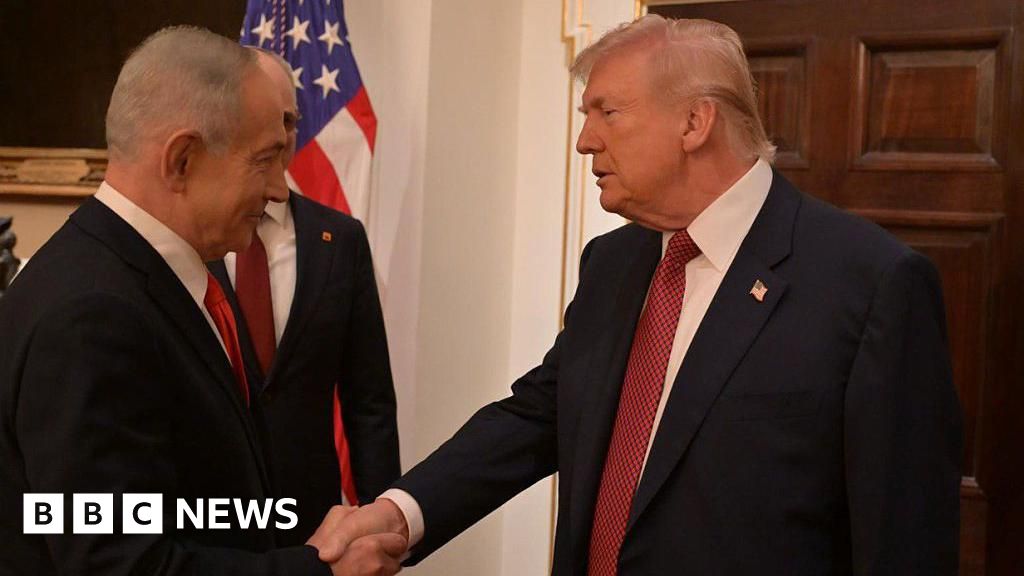
Washington D.C. – In a high-stakes meeting at the White House, U.S. President Donald Trump conveyed to Israeli Prime Minister Benjamin Netanyahu that negotiations aimed at curbing Iran’s nuclear program must persist, even as "nothing definitive" was finalized during their talks. The meeting, held amidst escalating tensions in the Middle East and intensified diplomatic maneuvering over Iran’s nuclear ambitions, underscored the complex geopolitical landscape surrounding Tehran’s uranium enrichment activities.
Prime Minister Netanyahu arrived at the White House for a closed-door session, having made his sixth visit to the United States since President Trump’s return to office, a frequency exceeding that of any other world leader. His agenda was reportedly focused on urging President Trump to pursue a comprehensive deal that would not only halt Iran’s uranium enrichment but also address its ballistic missile program and its support for regional proxy groups such as Hamas and Hezbollah. Iran, while signaling a willingness to limit its nuclear program in exchange for sanctions relief, has thus far rejected these broader demands.
The diplomatic standoff was further highlighted by Iranian President Masoud Pezeshkian, who, prior to the White House meeting, issued a stern warning that his country "will not yield to their excessive demands." This declaration came from Tehran during a rally marking the 47th anniversary of Iran’s Islamic Revolution, where President Pezeshkian reiterated his nation’s commitment to peace and stability in the region through dialogue with neighboring countries. He also firmly stated, "Our Iran will not yield in the face of aggression," while simultaneously affirming Iran’s lack of pursuit of nuclear weapons, a stance Iran has consistently maintained and is prepared to verify.
Following the meeting, President Trump took to his social media platform, Truth Social, to describe the discussion as "very good." He elaborated that the continuation of negotiations with Iran was a key outcome, stating, "There was nothing definitive reached other than I insisted that negotiations with Iran continue to see whether or not a deal can be consummated." Trump expressed his preference for a negotiated resolution but acknowledged that the ultimate outcome remained uncertain, adding, "if one could not be reached ‘we will just have to see what the outcome will be.’"
The Prime Minister’s office released a statement confirming that the leaders had discussed "the security needs of the State of Israel in the context of the negotiations" and pledged to maintain their "close coordination and relationship." Netanyahu, a staunch ally of President Trump, has consistently characterized Iran as an existential security threat to Israel and has actively lobbied the U.S. to curtail Tehran’s regional influence. His office had previously emphasized that any negotiations must encompass limitations on ballistic missiles and an end to Iran’s backing of what they term the "Iranian axis."
Earlier in the week, upon his arrival in Washington, Prime Minister Netanyahu engaged with Trump’s special envoy Steve Witkoff and son-in-law Jared Kushner. According to the Prime Minister’s office, Witkoff and Kushner provided an update on their initial round of negotiations with Iran, which had taken place the preceding Friday.
The timing of Netanyahu’s visit coincides with an increased U.S. military presence in the Middle East. President Trump has issued strong warnings to Tehran, threatening strikes if a nuclear deal is not reached and if Iran continues its crackdown on protesters. In a recent interview, Trump indicated he was "thinking" about deploying a second aircraft carrier strike group to the region, following the deployment of the USS Abraham Lincoln carrier strike group last month, which was a response to Trump’s threats of military action against Iran’s suppression of widespread protests. Trump expressed his belief that Iran "wants to make a deal very badly," suggesting that a diplomatic solution remained a viable option. He articulated his vision for a successful deal, stating to Fox Business that it would entail "no nuclear weapons, no missiles."
This increased rhetoric and military posturing come as the Trump administration is also actively pressing Israel and Hamas to advance their ceasefire agreement in Gaza. On Wednesday, Prime Minister Netanyahu reportedly met with Secretary of State Marco Rubio to formalize his membership in Trump’s "Board of Peace." A White House spokesperson highlighted the strong U.S.-Israel alliance, stating, "Israel ‘has had no better friend in its history than President Trump.’" The spokesperson added, "We continue to work closely with our ally Israel to implement President Trump’s historic Gaza peace agreement and to strengthen regional security in the Middle East."
The current ceasefire agreement between Israel and Hamas, which commenced in October following the Hamas attack on October 7, 2023, has been marked by mutual accusations of violations. The initial phase of the deal, which aimed to end a two-year conflict initiated by the attack that resulted in approximately 1,200 Israeli deaths and 251 hostages taken, has seen limited progress towards its subsequent phases. These later stages are intended to involve the disarmament of Hamas, a complete withdrawal of Israeli military forces from Gaza, and the reconstruction of the Gaza Strip. The Israeli military campaign in response to the October 7 attack has led to over 71,000 fatalities in Gaza, according to the Hamas-run health ministry.
Experts in Middle Eastern politics and international relations have weighed in on the complexities of the situation. Daniel Byman, a professor at Georgetown University’s School of Foreign Service, noted that Israel is concerned that a rushed deal with Iran might overlook critical issues such as Iran’s missile program, its support for proxy groups, or allow for a residual nuclear program. He observed that a key concern for Israel and other allies is Trump’s potential prioritization of securing any deal over specific outcomes. Mohammed Hafez, a professor at the Naval Postgraduate School, characterized the current Iranian regime as "vulnerable," suggesting that both the U.S. and Israel perceive themselves as holding significant leverage, allowing for "maximalist demands."
The context of these negotiations is also shaped by President Trump’s previous actions, notably his withdrawal of the U.S. from the Obama-era nuclear deal with Iran and the subsequent reimposition of stringent sanctions that have severely impacted Iran’s economy. Despite the heightened rhetoric and military deployments, former U.S. officials suggest that President Trump may seek to avoid a direct military confrontation with Iran, particularly in an election year. James Jeffrey, a former U.S. ambassador to Iraq and Turkey, commented, "I don’t think Trump wants a major military confrontation with Iran going into an election year. And I think the Iranians know that." This sentiment suggests that while the diplomatic and military pressure is significant, the ultimate aim might still be a negotiated settlement rather than an outright conflict.


 Ramos Leo
 Nakalama John

 atisusanti