George Anjay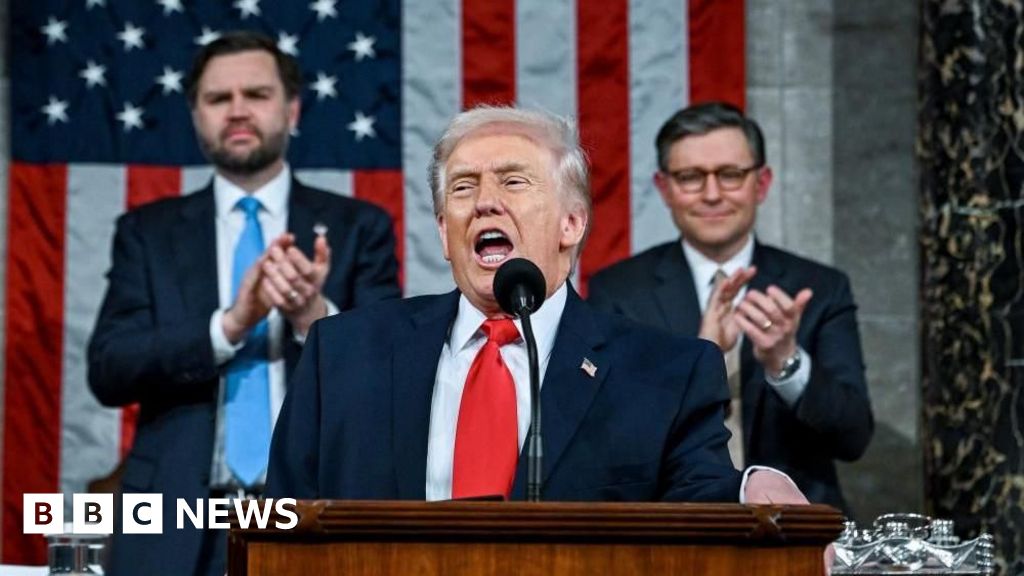
The address was replete with dramatic flourishes, embodying the kind of made-for-television moments that the former reality television personality seems to relish. Early in the proceedings, he welcomed the US Olympic men’s hockey team to the gallery. They proudly displayed their gold medals as Republicans erupted in chants of "USA!", and even Democrats rose to their feet in applause. Later, Trump singled out military heroes, including a centenarian World War II veteran and a Coast Guard swimmer credited with rescuing 165 individuals trapped during last year’s devastating Texas flooding. The swimmer was presented with a Congressional Medal of Honor, while the veteran received a Legion of Merit award for extraordinary heroism.
Although his speech set a new record for length, clocking in at an impressive 107 minutes, these carefully orchestrated moments injected a brisk pace into the evening, aligning seamlessly with the president’s overarching themes of American patriotism and achievement. His address commenced with familiar pronouncements. "Our nation is back," he declared, asserting that America was the "hottest" country in the world. At one point, after attributing the "affordability" crisis to Democrats, he optimistically added, "We are doing really well." He pointed to rising incomes, a burgeoning stock market, lower gasoline prices, a significantly reduced flow of undocumented migrants across the southern border, and tamed inflation as evidence of his administration’s success. "Our country is winning again," he concluded, encapsulating his message of resurgent national pride.
The president’s principal challenge, however, lies in his public approval ratings, which have remained stubbornly around the 40 percent mark. A significant segment of the American populace desires more substantive action to address their concerns. In a national address from the White House just last month, he articulated similar themes and cited comparable statistics, yet this failed to sway public sentiment. The president and his advisors appear to be banking on the larger viewership of the State of the Union address, which is expected to reach tens of millions, to yield a different outcome.
Crucially, the speech offered little in the way of novel policy proposals. Throughout the nearly two-hour address, Trump sprinkled in a handful of new ideas, including the establishment of new retirement savings accounts for working-class Americans and a proposed accord with artificial intelligence companies to ensure sufficient electricity for their operations, thereby preventing increased utility bills for consumers. He also reiterated proposals for older initiatives, such as a healthcare plan that would provide direct payments to Americans to help offset insurance premiums, legislation mandating proof of citizenship for all voters, and a prohibition on issuing commercial driver’s licenses to undocumented migrants. Furthermore, he pledged to continue his aggressive tariff regime, undeterred by a recent Supreme Court decision that invalidated many of the duties his administration had previously imposed.
Three of the justices who had ruled against the president maintained impassive expressions as they observed from the front row. Earlier, Trump and Chief Justice John Roberts, who authored the court’s tariff opinion, exchanged a brief handshake, though neither man offered a smile. In a speech frequently punctuated by enthusiastic applause from the Republican contingent, Trump’s discussion of tariffs elicited murmurs of dissent from Democrats and uncomfortable silences from Republicans, many of whom harbor reservations about the economic repercussions of these tariffs and the potential electoral damage their unpopularity might inflict.
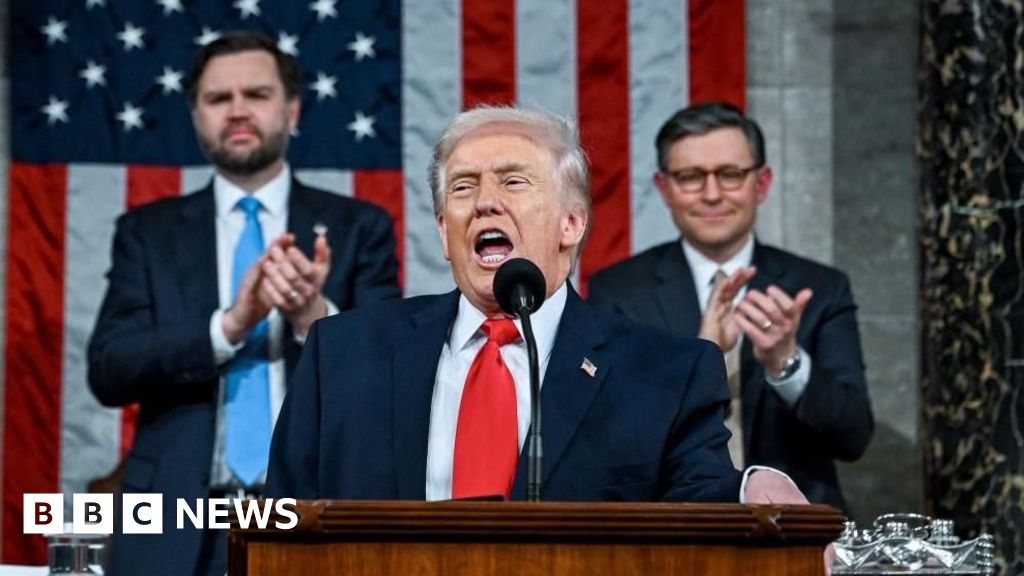
If tariffs cast a pall over the chamber, the atmosphere grew palpably tense when Trump turned his attention to immigration. His remarks regarding the perceived threat of "illegal aliens" prompted some of the most thunderous applause from Republicans present, met by angry shouts and icy glares from Democrats. Immigration had previously been a potent political asset for Trump, but a recent enforcement surge in Minneapolis, which tragically resulted in the shooting deaths of two American citizens by federal agents, had significantly eroded his standing on the issue. The president conspicuously omitted any mention of these fatal shootings or the "softer approach" to enforcement that had been suggested in their aftermath. Instead, Trump’s speech, by focusing on crimes allegedly committed by undocumented migrants – including murders, accidents, and corruption – represented an attempt to reclaim the narrative.
"The only thing standing between Americans and a wide-open border right now is President Donald J Trump and our great Republican patriots in Congress," he asserted. This statement served as a tacit acknowledgment that in just over eight months, Americans will head to the polls for midterm elections that will determine the composition of both chambers of Congress.
As is customary with these congressional addresses, foreign policy typically played a secondary role. Despite a substantial military buildup near Iran, Trump offered little to persuade the American public of the necessity for sustained US military action. "My preference is to solve this problem through diplomacy, but one thing is certain: I will never allow the world’s number one sponsor of terror to have a nuclear weapon," he stated, before swiftly moving on to other topics.
For the present moment, political headwinds appear to be unfavorable for the president. However, Trump may harbor a conviction that the public’s mood is poised for a shift. Perhaps he is confident that Americans will soon begin to experience the tangible economic benefits of his policies. Alternatively, he might believe that a renewed sense of patriotism, particularly during the nation’s 250th birthday celebrations this summer, will alter the prevailing sentiment. His speech, with its deliberate acknowledgments of military heroes and gold-medal-winning hockey players in the audience, could be interpreted as a strategic political wager he has placed.
The speech itself, while lengthy, was designed to resonate with his base and project an image of strength and success. The theatrical elements, such as the summoning of heroes and the highlighting of athletic achievements, were carefully calibrated to evoke a sense of national pride and accomplishment. However, the lack of substantial new policy initiatives suggests a strategy focused on reinforcing existing narratives and mobilizing core supporters rather than pivoting to address broader public concerns. The upcoming midterm elections will likely serve as a critical referendum on the effectiveness of this approach, testing whether Trump’s brand of patriotic rallying and political combat can overcome prevailing dissatisfaction and secure his party’s grip on power. The president’s gamble appears to be that the spectacle of national pride and the reinforcement of his core message will be enough to carry him and his party through the upcoming electoral challenges.


 Nana Banana
 atisusanti
 Nakalama John