Nana Banana
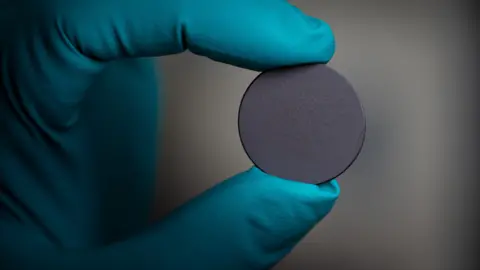
This groundbreaking venture aims to revolutionize the manufacturing of critical materials, specifically focusing on semiconductors. These advanced materials, once produced in the unique conditions of space, are destined for crucial applications back on Earth, powering everything from sophisticated communications infrastructure and advanced computing systems to the rapidly evolving transport sector, including electric vehicles and next-generation aircraft. The promise lies in the unparalleled purity and structural integrity that a space-based manufacturing environment can offer.
Semiconductors are the fundamental building blocks of modern electronics. Their efficiency and performance are intrinsically linked to the precise arrangement of their atomic structure. In conventional terrestrial manufacturing, the forces of gravity and atmospheric contaminants pose significant challenges, leading to microscopic imperfections in the material’s crystalline lattice. These imperfections, however minute, can degrade performance. Space Forge’s innovation leverages the unique advantages of the orbital environment to overcome these limitations.

The weightless, microgravity conditions found hundreds of kilometres above Earth are ideal for crystallizing materials. Without the influence of gravity, atoms can arrange themselves into a perfectly ordered, three-dimensional structure without the disruptive effects of convection currents or sedimentation that occur during cooling on Earth. Furthermore, the inherent vacuum of space provides an ultra-clean environment, eliminating the risk of airborne contaminants sneaking into the manufacturing process. The result, as highlighted by Josh Western, CEO of Space Forge, is transformative: "The work that we’re doing now is allowing us to create semiconductors up to 4,000 times purer in space than we can currently make here today." This extraordinary level of purity and structural order translates directly into superior performance for the electronic components derived from these semiconductors.
Western further elaborated on the far-reaching impact of such advancements. These ultra-pure semiconductors are not just incremental improvements; they represent a leap forward that could power the next generation of technology. "This sort of semiconductor would go on to be in the 5G tower in which you get your mobile phone signal, it’s going to be in the car charger you plug an EV into, it’s going to be in the latest planes," he explained, painting a vivid picture of the pervasive influence these space-made materials could have across essential global infrastructure and consumer technology.
The journey to this pivotal demonstration began with the launch of the company’s mini-factory aboard a SpaceX rocket earlier this year. Since its deployment into orbit, the dedicated team at Space Forge’s mission control in Cardiff has been meticulously testing and monitoring its various systems. A particularly exhilarating moment for the team came with the successful activation of the furnace. Veronica Viera, the company’s payload operations lead, shared her excitement over an image beamed back from the satellite. The image, captured from within the furnace itself, showcased plasma – gas heated to approximately 1,000 degrees Celsius – glowing brilliantly. For Viera, witnessing this image was "one of the most exciting moments of my life." She emphasized the profound significance of this visual confirmation: "This is so important because it’s one of the core ingredients that we need for our in-space manufacturing process. So being able to demonstrate this is amazing." It confirmed the furnace’s operational capability and its ability to create the high-temperature environment necessary for material processing.
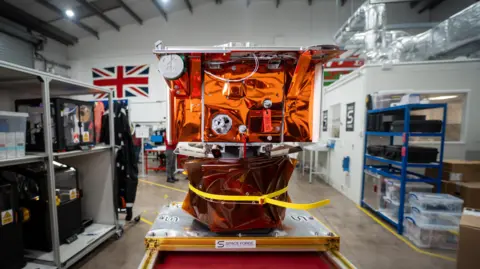
Building on this foundational success, Space Forge is already setting its sights on scaling up operations. The next phase involves developing a larger space factory, one with the capacity to produce semiconductor material sufficient for an estimated 10,000 chips. However, the manufacturing process is only half the equation. A crucial element for commercial viability is the ability to safely and reliably return these high-value materials to Earth. This presents a unique engineering challenge, as re-entry into Earth’s atmosphere involves extreme temperatures and forces.
To address this, Space Forge plans to deploy advanced re-entry technology on future missions. Central to this will be a specialized heat shield, evocatively named Pridwen – after the legendary shield of King Arthur. This shield is designed to protect the spacecraft and its precious cargo from the intense frictional heat and atmospheric pressures encountered during the descent, ensuring the integrity of the manufactured materials. Proving the efficacy of Pridwen will be a critical step towards establishing a sustainable and economically viable space manufacturing pipeline.
Space Forge is not alone in recognizing the immense potential of orbital manufacturing. The nascent field of in-space manufacturing is attracting increasing interest from various sectors. Companies globally are exploring the unique advantages of microgravity and vacuum to produce a diverse range of products, from highly pure pharmaceuticals and novel alloys to delicate artificial tissues for medical research. The absence of gravity can facilitate crystal growth in ways impossible on Earth, potentially leading to breakthroughs in drug discovery and material science.
Libby Jackson, head of space at the Science Museum, underscored the contemporary relevance and future promise of this burgeoning industry. "In-space manufacturing is something that is happening now," she stated, acknowledging that while these are "early days" and production volumes are currently small, the foundational technology is being proven. "But by proving the technology it really opens the door for an economically viable product, where things can be made in space and return to Earth and have use and benefit to everybody on Earth. And that’s really exciting." Her comments highlight the transition from experimental curiosity to a legitimate commercial endeavor, with the potential to yield substantial benefits across numerous industries.
The advantages of space manufacturing extend beyond just semiconductors. For instance, in drug development, microgravity can allow for the growth of larger, more perfect protein crystals, which are vital for understanding molecular structures and designing new medicines. Similarly, the creation of unique alloys or optical fibres with properties unattainable on Earth due to gravitational segregation of elements is another promising area. The perfect vacuum of space, devoid of atmospheric contaminants, means that ultra-clean manufacturing environments can be achieved without the enormous energy expenditure and complex infrastructure required for equivalent conditions on Earth. This could lead to materials with unprecedented purity and performance, opening doors for entirely new technological capabilities.
While the potential is immense, challenges remain. The cost of launching materials into space and returning finished products is still significant, though rapidly decreasing thanks to innovations from companies like SpaceX. The reliability of autonomous systems operating remotely, the harsh radiation environment of space, and the complex logistics of a space-based supply chain are all factors that need continuous innovation and refinement. Regulatory frameworks for off-Earth manufacturing and property rights in space are also evolving.

Nevertheless, Space Forge’s achievement marks a pivotal moment. By successfully demonstrating the functionality of a 1,000C furnace in orbit, they have moved beyond theoretical discussions to practical implementation. This achievement is not merely a technical feat; it signifies the dawn of a new industrial era. It paves the way for a future where humanity harnesses the unique properties of space to create superior materials, drive technological advancement, and address critical needs on Earth, from powering the next generation of electronics to developing life-saving medicines. The mini-factory in orbit, with its glowing furnace, is a beacon for the transformative potential of off-Earth manufacturing, promising a future where the sky is no longer the limit for industrial innovation.




 George Anjay

 Ramos Leo
 Nakalama John