
 Ramos Leo
The United Kingdom government has officially committed to a substantial increase in its military presence in Norway over the next three years, a strategic move designed to significantly enhance deterrence and defensive capabilities against growing Russian threats in the strategically vital Arctic and High North regions. This pivotal decision underscores a renewed focus on collective security within NATO and a recognition of the escalating geopolitical competition in the Earth’s northernmost territories.
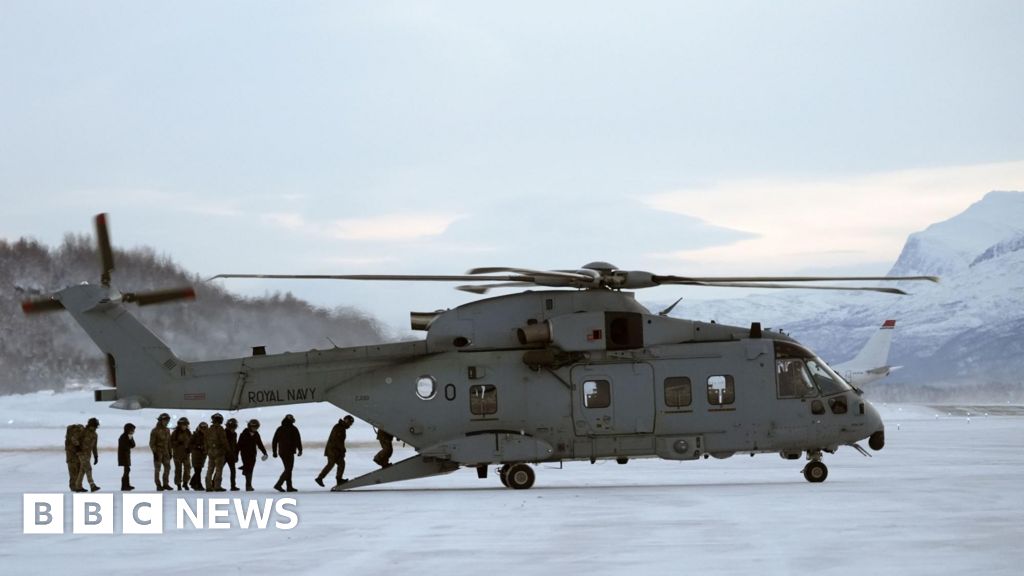
Defence Secretary John Healey confirmed that the number of British troops permanently stationed in Norway would double, escalating from the current 1,000 personnel to a robust 2,000. This expansion represents a tangible commitment to strengthening NATO’s northern flank and reinforcing the UK’s position as a key security guarantor in the Euro-Atlantic area. The deployment will involve a rotational presence of highly skilled British forces, including elements of the Royal Marines, Army, and Royal Air Force, ensuring a continuous and adaptable military footprint in the challenging Arctic environment.
According to Healey, the Kremlin is "rapidly re-establishing military presence in the region, including reopening old Cold War bases." This resurgence of Russian activity extends beyond mere rhetoric, encompassing significant investments in military infrastructure, the deployment of advanced weaponry, and increasingly assertive naval and air operations. Russia’s Kola Peninsula, bordering Norway and Finland, hosts a substantial portion of its strategic nuclear arsenal and its Northern Fleet, making the region a critical area for both offensive and defensive posturing. Modernized airfields, new deep-water ports, and the development of specialized Arctic combat units are all part of Moscow’s comprehensive strategy to assert dominance in a region that is becoming increasingly accessible due to climate change.
Healey’s concern is not isolated but echoed across Europe, where a palpable increase in Kremlin aggression has been observed since Russia launched its full-scale invasion of Ukraine four years ago. This aggression manifests not only in conventional military movements but also in hybrid warfare tactics, cyberattacks targeting critical infrastructure, and disinformation campaigns designed to destabilize Western democracies. The invasion of Ukraine fundamentally shifted the European security paradigm, prompting a reassessment of defense strategies and a renewed emphasis on collective deterrence.
"Demands on defence are rising and Russia poses the greatest threat to Arctic and High North security that we have seen since the Cold War," Healey articulated, highlighting the urgency of the UK’s commitment. The High North, a term encompassing the Arctic Circle and its adjacent areas, is experiencing unprecedented geopolitical interest. Its melting ice caps are opening new shipping routes, such as the Northern Sea Route, which could drastically reduce transit times between Asia and Europe. Furthermore, the region holds vast untapped reserves of natural resources, including oil, gas, and rare earth minerals, making it a focal point for economic and strategic competition. The UK’s increased presence aims to safeguard these interests and ensure freedom of navigation and access in accordance with international law.
The Defence Secretary is set to join his NATO counterparts at the alliance’s headquarters in Brussels on Thursday to discuss these proposals and broader Arctic security strategies. This high-level meeting will serve as a platform to coordinate allied responses to Russian activities, share intelligence, and reinforce the principle of collective defense under Article 5 of the NATO treaty. Discussions are expected to cover enhanced surveillance capabilities, joint training initiatives, and the development of integrated defense plans tailored to the unique challenges of Arctic warfare.
This significant announcement comes merely weeks after a notable rift emerged between European allies and Washington concerning Greenland, a semi-autonomous Danish territory also located in the Arctic. Former US President Donald Trump had controversially threatened to acquire Greenland, citing alleged threats from Russia and China to the region’s security. While he has since appeared to back down from plans to annex the territory, the incident underscored the burgeoning geopolitical competition in the Arctic and the complex interplay of economic, strategic, and sovereign interests. Greenland, with its strategic location and the vital Thule Air Base, is a critical component of North American and European defense, and any perceived instability or external influence there is a cause for concern among NATO allies.
Central to the UK’s expanded strategy is the "Arctic Sentry" mission, proposed by Foreign Secretary Yvette Cooper. This ambitious initiative aims to bolster surveillance, intelligence gathering, and overall security in the region, drawing inspiration from existing NATO alliances such as the Baltic Sentry and Eastern Sentry missions, which focus on monitoring and deterring aggression in the Baltic Sea and Eastern European flanks, respectively. Arctic Sentry will involve advanced maritime patrol aircraft, sophisticated underwater sensors, and enhanced satellite imagery capabilities to provide real-time intelligence on Russian movements and activities, ensuring a comprehensive understanding of the operational environment.
As a cornerstone of this expanded presence, a contingent of 1,500 Royal Marine Commandos, renowned for their expertise in cold weather and amphibious operations, will participate in NATO’s Exercise Cold Response in March. This large-scale, multinational drill, conducted across Norway, Finland, and Sweden, is specifically designed to train allied forces in extreme Arctic conditions. Exercise Cold Response simulates a complex, high-intensity conflict scenario, testing the interoperability of forces from various nations in areas such as amphibious landings, mountain warfare, long-range patrols, and logistical support in sub-zero temperatures. The inclusion of Finland and Sweden, both recent NATO entrants, further strengthens the alliance’s collective Arctic defense capabilities and underscores the unified front against potential adversaries.
Later in the year, in September, the UK-led Joint Expeditionary Force (JEF) will conduct a crucial exercise known as Lion Protector. This operation will involve air, land, and naval forces from several European nations, including key partners like Norway, Iceland, and the Baltic states. The government has stated that Lion Protector will specifically train armed forces to defend critical infrastructure against potential attacks and sabotage across the North Atlantic, focusing on vital chokepoints such as the Danish straits. This exercise is particularly relevant given the heightened concerns about hybrid threats and the vulnerability of undersea assets.
The UK and its NATO allies have become increasingly concerned about the risk Moscow poses to critical underwater cables and pipelines, amid heightened tensions following the invasion of Ukraine. These subsea networks form the backbone of modern global communication and energy supply, carrying an estimated 97% of global internet traffic and vast quantities of natural gas. Any disruption to these vital arteries, whether through overt attack or covert sabotage, could have catastrophic economic and societal consequences. Intelligence reports and increased Russian naval activity have fueled fears that these networks could be targeted as part of a broader strategy to exert pressure on Western nations.
Indeed, the Ministry of Defence (MoD) has reported a significant 30% rise in Russian submarines operating in UK waters over the past two years alone. This surge in activity involves a range of Russian submarines, from conventional diesel-electric boats to advanced nuclear-powered attack submarines and specialized intelligence-gathering vessels. Their objectives are believed to include mapping critical infrastructure, gathering intelligence on naval movements, and potentially preparing for future operations.
The defence ministry has further underscored the gravity of the situation, confirming that Russian submarine activity in the North Atlantic has now returned to the same alarming levels last seen during the height of the Cold War era. This resurgence necessitates a robust and sustained response from NATO, involving enhanced anti-submarine warfare (ASW) capabilities, increased maritime patrol flights, and closer coordination among allied navies to monitor and deter any hostile actions in these crucial international waters. The UK’s bolstered presence in Norway is a direct and determined response to this evolving and increasingly complex security landscape.



 atisusanti
 Nakalama John
 George Anjay
 Roy Suryo