Nana Banana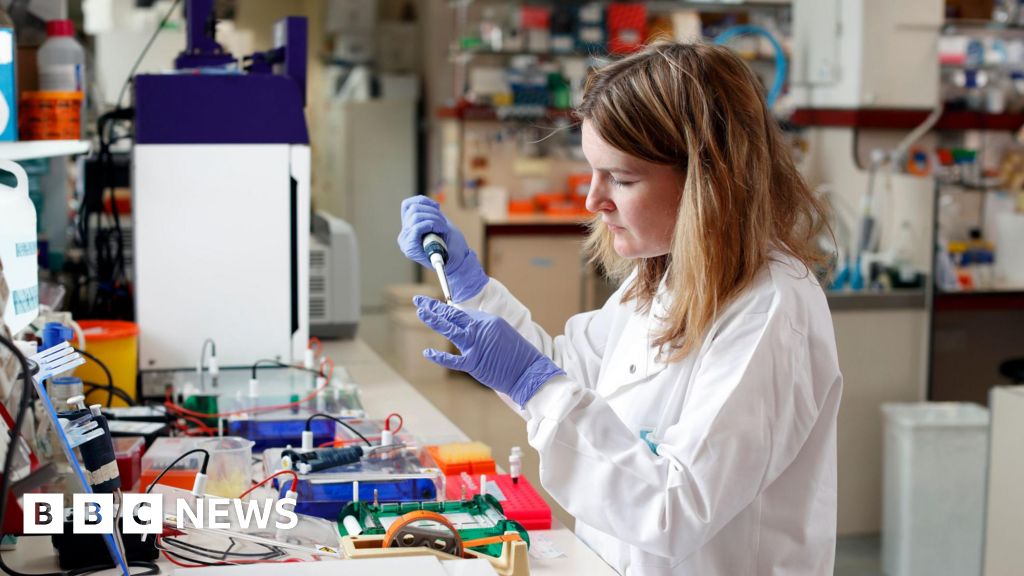
UKRI, established in 2018, serves as the central coordinating body for the UK’s diverse research and innovation ecosystem, bringing together nine constituent councils and Innovate UK. Its overarching mission is to ensure that the UK remains at the forefront of global research and innovation, fostering an environment where world-class discoveries translate into economic growth and societal benefit. The sheer scale of its budget underscores its critical role in shaping the nation’s scientific future, making any significant shift in its operational strategy a matter of national importance.
Chapman’s open letter, followed by a subsequent briefing, articulated a future where the current approach to funding may no longer be sustainable. While the precise details of these changes are still being ironed out, he anticipates their full implementation by April 2027. Crucially, he refrained from specifying the new criteria or mechanisms for selecting research projects, leaving many in the dark about what the "focus" will entail. This ambiguity has amplified anxieties, with researchers and institutions grappling with uncertainty about their long-term prospects.
Despite the impending cuts in some areas, Chapman indicated that the overall financial envelope for researchers is projected to increase in the coming years, albeit with a pronounced "more emphasis on commercialisation." This strategic reorientation suggests a governmental push towards research with clearer, more immediate economic returns and tangible market applications. While fostering innovation that drives economic growth is a laudable goal, critics argue that an overemphasis on commercialisation risks sidelining fundamental, "curiosity-driven" research, which has historically been the bedrock of groundbreaking scientific discoveries.
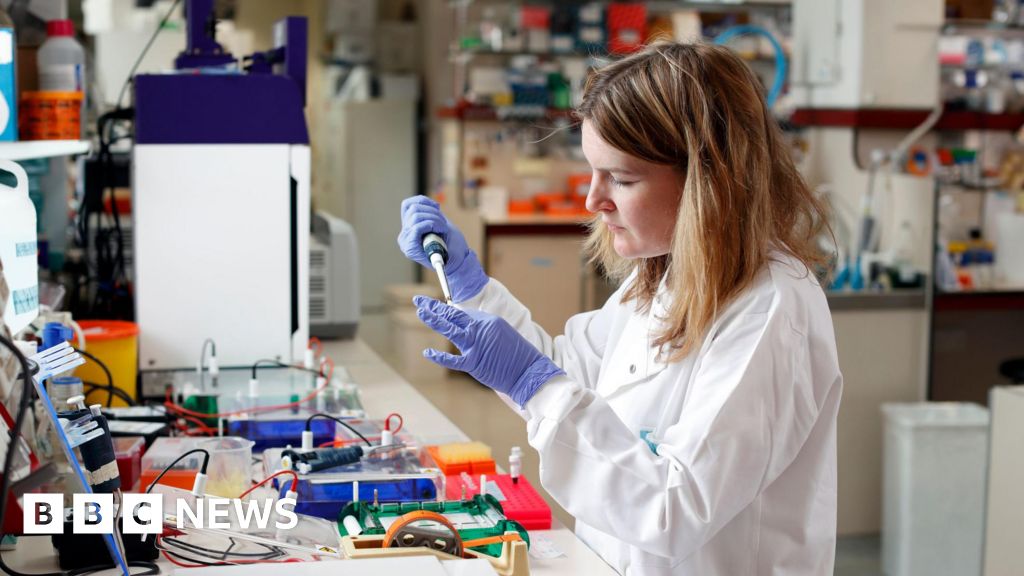
Indeed, funding for "curiosity-driven" research, an area Chapman acknowledged the UK is "really good at," is slated to remain at its current nominal level. In real terms, however, this effectively constitutes a decrease over time due to inflation, posing a significant threat to foundational science. Past triumphs of this type of research in the UK include pioneering work on blood clot detection, the development of plastic-eating enzymes, and critical studies into early childhood learning – all projects that might not have immediate commercial appeal but have profound long-term societal benefits or lay the groundwork for future applied innovations. As Chapman pragmatically put it, "When you make choices some will miss out, but if you don’t make choices everybody loses out," a statement that underscores the difficult balancing act UKRI is now forced to perform.
The implications of these "hard decisions" are already manifesting across UKRI’s constituent bodies. The Science and Technology Facilities Council (STFC), one of the eight research councils under UKRI, which is responsible for safeguarding the UK’s leading position in fields such as astronomy, computational science, and nuclear physics, has been particularly hard hit. The STFC is tasked with finding a substantial £162 million in savings. Its remit includes crucial international commitments, such as the UK’s membership contributions to the European Organisation for Nuclear Research (CERN) in Switzerland and the European Space Agency (ESA), as well as supporting and operating some of the world’s most powerful telescopes and scientific facilities.
Michele Dougherty, the executive chair of the STFC, candidly admitted that "The STFC was extremely ambitious in what it wanted to do and the funding isn’t there." While she reassured that there are no immediate plans to withdraw from existing international commitments, the future of new projects remains precarious. Dougherty suggested that any new endeavours in the next few years would likely come "at the expense of something it is currently supporting," implying a difficult trade-off that could see ongoing, valuable research discontinued or scaled back significantly. This scenario raises concerns about the continuity of scientific endeavour and the potential for losing momentum in critical areas where the UK has established global leadership.
The impact extends beyond STFC, with other UKRI councils also reportedly pausing grants for new research initiatives. This widespread halt in new funding applications creates a chilling effect across the academic and scientific landscape. Professor Chris Lintott, an astrophysicist at Oxford University, articulated the sentiment of many in the community: "The UK punches above its weight in scientific impact and in space-related industry. This should be a national success story but instead we are facing the possibility of unsettling and destabilising threats to funding for cutting edge science." The concern is that the UK’s reputation as a global scientific powerhouse, built over decades of consistent investment in fundamental research and international collaboration, could be jeopardised by these funding constraints.
The reorganisation also casts a long shadow over Innovate UK, the branch of UKRI specifically designed to support small and medium-sized businesses (SMEs) through grants and expert advice, helping them translate research into viable commercial products and services. Reports indicate that local business advisors within Innovate UK have faced layoffs, and those remaining have been instructed to cease taking on new "clients" – science and technology businesses seeking vital funding and guidance. This move appears paradoxical given the stated shift towards "commercialisation."
Chapman acknowledged this strategic recalibration for Innovate UK, stating, "In the past we have supported thousands of start-ups with small amounts of money. We are now seeking to support fewer companies." Again, the lack of clarity on how these selected companies will be chosen adds to the apprehension. The inherent difficulty in identifying future commercial successes is well-documented; approximately 75% of businesses receiving private venture capital funding ultimately fail. This reality makes the task of public bodies "picking winners" even more fraught with risk, potentially leading to missed opportunities for nascent but promising innovations.
Stephen Tulip, UK manager of the App Association, voiced strong disapproval of the changes at Innovate UK, arguing, "Reducing budgets and staffing for small and medium-sized enterprise (SME) support at Innovate UK is the opposite of what our domestic start-up and entrepreneur community needs." He warned that "Cutting access to expertise and funding for UK SMEs will harm the UK’s growth agenda and force start-ups to look elsewhere for investment and support." This sentiment was echoed by Mike Griffin, founder of a sustainable 3D printing company that benefited from Innovate UK’s support. Griffin emphasized the critical role of early-stage backing for small companies, describing it as "the bridge to market." He cautioned that "If support shifts toward bigger, later-stage winners, many practical, life-changing innovations won’t survive long enough to scale."
The long-term ramifications of these "hard decisions" could be profound. A diminished capacity for curiosity-driven research risks stifling the serendipitous discoveries that often underpin transformative technologies, while a more selective, top-down approach to commercialisation could inadvertently prune the innovative ecosystem, leaving countless promising startups uncultivated. The UK’s ambition to be a "science superpower" could be undermined if its foundational research is eroded and its vibrant SME sector is starved of crucial early-stage support. The scientific community faces a period of intense uncertainty and strategic realignment, with the future trajectory of British innovation hanging in the balance as UKRI navigates these complex and challenging waters.




 George Anjay
 Ramos Leo
 Nakalama John