Nana Banana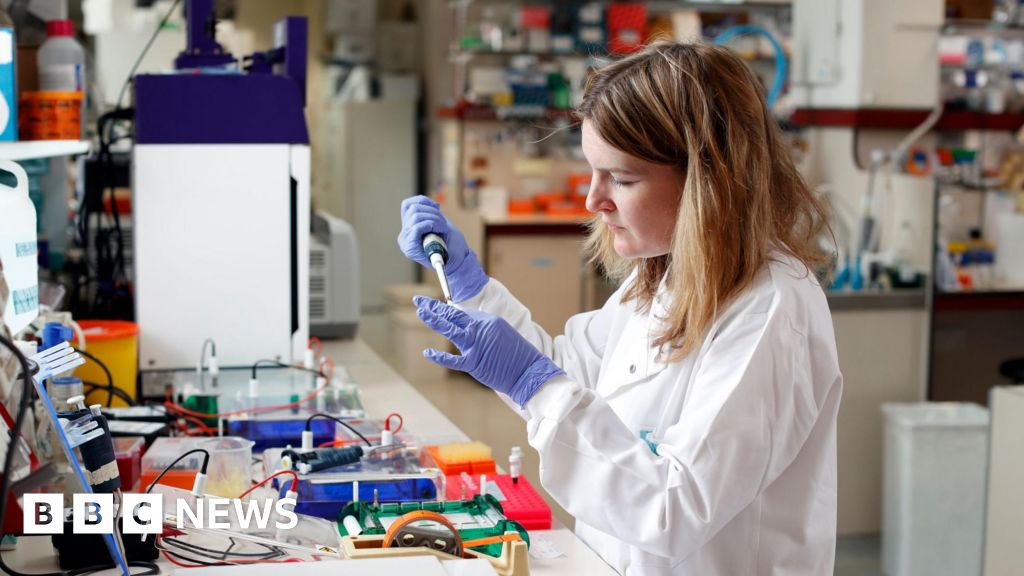
This strategic pivot represents a significant overhaul in how public money is prioritised and distributed for scientific endeavours across the United Kingdom. While the precise details of these changes are still being ironed out, Chapman indicated that the full implementation is anticipated by April 2027, leaving a period of considerable uncertainty for researchers and institutions. During a subsequent briefing, Chapman refrained from elaborating on the specific criteria that will guide the selection of future research projects. However, he did confirm that the overall funding available to researchers is slated to increase, albeit with a pronounced "more emphasis on commercialisation." This shift prioritises research with clear, immediate economic or societal applications, moving away from a broader, more exploratory approach.
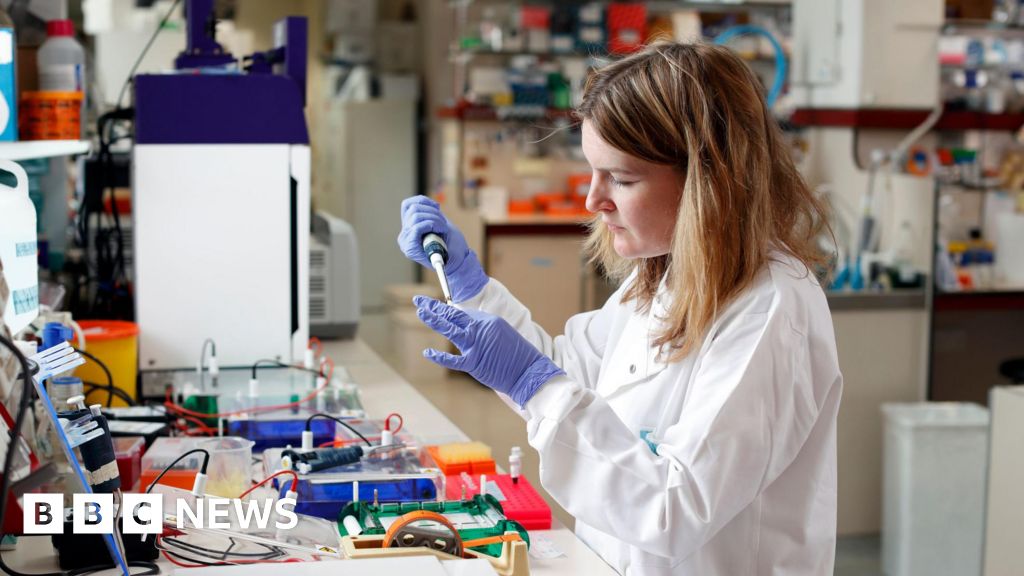
Crucially, funding for "curiosity-driven" research, a domain Chapman himself lauded as one in which the UK "is really good at," is set to remain at its current nominal level. In an inflationary environment, maintaining a fixed budget effectively translates to a decrease in real terms over time, diminishing its purchasing power and capacity to support new investigations. This category of fundamental research, which has historically led to breakthroughs such as advanced blood clot detection techniques, the discovery of plastic-eating enzymes, and deeper insights into infant learning processes, forms the bedrock of future innovation. Chapman defended the difficult choices, stating, "When you make choices some will miss out, but if you don’t make choices everybody loses out." This sentiment, while understandable from a budgetary perspective, has resonated with significant concern among academics and scientists who fear the long-term repercussions of deprioritising foundational science.
The research community’s discontent stems from a worry that narrowing the focus to immediately commercialisable projects could stifle serendipitous discoveries and limit the nation’s capacity for groundbreaking, long-term innovation. Curiosity-driven research, by its very nature, explores the unknown without predefined commercial outcomes, often laying the groundwork for technologies and industries that emerge decades later. Examples abound, from the discovery of penicillin to the development of the World Wide Web, all born from initial inquiries driven by pure scientific curiosity. Reducing investment in this area, even in real terms, risks creating a "knowledge gap" that could hinder the UK’s global scientific standing and future economic competitiveness.
UKRI operates through a network of eight distinct research councils, each dedicated to specific scientific disciplines, including medicine, biotechnology, environmental science, and physical sciences. One such council, the Science and Technologies Facilities Council (STFC), plays a critical role in supporting research into astronomy, computational science, and nuclear physics. The STFC is responsible for the UK’s significant financial contributions to prestigious international collaborations, including its membership in the Switzerland-based European Organization for Nuclear Research (CERN) and the European Space Agency (ESA). It also underpins the operation of some of the world’s most advanced telescopes and scientific facilities. The STFC has been specifically instructed to identify and implement £162 million in savings, a substantial sum that raises serious questions about its future capacity.
Michele Dougherty, the executive chair of the STFC, candidly admitted that the council had been "extremely ambitious in what it wanted to do and the funding isn’t there." While she reassured the public that there are no immediate plans to withdraw from existing international commitments, the prospect of such significant savings without cutting ties implies substantial reductions elsewhere. This could mean delaying essential upgrades to existing infrastructure, scaling back operational support for vital research facilities, or severely curtailing investment in entirely new projects. Dougherty acknowledged that it was too early to definitively state whether the council would fund any new projects in the coming years, but strongly suggested that any new initiatives would likely come "at the expense of something it is currently supporting." This zero-sum game approach highlights the severity of the financial pressures.
The implications for fields like astrophysics and space-related industry are particularly acute. Professor Chris Lintott of Oxford University, a leading astrophysicist, underscored the UK’s strong track record, stating, "The UK punches above its weight in scientific impact and in space-related industry." He lamented that what "should be a national success story" is now facing "the possibility of unsettling and destabilising threats to funding for cutting edge science." The fear is that a reduction in funding for new projects could lead to a brain drain, as talented researchers seek opportunities in countries with more stable and ambitious research environments. It could also diminish the UK’s influence in global scientific collaborations and its capacity to contribute to major international discoveries. Other research councils within UKRI have also reportedly paused grants for new research, indicating a systemic shift rather than an isolated incident.
Beyond fundamental research, the changes are also profoundly impacting Innovate UK, a crucial arm of UKRI dedicated to supporting small and medium-sized businesses (SMEs) with vital grants and expert advice. The BBC understands that a number of local business advisors at Innovate UK have been laid off, and those remaining have received instructions not to take on any new "clients"—science and technology businesses seeking critical funding and guidance. This move is a direct consequence of the new directive to "focus and do fewer things better." Chapman explained the rationale: "In the past we have supported thousands of start-ups with small amounts of money. We are now seeking to support fewer companies." While he did not detail the selection process for these chosen few, he indicated that they would receive more intensive support.
This change in strategy for Innovate UK has drawn sharp criticism from industry experts and business advocates. In the commercial sector, the reality is that a significant proportion, often around 75%, of businesses receiving private funding from venture capitalists ultimately fail. Identifying the few that will succeed in their early stages is notoriously difficult, even for experienced investors. Stephen Tulip, the UK manager of the App Association, voiced his profound concern: "Reducing budgets and staffing for small and medium-sized enterprise (SME) support at Innovate UK is the opposite of what our domestic start-up and entrepreneur community needs." He argued that "cutting access to expertise and funding for UK SMEs will harm the UK’s growth agenda and force start-ups to look elsewhere for investment and support."
Mike Griffin, who successfully founded a sustainable 3D printing company with early assistance from Innovate UK, echoed these sentiments, highlighting the critical role of initial backing. "For small companies, early-stage backing is the bridge to market," Griffin stated. He warned that if "support shifts toward bigger, later-stage winners, many practical, life-changing innovations won’t survive long enough to scale." This points to the "valley of death" phenomenon in innovation, where promising early-stage ideas often fail due to a lack of funding and support before they can attract larger-scale investment. By focusing on fewer, more established companies, Innovate UK risks overlooking and inadvertently stifling the very start-ups that could become the next generation of successful, high-growth businesses.
The long-term implications of these "hard decisions" are significant. The UK has consistently prided itself on being a global leader in scientific research and innovation. This strategic shift, driven by a government mandate to prioritise commercialisation and streamline funding, risks undermining the diverse ecosystem that has fostered such success. While efficiency and a focus on tangible returns are understandable objectives, the potential for unintended consequences – a decline in foundational research, a weakening of international collaborations, a hampered start-up ecosystem, and a potential brain drain – looms large. The coming years, leading up to the full implementation in April 2027, will be critical in determining whether these strategic adjustments will truly lead to a stronger, more focused UK research landscape, or if they will inadvertently diminish the very strengths they aim to enhance. The stakes are exceptionally high for the UK’s scientific future and its economic prosperity.




 George Anjay
 Ramos Leo
 Nakalama John