George Anjay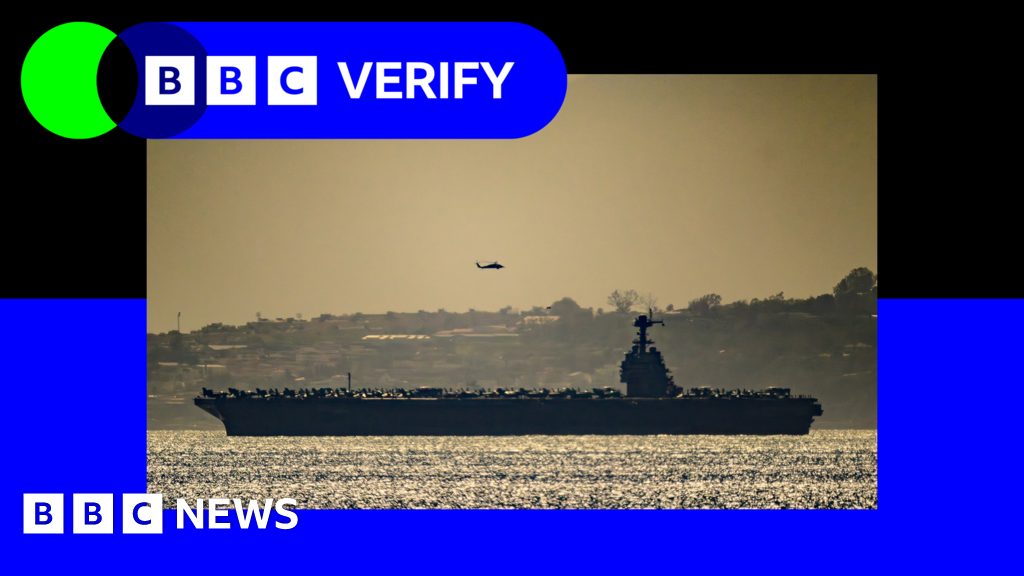
By Richard Irvine-Brown and Alex Murray
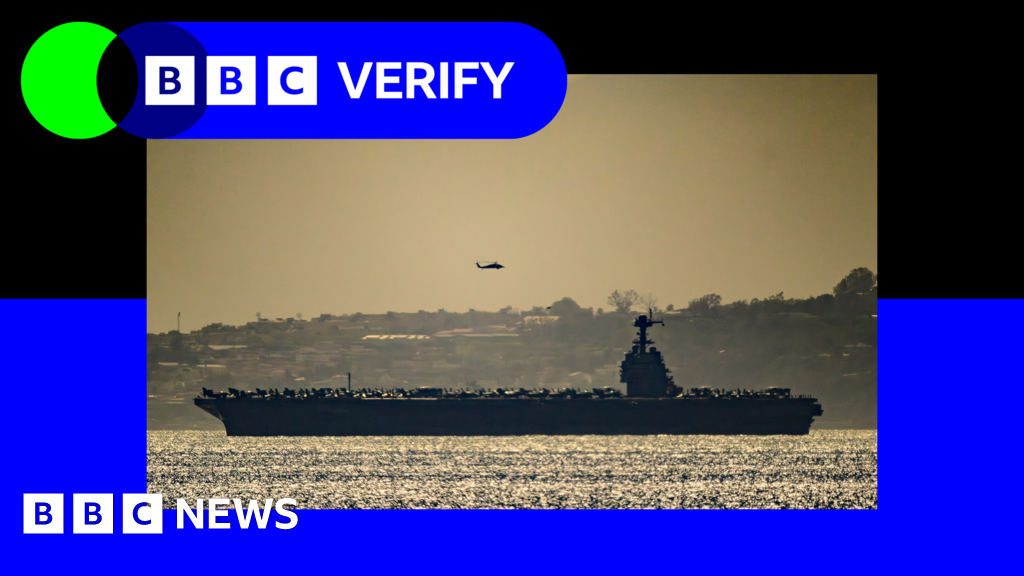
Gibraltar – BBC Verify has confirmed the presence of the USS Gerald R. Ford aircraft carrier, a powerful symbol of American naval might, as it transited the Strait of Gibraltar towards the Mediterranean Sea on Friday. Verified photographs, captured from land in Gibraltar, clearly depict the colossal warship navigating the strait with the distant Moroccan mountain range serving as a dramatic backdrop. This significant movement underscores a broader pattern of American military reinforcement in the region, raising geopolitical tensions and fueling speculation about potential US-Iran relations.
Ship-tracking data further corroborated the presence of the USS Mahan, one of the formidable destroyers integral to the Ford’s strike group, as it also passed through the Strait of Gibraltar. The Gerald R. Ford had previously broadcast its location briefly off Morocco’s Atlantic coast on Wednesday, indicating a deliberate westward trajectory. It is widely believed that the carrier is en route to the Middle East, a region where another prominent US aircraft carrier, the USS Abraham Lincoln, was tracked earlier this week. This coordinated deployment of two of the US Navy’s eleven aircraft carriers represents a substantial escalation in American military posture.
The naval build-up occurs against a backdrop of ongoing diplomatic efforts. US and Iranian officials convened for a second round of talks in Switzerland earlier this week, with reports suggesting that some progress had been made. However, the situation remains precarious. President Donald Trump stated on Thursday that the world would likely know within the next ten days whether the United States would reach a deal with Iran or resort to military action, highlighting the critical juncture in US-Iran relations.
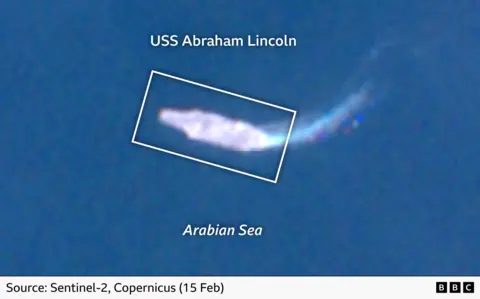
BBC Verify’s independent analysis has been instrumental in tracking these developments. On Monday, the Abraham Lincoln was definitively identified in satellite imagery captured on Saturday. The images placed the carrier in the Arabian Sea, approximately 700 kilometers (430 miles) from Iran’s coastline. This positioning adds to the growing evidence of a significant US military buildup in the Middle East over the past few weeks. BBC Verify has meticulously tracked an increase in the presence of destroyers, combat ships, and fighter jets operating in and around the region.
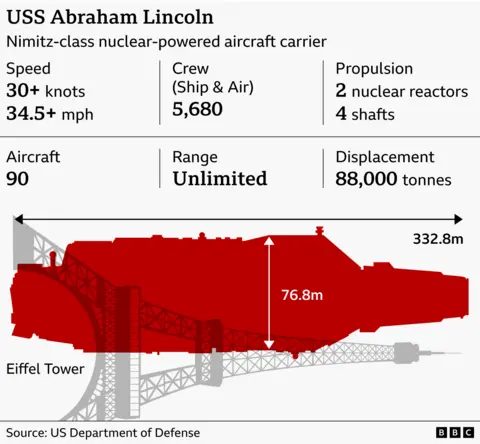
Both the Gerald R. Ford and the Abraham Lincoln are flagships of powerful strike groups, each comprising several guided missile destroyers. These colossal vessels are crewed by over 5,600 personnel and serve as mobile airbases, carrying dozens of advanced aircraft. The sheer scale of these deployments signifies a considerable projection of American power.
What Military Assets Has the US Moved into the Middle East?
The USS Gerald R. Ford activated its ship-tracking automatic identification system (AIS) for the first time this year at 12:30 GMT on Wednesday. The carrier transmitted its location, visible on the ship-tracking website MarineTraffic, until 13:18 GMT, confirming its westward movement towards the Mediterranean. Intriguingly, a transport aircraft attached to the carrier, which had landed in Spain on the same day, was tracked on Thursday at approximately 13:00 GMT, heading towards the general vicinity where the aircraft carrier had been spotted.
This development followed the earlier identification of the Abraham Lincoln in the Arabian Sea. Publicly available satellite imagery, captured by the European Sentinel-2 satellites on Saturday, placed the carrier approximately 240 kilometers (150 miles) off the coast of Oman. The Abraham Lincoln had not been visually confirmed since reportedly entering the region in January, though its movements had been across vast stretches of open sea where satellite coverage is inherently limited. Military assets positioned on land, however, are far more visible and are frequently captured by satellite imagery.
BBC Verify has now tracked a total of twelve US ships operating in the Middle East. The Abraham Lincoln, a nuclear-powered Nimitz-class carrier, forms the core of a carrier strike group that includes three Arleigh Burke-class destroyers. Additionally, two other destroyers, capable of launching long-range missile strikes, and three specialist ships designed for littoral combat operations are currently stationed at the Khalifa Bin Salman Port in Bahrain, situated within the Persian Gulf. Two further destroyers have been observed in the eastern Mediterranean, operating in proximity to the US base at Souda Bay, and another destroyer is positioned in the Red Sea.
Beyond naval deployments, BBC Verify has also been monitoring the significant movement of US aircraft to various airbases across both Europe and the Middle East. These deployments include:
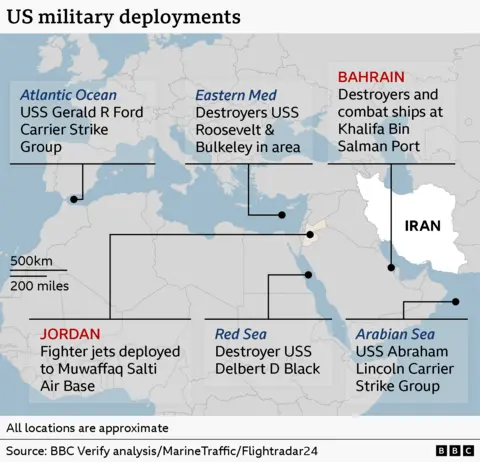
- Jordan: Fighter jets have been deployed to Muwaffaq Salti Air Base.
- Bahrain: Destroyers and combat ships are present at Khalifa Bin Salman Port.
- Eastern Mediterranean: Destroyers USS Roosevelt and USS Bulkeley are operating in the area.
- Red Sea: The destroyer USS Delbert D. Black is stationed here.
- Arabian Sea: The USS Abraham Lincoln carrier strike group is active in this region.
- Atlantic Ocean: The USS Gerald R. Ford carrier strike group has been tracked transiting towards the Mediterranean.
How Has Iran Responded?
In direct response to the escalating US military presence, Iran has conducted its own displays of force, signaling its readiness to counter any perceived threats. On Monday, the Islamic Revolutionary Guard Corps (IRGC) launched a maritime drill in the strategic Strait of Hormuz, a vital chokepoint situated in the Persian Gulf between Iran and Oman. Reports from the IRGC-linked Tasnim News Agency indicated that IRGC Commander-in-Chief Major General Mohammad Pakpour inspected naval vessels at a harbor before observing missile launches from a ship.
The Strait of Hormuz is recognized as one of the world’s most critical shipping routes and a vital artery for global oil transit. Approximately one-fifth of the world’s oil and gas supply passes through this narrow waterway, including exports from Iran’s main oil terminal, Kharg Island. During the report on Iran’s latest military maneuvers, Major General Pakpour was seen surveying Kharg Island from a helicopter.
Further demonstrating its military capabilities and regional cooperation, footage broadcast by Iranian state television on Thursday showcased planned naval drills in the Gulf of Oman conducted in conjunction with Russia. These exercises included a simulated ship rescue operation. The Fars news agency, affiliated with the IRGC, reported that operational units from both Iran’s regular army navy and the IRGC navy participated in these joint maneuvers.
How Does it Compare with Venezuela and Operation Midnight Hammer?
Military intelligence expert Justin Crump has provided an analytical perspective on the current US military preparations, stating that the current deployments in the Middle East exhibit "more depth and sustainability" compared to previous maneuvers. These include preparations preceding the seizure of former Venezuelan President Nicolás Maduro in January and the operation that carried out air strikes on Iran’s nuclear facilities in June of last year.
While all these scenarios involved a carrier strike group and multiple destroyers operating independently, the circumstances surrounding the US deployments in Venezuela and Iran last year were distinct. The US deployed the Gerald R. Ford to the Caribbean ahead of its strikes on Venezuela. At that time, eight warships were tracked in the region. However, fewer aircraft were utilized as jets could be readily dispatched from surrounding US bases on the mainland or from its base in Puerto Rico. Additionally, the US deployed amphibious assault ships within the Caribbean, which served as effective launch platforms for helicopter operations, as was demonstrated during Maduro’s capture. Venezuela’s military, at the time, was generally perceived as less capable of mounting a significant defense or retaliation against the US.
In contrast, when the US struck Iran last year in Operation Midnight Hammer, targeting its nuclear facilities, it was confronting a nation with a considerably more formidable military. Iran’s military possesses the capability to strike US bases across the Middle East. The current build-up in the region bears a striking resemblance to the force posture observed during Operation Midnight Hammer. At that time, the US had two aircraft carrier strike groups in the region, five destroyers positioned in the Mediterranean and Red Seas, and three combat ships in the Persian Gulf. Furthermore, squadrons of fighter jets and refueling aircraft were moved from the US to Europe. Notably, the B2 stealth bombers that executed strikes on Iran’s Fordow, Isfahan, and Natanz nuclear sites actually took off from US bases in Missouri.
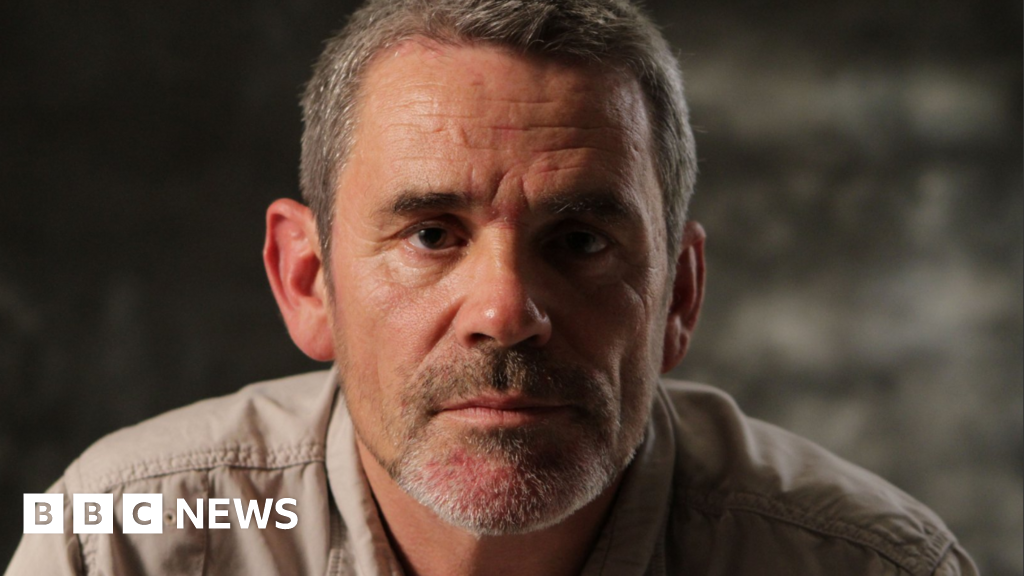
Crump, who also serves as the chief executive of the risk and intelligence company Sibylline, asserted that the current concentration of US warships and aircraft, coupled with the presence of eight existing airbases in the region, would enable the US to conduct a "fairly intensive and sustained strike rate" of approximately 800 sorties per day. The objective of such a deployment would be to render any Iranian responses "ineffective." He further elaborated, "What we are seeing isn’t just strike preparation, but rather a broader deterrent deployment capable of being scaled up or down. This means it has more depth and sustainability than the force packages arranged for either Venezuela or Midnight Hammer last year. It’s designed to sustain an engagement and counter all potential responses against US assets in the region and, of course, Israel."
Additional reporting by Barbara Metzler, Ghoncheh Habibiazad, Thomas Copeland, Yi Ma.



 atisusanti
 Nakalama John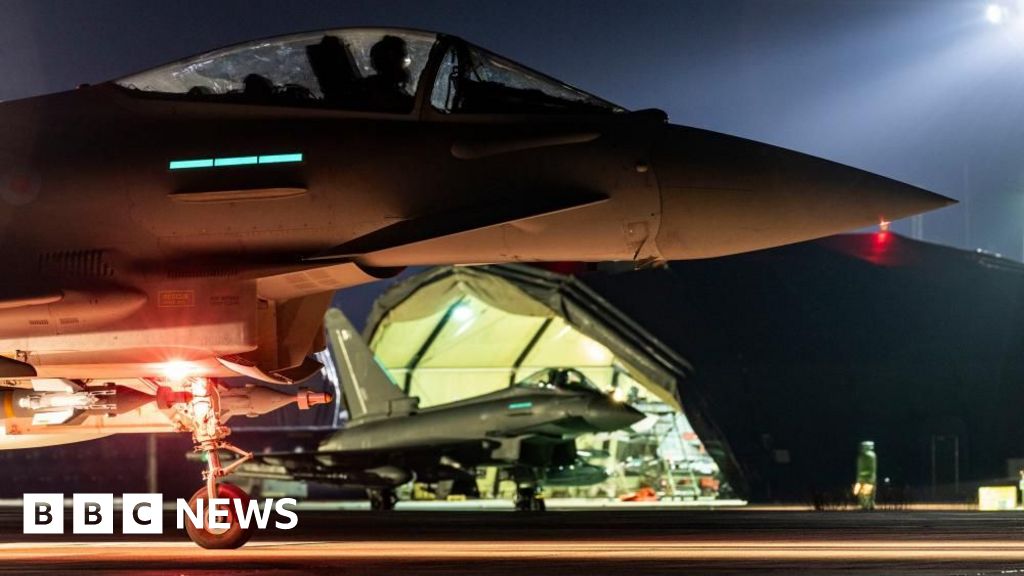
 Ramos Leo
 Roy Suryo