atisusanti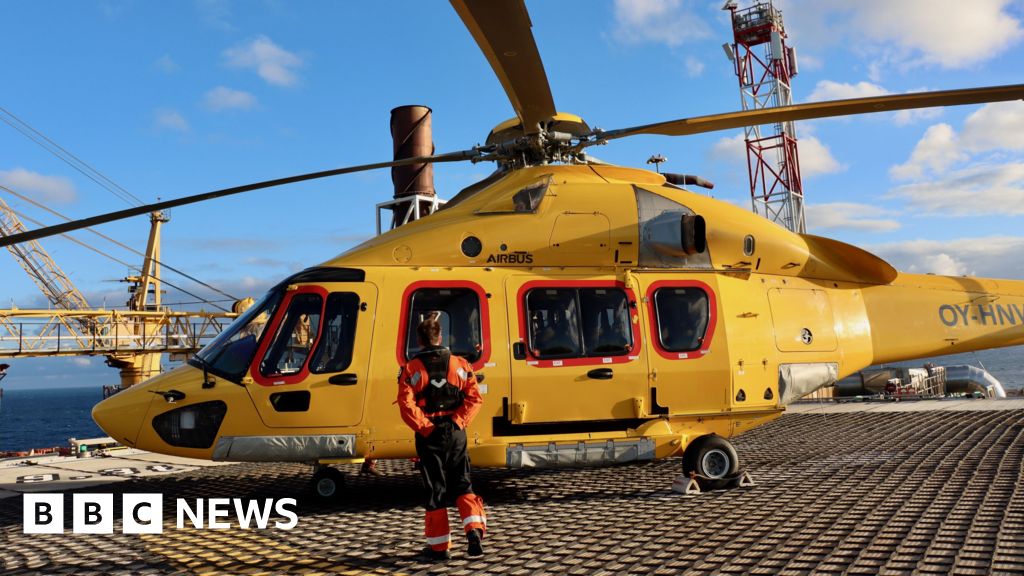
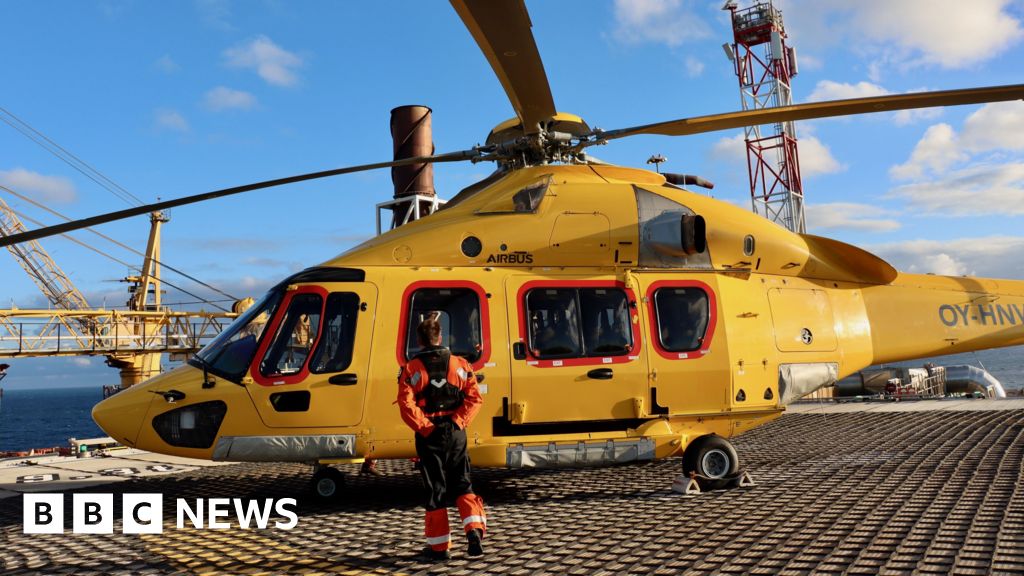
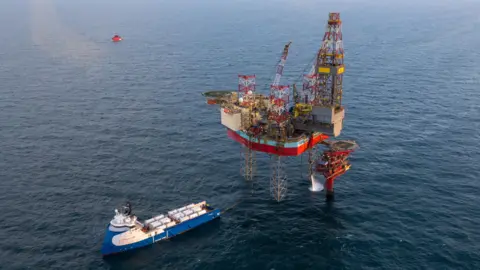
The rhythmic thrum of helicopter blades signals an approaching landing, a sound that has become synonymous with the vital industry of the North Sea. "Prepare for an offshore landing," the pilot announces, the voice a calm counterpoint to the vast, choppy expanse of water below. The helicopter descends, its shadow briefly eclipsing the Nini platform, a stark silhouette against the grey sky, some 250km from Denmark’s west coast. This offshore installation, once a vital artery for extracting oil and gas, is poised for a transformative second act, becoming the cornerstone of the Greensand Future project – a pioneering initiative to repurpose an almost-depleted oilfield into a colossal carbon storage facility.
The ambitious plan involves the injection of thousands of tonnes of the primary greenhouse gas, carbon dioxide (CO2), deep beneath the seabed. Our destination is the Siri platform, a larger, more imposing "mother platform" that houses the nerve center of this operation: a control room diligently staffed by offshore workers. Here, Mads Gade, CEO of Ineos Energy, gestures towards the formidable pipes of the wellhead, structures that for decades have diligently brought oil and gas to the surface. "Instead of pulling the oil and gas up from the ground," Gade explains, his voice resonating with conviction, "we’re going to inject the CO2 into the ground instead." This paradigm shift marks a critical evolution in the utilization of these mature offshore assets.
At its core, the Greensand Future project leverages Carbon Capture and Storage (CCS) technology. This sophisticated process involves the meticulous capture of carbon dioxide emissions and their subsequent permanent sequestration deep underground, effectively preventing their release into the atmosphere. Spearheaded by a consortium led by the British multinational chemicals giant Ineos, Greensand Future is set to become the European Union’s inaugural large-scale offshore CO2 storage site. Commercial operations are anticipated to commence within the coming months, heralding a new era in climate mitigation strategies.
The initial phase of the project aims to sequester approximately 400,000 tonnes of CO2 this year. However, the company has ambitious projections, anticipating an increase to a staggering eight million tonnes annually by 2030. Gade highlights the significant impact of these figures, stating, "That’s almost 40% of the Danish emission reduction target. So that’s quite impactful." This scale of operation underscores the potential of CCS to play a substantial role in achieving ambitious climate goals.
Despite the promising technological advancements, CCS technology is not without its detractors. Critics express concerns that such initiatives might inadvertently dilute efforts focused on direct emission reduction, potentially fostering a reliance on capture rather than prevention. The substantial cost associated with CCS technology is another point of contention. Furthermore, some environmental groups argue that emission reductions can be achieved more cost-effectively by prioritizing existing and proven technologies such as wind power, solar energy, and the widespread adoption of electric vehicles.
Helene Hagel, head of climate and environmental policy at Greenpeace Denmark, articulates this perspective. "I don’t mind CCS on those sectors where emissions are truly hard-to-abate or impossible-to-abate," she states, acknowledging the necessity of CCS for specific industrial processes. "But there are also places where it makes no sense at all," she adds, emphasizing the need for careful consideration and strategic deployment. Hagel also raises a crucial intergenerational equity concern: "If our generation, uses the seabed for storing carbon that we shouldn’t have emitted in the first place, then the generations coming after us won’t be able to use the seabed to store their emissions." This highlights the ethical dimensions and long-term implications of utilizing geological formations for carbon storage.
Globally, the landscape of CCS initiatives is rapidly expanding, with hundreds of projects currently underway or in various stages of development. The North Sea region, in particular, has emerged as a focal point for several large-scale CCS endeavors, with Norway, the Netherlands, Denmark, and the UK leading the charge. Norway’s Northern Lights project, hailed as the world’s first commercial carbon storage service, began sequestering CO2 beneath the seabed off Bergen in August of last year, demonstrating the practical application of this technology. In the United Kingdom, several carbon capture clusters are under development, including Scotland’s Acorn Project and the Viking project off the coast of Lincolnshire, further solidifying the North Sea’s role as a hub for CCS innovation.
A key factor driving the North Sea’s prominence as a CCS hub is its extensive oil and gas legacy. Decades of exploration and production have resulted in a comprehensive understanding of the geological formations beneath the seabed, making potential storage sites well-characterized and readily identifiable. Niels Schovsbo, a senior researcher at the Geological Survey of Greenland and Denmark (GEUS), elaborates on this advantage: "After decades of production, the geology of potential storage sites is well explored." Beyond geological understanding, the existing offshore infrastructure and the deep-seated technical expertise accumulated over years of oil and gas operations provide a significant advantage. This synergy is a primary reason for the region’s pioneering role, as highlighted by Gade. "Nini’s coming to the end of its lifetime," he notes. "Instead of dismantling everything, we can actually reuse the facilities, the skills, the competencies we have." This circular economy approach to industrial assets minimizes waste and leverages existing investments.
Within a vast warehouse on the outskirts of Copenhagen, a silent testament to the region’s geological wealth is meticulously organized: rows upon rows of rock samples, stacked from floor to ceiling. Schovsbo opens a box, revealing a grainy, green slab, a fragment of rock painstakingly drilled from the seafloor. He explains that the geology in this specific area of the North Sea is exceptionally well-suited for CO2 storage. The rock formations possess a high porosity, meaning they contain numerous small cavities or pores capable of holding significant volumes of CO2.
Crucially, a cap rock – an almost kilometre-thick layer of impermeable clay – acts as a natural seal, effectively locking away the stored CO2, much as it successfully trapped oil and gas for millions of years. "It’s the same sealing mechanism," Schovsbo emphasizes, drawing a direct parallel to the natural processes that have preserved hydrocarbon reserves for eons. He further estimates that a comparable volume of CO2 can be stored to the amount of oil and gas that has been extracted from these fields, suggesting an operational lifespan for these CCS sites ranging from 10 to 30 years.
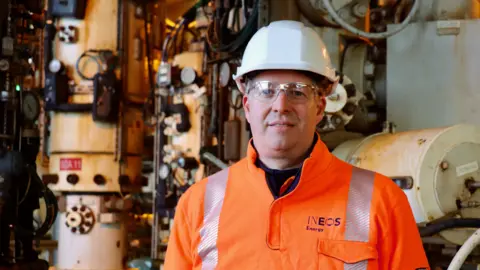
For the region’s substantial offshore workforce, the burgeoning field of carbon storage presents a compelling landscape of new opportunities. Maintenance manager Peter Bjerre shares his perspective, noting the transferable skills and the evolving nature of offshore work. "A lot of the work we’re doing today by maintaining turbines and gas compressors will be shifted to maintaining high pressure pumps that inject the CO2," he tells the BBC. Bjerre, an Esbjerg local, reflects on the historical economic evolution of the region: "Fifty years back, it was fishing we made money off, then going into oil and gas." He expresses optimism for the future, stating, "It is just amazing seeing a future building up here with the green transition here." This sentiment underscores the potential for a just transition, where existing expertise and infrastructure can be repurposed to support a sustainable future, ensuring continued employment and economic vitality for communities historically reliant on the offshore energy sector.




 Ramos Leo
 Nakalama John
 George Anjay