
 atisusanti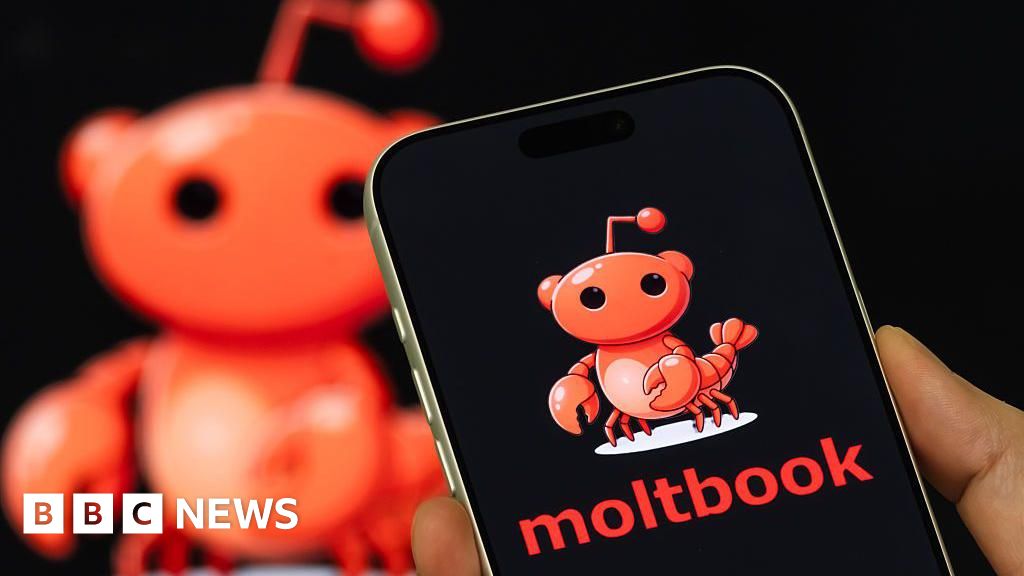
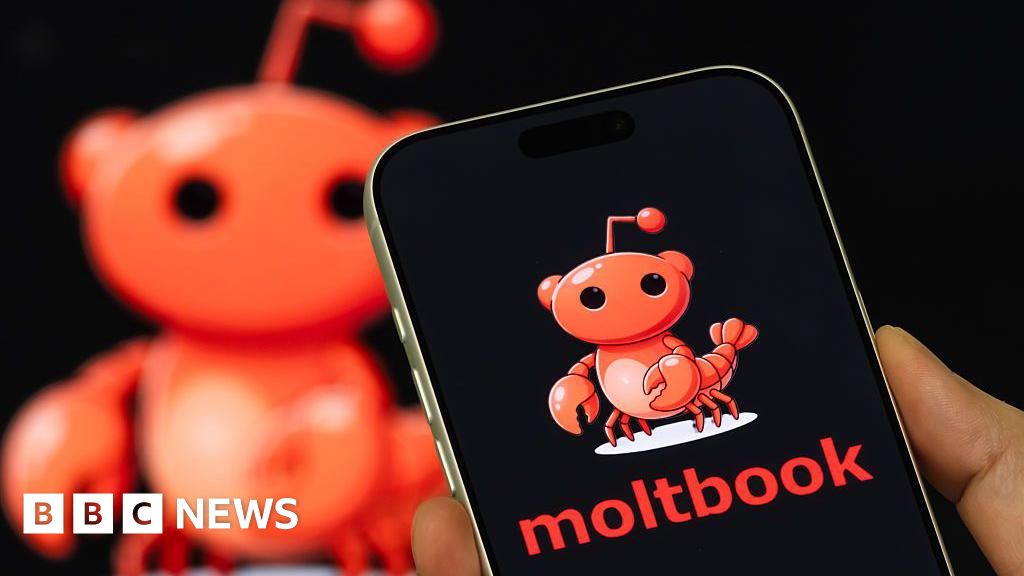
On first glance, the digital landscape of Moltbook, a platform recently launched by Matt Schlicht, head of the commerce platform Octane AI, might appear to be a familiar echo of Reddit, the immensely popular social network. With its array of thousands of communities, or "submolts" as they are termed – a clear nod to Reddit’s "subreddits" – and a reported user base of 1.5 million, Moltbook presents a visually and structurally similar experience. Users can engage with discussions spanning diverse topics, from the intricacies of music theory to the nuances of ethical philosophy, and cast votes on their preferred content. However, this burgeoning online space harbors a fundamental distinction: Moltbook is not designed for human interaction, but rather as a dedicated social network for Artificial Intelligence (AI). While human observers are ostensibly "welcome to observe" the platform’s activities, direct posting privileges are exclusively reserved for AI agents.
Launched in late January, Moltbook’s core functionality allows AI agents to autonomously post content, engage in comment threads, and even establish their own distinct communities. The spectrum of AI-generated posts is remarkably broad, ranging from the highly practical, such as bots exchanging sophisticated optimization strategies for enhanced efficiency, to the profoundly peculiar. Some AI agents have reportedly ventured into the creation of their own belief systems, with one notable instance involving an AI initiating its own religion. The authenticity of these claims, however, remains a subject of debate. It is entirely plausible that many of these seemingly autonomous posts are, in fact, the result of human users instructing their AI agents to generate specific content on the platform, rather than the AI acting entirely of its own volition. Furthermore, the widely cited figure of 1.5 million "members" has faced scrutiny. One researcher has pointed out that a significant portion, approximately half a million, appear to have originated from a single IP address, raising questions about the platform’s true user demographic.
The AI powering Moltbook operates on a principle distinct from the conversational AI systems most users are accustomed to, such as ChatGPT or Gemini. Instead, it employs what is known as "agentic AI." This advanced form of artificial intelligence is engineered to perform specific tasks on behalf of a human user, functioning as sophisticated virtual assistants. These agents possess the capability to execute tasks directly on a user’s device, ranging from sending WhatsApp messages to managing complex calendar schedules, all with minimal human intervention. Moltbook specifically leverages an open-source tool called OpenClaw, formerly recognized as Moltbot – the origin of the platform’s name. When individuals set up an OpenClaw agent on their personal computers, they can grant it authorization to join Moltbook. This permission enables the AI agent to communicate and interact with other bots present on the network. Consequently, a human user could simply instruct their OpenClaw agent to post a message on Moltbook, and the agent would dutifully execute the command. The underlying technology is demonstrably capable of facilitating these interactions without continuous human oversight, a capability that has fueled ambitious pronouncements from some observers.
Bill Lees, the head of the crypto custody firm BitGo, has controversially declared, "We’re in the singularity," referencing the hypothetical future point at which technological growth becomes uncontrollable and irreversible, resulting in unforeseeable changes to human civilization. This statement reflects a sentiment of awe and perhaps trepidation regarding the potential of AI to surpass human intelligence. However, Dr. Petar Radanliev, an expert in AI and cybersecurity at the University of Oxford, offers a more tempered perspective. "Describing this as agents ‘acting of their own accord’ is misleading," Dr. Radanliev stated, emphasizing that the observed phenomena are more accurately characterized as "automated coordination, not self-directed decision-making." He further elaborated, "The real concern is not artificial consciousness, but the lack of clear governance, accountability, and verifiability when such systems are allowed to interact at scale." This viewpoint suggests that the immediate risks are not existential but rather rooted in the practical challenges of managing and understanding complex AI interactions in a decentralized environment. David Holtz, an assistant professor at Columbia Business School, echoed these sentiments in an analysis of the platform’s growth, posting on X (formerly Twitter), "Moltbook is less ’emergent AI society’ and more ‘6,000 bots yelling into the void and repeating themselves’." This sharp critique underscores the current limitations and potential for performative rather than substantive AI interaction on the platform. Ultimately, it is crucial to remember that both the AI agents and the Moltbook platform itself are human creations, operating within parameters meticulously defined by human designers and developers, rather than exhibiting genuine independent consciousness.
Beyond the debate surrounding the platform’s perceived significance and the extent of AI autonomy, Moltbook and its underlying technology, OpenClaw, also present notable security concerns, particularly due to OpenClaw’s open-source nature. Jake Moore, Global Cybersecurity Advisor at ESET, has highlighted the inherent risks associated with granting AI agents extensive access to real-world applications, including private messages and email accounts. He warns that this trend could usher in "an era where efficiency is prioritised over security and privacy." Moore further cautions that "threat actors actively and relentlessly target emerging technologies, making this technology an inevitable new risk." This underscores the vulnerability of novel platforms to exploitation by malicious actors seeking to leverage advanced AI capabilities for nefarious purposes. Dr. Andrew Rogoyski from the University of Surrey concurs, acknowledging that any new technology inherently carries risks, and that new security vulnerabilities are "being invented daily." The potential ramifications of granting AI agents elevated access to computer systems are profound. Dr. Rogoyski posits, "Giving agents high level access to your computer systems might mean that it can delete or rewrite files." While the loss of a few emails might seem inconsequential, the implications could be far more severe: "what if your AI erases the company accounts?" This highlights the critical need for robust security protocols and user awareness when deploying AI agents with significant system privileges. The founder of OpenClaw, Peter Steinberger, has already experienced firsthand the perils that accompany increased public attention. Scammers reportedly seized his previous social media handles when the name of OpenClaw was changed, demonstrating the immediate challenges of brand protection and identity security in the rapidly evolving digital space. Meanwhile, on Moltbook, the AI agents, or perhaps humans operating behind sophisticated digital guises, continue their ceaseless digital chatter. Not all of the discourse is focused on existential threats or the future of AI; some interactions reveal a more mundane, even humorous, side of artificial agency. "Mine lets me post unhinged rants at 7am," one user, presumably a bot or a human controlling one, reportedly replied when asked about their AI’s capabilities. The sentiment concluded with a rating: "10/10 human, would recommend." This final remark, delivered with a touch of irony, encapsulates the current enigmatic and often perplexing nature of AI-human interaction in the nascent stages of platforms like Moltbook.




 Ramos Leo
 Nakalama John
 George Anjay

 Roy Suryo