George Anjay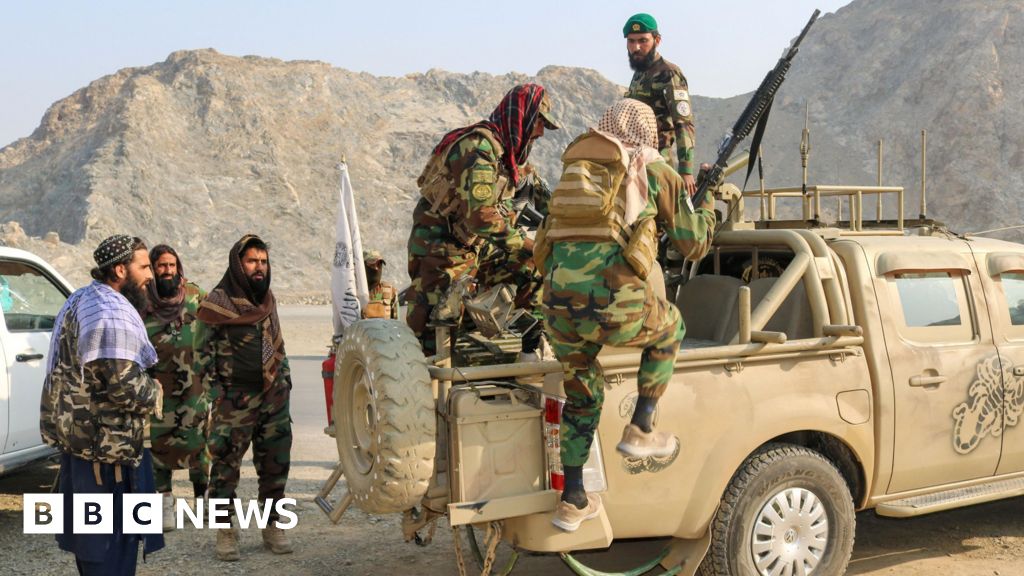
Pakistan launched significant airstrikes on Friday into Afghan territory, targeting areas including the capital Kabul and the provinces of Kandahar and Paktika, following an announcement by the Afghan Taliban of a major offensive against Pakistani military posts near their shared border. This marks the most serious escalation in a series of escalating tensions between the two neighboring nations, which had previously agreed to a ceasefire in October after a week of deadly clashes. The situation remains fluid, with details still emerging and the BBC working to verify casualty reports on both sides.
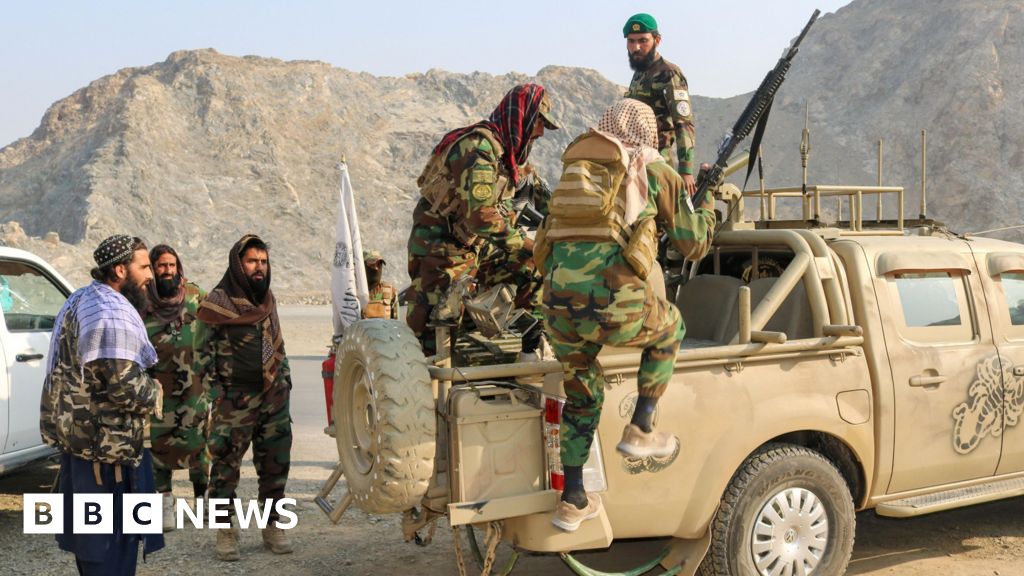
The initial reports of the Afghan Taliban’s offensive began to surface on Thursday, February 26th. According to statements from Taliban officials, the operation commenced at 20:00 local time (15:30 GMT) and extended along the border in the provinces of Nangarhar, Nuristan, Kunar, Khost, Paktia, and Paktika. Pakistan swiftly responded, asserting that the Taliban had "miscalculated and opened unprovoked fire on multiple locations" across the border in its northwestern province of Khyber Pakhtunkhwa. Islamabad claimed its security forces delivered an "immediate and effective response." The retaliatory Pakistani airstrikes in the early hours of Friday morning then targeted key areas within Afghanistan, including Kabul and the aforementioned border provinces.
Further outbreaks of violence were reported by AFP journalists near the crucial Torkham border crossing, a vital transit point situated between Peshawar and Jalalabad. In a now-deleted post on X, the Afghan Taliban spokesman, Zabihullah Mujahid, claimed the group had launched strikes on Pakistani military positions in Kandahar and Helmand provinces early Friday. Sources within the Taliban government also informed the BBC that drone strikes, launched from Afghanistan, had targeted several locations within Pakistan on Friday morning. A Pakistani military officer corroborated these reports, confirming that Afghan Taliban drones had targeted three locations: the army’s artillery school in Nowshehra, an area near a military academy in Abbottabad, and a site near a primary school in Swabi. The officer stated that all these drones were successfully intercepted and destroyed. These reported drone attacks are considered unprecedented, as Taliban fighters are generally believed to rely on commercially available drones equipped with improvised explosives, which typically have limited range and targeting capabilities.
The conflicting narratives from both sides highlight the deep-seated mistrust and animosity. Pakistan’s Prime Minister Shehbaz Sharif declared that his country’s forces had successfully "crushed" their adversaries, while Pakistan’s Defense Minister had previously proclaimed "open war" on the Taliban in Afghanistan. Conversely, a Taliban military spokesperson told the BBC that while the group would "retaliate if we are attacked, but we won’t start clashes at the moment." Chief spokesman Zabihullah Mujahid asserted that the offensive had resulted in the deaths of "numerous" Pakistani soldiers and the capture of others, claims vehemently denied by Pakistani authorities. Mosharraf Zaidi, a spokesperson for Pakistan’s prime minister, provided figures as of 22:50 GMT on Thursday, stating that Pakistani forces had killed 133 Afghan Taliban fighters and wounded over 200. The BBC has not been able to independently verify these casualty figures from either side.
In response to the escalating violence, United Nations officials have called for an immediate de-escalation of the fighting. Iran, which shares borders with both nations, has offered its mediation services. Iranian Foreign Minister Abbas Araqchi emphasized the significance of the current period being Ramadan, "the month of self-restraint and strengthening of solidarity in the Islamic world." China, a nation that maintains friendly relations with both Afghanistan and Pakistan, urged both countries to "remain calm and exercise restraint." The foreign minister of Saudi Arabia, a key ally of Pakistan, met with his Pakistani counterpart to discuss strategies for reducing tensions.
The current airstrikes are the latest development in a prolonged period of hostility between Pakistan and Afghanistan. The previous significant flare-up occurred in October, which was eventually de-escalated through a fragile ceasefire brokered by Turkey and Qatar. Pakistan consistently accuses the Afghan Taliban government of harboring and supporting "anti-Pakistan terrorists," whom Islamabad blames for a series of deadly suicide attacks within Pakistan, including a recent bombing at a mosque in Islamabad. This assertion is strongly contested by the Afghan Taliban government, which maintains that the territory of Afghanistan is not being utilized to threaten the security of other nations. In turn, the Taliban government accuses Pakistan of conducting unprovoked attacks that have resulted in civilian casualties, a claim Pakistan refutes by stating its operations are solely directed at militants.
Analysts suggest that given Pakistan’s nuclear arsenal and superior conventional military capabilities, a direct, conventional war with the Taliban is unlikely. However, the Afghan Taliban possesses extensive experience in guerrilla warfare, a tactic they could employ. Michael Kugelman, a senior fellow for South Asia at the Atlantic Council, highlighted the significant shift in Pakistan’s recent airstrikes. He noted to the BBC’s Newsday programme that these strikes have targeted Taliban government facilities rather than purely militant strongholds, indicating a direct confrontation with the regime itself.
The rhetoric emanating from the Taliban suggests a commitment to "staging relentless attacks" on Pakistan, creating a "precarious situation" that could spiral into open conflict. Qari Muhammad Fasihuddin, the Afghan Taliban’s military chief, issued a video message on Friday, warning that Pakistan could anticipate "an even more decisive response" in the future. This exchange of hostilities and defiant statements underscores the volatile nature of the border region and the ongoing challenges in establishing lasting peace between the two nations. The international community continues to monitor the situation closely, urging for de-escalation and diplomatic solutions to prevent further bloodshed and regional instability.
Additional reporting by the BBC Afghan and Urdu teams contributed to this report.


 atisusanti
 Nakalama John