
 George Anjay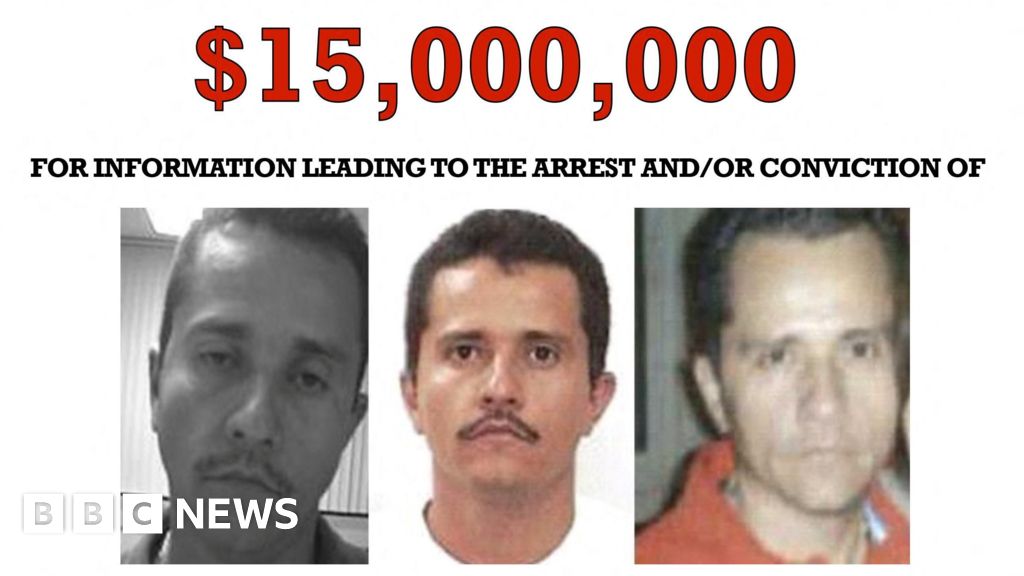
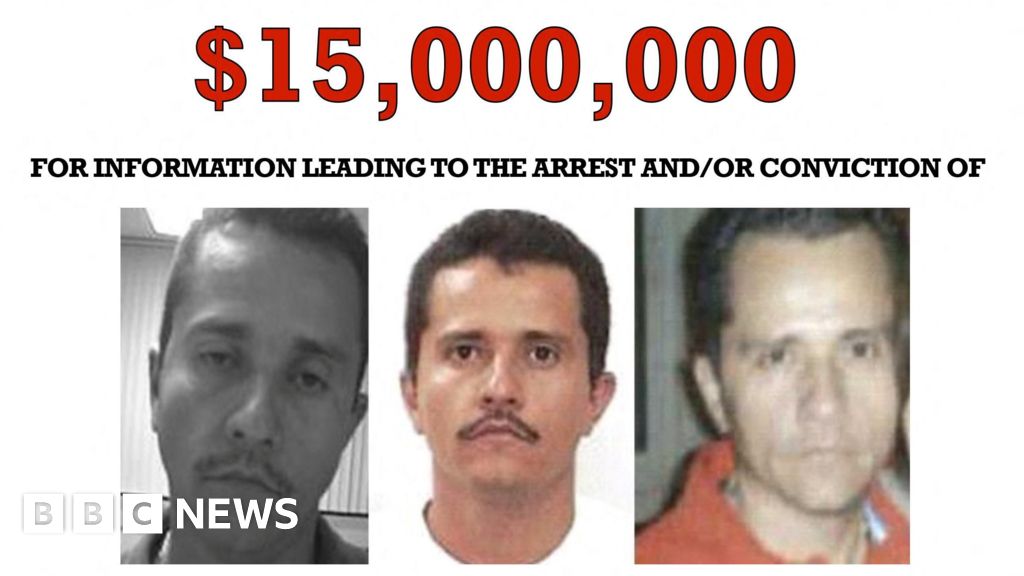
Nemesio Oseguera Cervantes, known to the world as "El Mencho," was a name that instilled fear across Mexico and far beyond its borders. For years, he stood as the undisputed leader of the Jalisco New Generation Cartel (CJNG), a criminal organization that rose with terrifying speed to become one of the most powerful and brutal in the Western Hemisphere. His life story, a descent from humble rural origins to the apex of global organized crime, is a stark testament to ambition, ruthlessness, and the insatiable hunger for power. The recent news of his demise, orchestrated through a sophisticated joint operation involving Mexican authorities and US intelligence, has been hailed as a significant victory, a moment of profound consequence for both nations grappling with the pervasive influence of drug trafficking and violence.
The elimination of El Mencho, a man whose face was synonymous with the unchecked power of the CJNG, represents a symbolic triumph. For the Mexican military and security forces, it is the removal of a key architect of widespread instability and bloodshed. For the United States, it marks a substantial blow against a cartel deeply implicated in the deadly fentanyl trade that has ravaged American communities. The cross-border cooperation that reportedly led to his downfall underscores a shared commitment to confronting these transnational criminal enterprises, a narrative that both governments will likely leverage to bolster their respective credibility and security agendas.
However, the immediate aftermath of El Mencho’s death has been anything but tranquil. In a chilling display of loyalty and defiance, his loyal foot soldiers have unleashed a wave of retaliatory violence across at least eight Mexican states. From the Pacific coast of Guerrero to the northeastern state of Tamaulipas, roadblocks have been erected, and streets have been engulfed in flames. Even the bustling capital, Mexico City, and its surrounding state have not been spared from these violent outbursts. The heartland of the CJNG, the western state of Jalisco, has witnessed some of the most graphic scenes. In its capital, Guadalajara, a city slated to host matches in the upcoming FIFA World Cup, masked gunmen have set fire to businesses, creating an atmosphere of terror. In the popular tourist destination of Puerto Vallarta, both residents and visitors have been forced to seek shelter, anxiously awaiting the dissipation of this violent storm.
This surge of aggression is a clear demonstration of the CJNG’s formidable reach and the deep-seated loyalty it commands within its ranks. It is a potent, albeit terrifying, message to the authorities: the elimination of their leader will not go unchallenged. The coming days will be critical in determining the true impact of this operation. The intensity of the violence, the response of law enforcement, and the potential for internal power struggles within the CJNG will reveal whether this is a temporary show of force or the harbinger of further, more destabilizing conflict.
The enduring reality of transnational criminal organizations is that even the most influential leaders are often replaceable. It is a grim certainty that El Mencho, for all his notoriety, likely had a cadre of well-positioned lieutenants ready to vie for control. Yet, his personal role in the CJNG’s meteoric ascent cannot be overstated. His journey from a young man cultivating marijuana in the fields of Michoacán to the kingpin of a global drug empire is a narrative steeped in the harsh realities of Mexico’s underworld.
El Mencho’s formative years were spent navigating the treacherous landscape of organized crime. His early brushes with the law began in his native Michoacán, a state that has long been a crucible for drug cultivation and trafficking. Seeking opportunity and anonymity, he migrated to the United States in the 1980s as an undocumented immigrant. There, his involvement in illicit activities deepened, particularly in California, where he became entrenched in the narcotics trade. His criminal career in the US culminated in a prison sentence, a period that likely served as a formative experience, hardening his resolve and refining his understanding of the criminal enterprise.
Upon his deportation back to Mexico in his early thirties, El Mencho fully committed himself to the world of cartels. He initially aligned himself with the Milenio Cartel, a powerful organization operating out of Michoacán. During this period, he meticulously cultivated his reputation, distinguishing himself as a shrewd strategist and a leader known for his chilling efficiency and unwavering cruelty. His ability to command respect, often through fear, laid the groundwork for his future leadership.
The opportune moment for El Mencho’s ascent arrived with the fragmentation of the Milenio Cartel. From the ashes of this fractured organization, the Jalisco New Generation Cartel (CJNG) emerged, with El Mencho at its helm. He proved to be a visionary leader, orchestrating a relentless campaign of territorial expansion and demonstrating an uncanny ability to adapt the cartel’s operations to new and lucrative illicit ventures. This adaptability, coupled with his aggressive expansionist policies, transformed the CJNG into the dominant criminal force in Mexico, eclipsing many of its rivals.
A significant factor in the CJNG’s burgeoning power was the unraveling of the Sinaloa Cartel, once Mexico’s most formidable criminal syndicate. The extradition of its legendary leader, Joaquín "El Chapo" Guzmán, to the United States created a power vacuum and triggered a series of bloody internal conflicts among rival factions. The CJNG, under El Mencho’s leadership, was strategically positioned to capitalize on this chaos. They were able to seize control of key trafficking routes and, crucially, a significant portion of the lucrative fentanyl trade, particularly after the downfall of Guzmán’s sons. One of these sons, Joaquín Guzmán López, eventually surrendered to US authorities, inadvertently weakening his own faction and further consolidating the CJNG’s market share.
El Mencho was a direct beneficiary of this dramatic shift in the cartel landscape. However, as is often the case in the volatile world of Mexican drug trafficking, the reign of undisputed power is rarely long-lived. The removal of El Mencho, while a significant event, does not signify the end of the CJNG. It is a testament to the complex and ever-evolving nature of organized crime in Mexico.
The government of President Claudia Sheinbaum will undoubtedly present El Mencho’s demise as a major victory, a tangible accomplishment in the fight against organized crime and a response to international pressure, particularly from the United States regarding fentanyl trafficking. The reported involvement of US intelligence in the operation also serves to highlight the Sheinbaum administration’s willingness to cooperate with Washington, potentially preempting calls for unilateral US military intervention on Mexican soil, a prospect that has been openly discussed by some factions within the Republican Party and the former Trump administration.
The implications of this operation will continue to unfold in the coming weeks and months. For now, Mexico is grappling with the immediate reality of El Mencho’s death, a development that has plunged several cities into a state of fear and unrest. The burning cars and barricaded streets are a stark reminder of the enduring power and ruthlessness of the criminal organizations that continue to challenge the authority of the state. The death of El Mencho marks the end of an era, but the fight for control within the criminal underworld, and the struggle for peace and security in Mexico, is far from over.


 Ramos Leo
 Roy Suryo
 atisusanti
 Nakalama John