
 atisusanti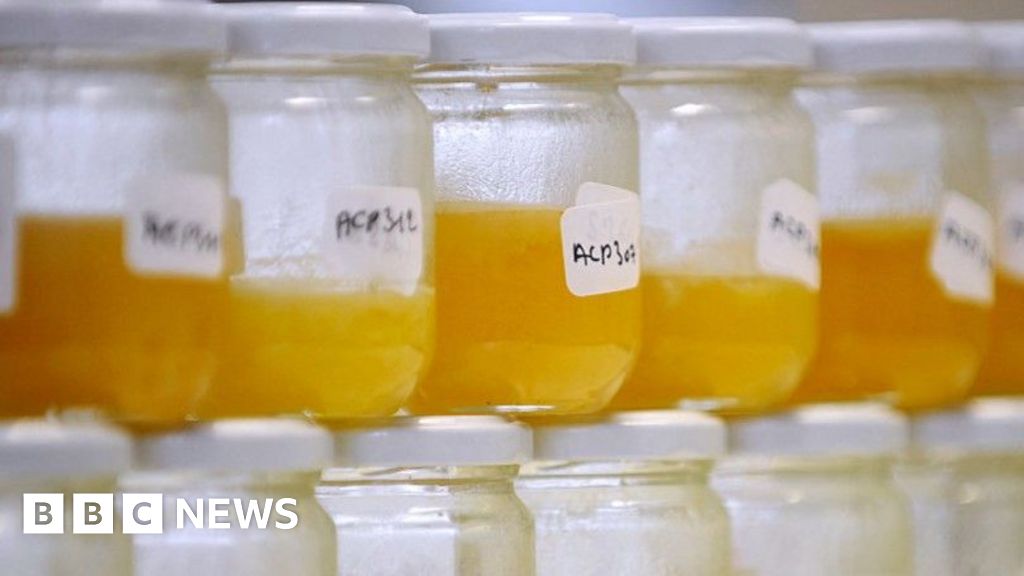
Food fraud, a pervasive and often hidden global issue, continues to plague the industry despite significant advancements in detection and verification technologies. This sophisticated form of crime encompasses a wide range of deceptive practices, from the dilution and substitution of ingredients to the falsification of documentation and the utilization of unapproved processing methods. The economic impact is staggering, with one 2025 estimate projecting that food crime costs the global economy approximately £81 billion ($110 billion) annually. Fraudsters commonly target staple foods like dairy and high-value commodities such as olive oil. Honey, along with alcohol, seafood, and edible oils, frequently appears on the list of most commonly faked foods. The allure of profit is substantial, as plant-based syrups, like glucose syrup derived from sugar cane, can be priced at half, or even less, than genuine honey.
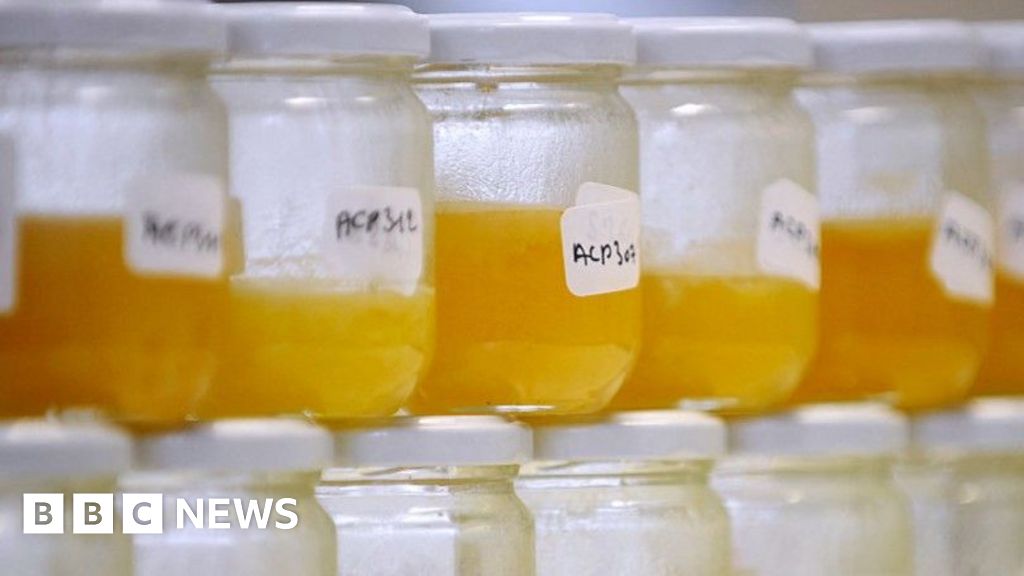
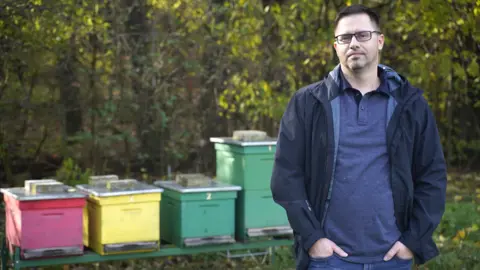
Dr. Juraj Majtán, who manages a laboratory dedicated to the study of bees and bee products at the Institute of Molecular Biology within the Slovak Academy of Sciences and also maintains five beehives himself, possesses a deep understanding of honey’s intricate biological composition. Honey is an exceptionally complex substance, containing hundreds of compounds and originating from a vast array of diverse sources and types. This inherent complexity presents a significant challenge in determining whether honey in a jar genuinely originates from honeybees of a specific region or has been adulterated with syrups derived from rice, wheat, corn, or sugar beets. The lack of a universally agreed-upon definition of honey further complicates matters. While adulterated honey may sometimes exhibit a runnier consistency and a weaker flavor profile compared to genuine honey, sophisticated imitations can be virtually indistinguishable in appearance, aroma, and taste. Moreover, these inauthentic honey products can even deceive chemical analyses due to their remarkably similar sugar content.
A variety of analytical methods are employed to detect suspicious honey. Some techniques focus on examining chemical bonds, comparing them against established profiles of genuine honey samples. Others utilize isotopic analysis to ascertain the likely geographical origin of a product. However, as Dr. Majtán explains, "currently there is no single method…that can say that this honey is fake honey." He emphasizes the urgent need for the development of new, more definitive detection methods. The primary harm caused by faked honey often falls upon the livelihoods of beekeepers. However, food fraud can also pose serious risks to human health, particularly when fraudulent products contain undeclared allergens or toxic chemicals.
In 2008, Dr. Selvarani Elahi, then Deputy Government Chemist in the UK and now based at the measurement and testing services company LGC, was deeply disturbed by the scandal of melamine-tainted infant formula in China, which tragically led to the deaths of at least six babies due to kidney damage linked to the chemical. Elahi expressed disbelief that food fraudsters would target children, yet the perpetrators of this crime, despite the severity of the consequences – including the execution of two individuals involved – were not deterred. "Even the risk of that doesn’t stop people from perpetrating fraud," Elahi remarked with astonishment. With decades of experience in food standards, Elahi remains vigilant about the potential for fraud to infiltrate various food categories. For instance, LGC is collaborating with the UK government on developing DNA-based methods to identify foods containing the four permitted insect species for human consumption. The concern is that fraudsters might attempt to pass off different, unpermitted insect species as approved ones. A significant risk associated with this deception is the potential for individuals with shellfish allergies to experience adverse reactions, as some insect species share allergenic proteins with shellfish.
While insects are considered a novel food in some jurisdictions, the adulteration of spices with industrial dyes remains a persistent global problem. Paprika, for example, is often contaminated with widely available industrial dyes. A particularly notorious adulterant is lead chromate, mixed with cinnamon to achieve a vibrant color or to increase the powder’s bulk. In 2023, the United States witnessed hundreds of children being poisoned by lead originating from imported cinnamon that found its way into applesauce. According to Elahi, the technological means to detect industrial dyes in spices are not the bottleneck; these methods are sufficiently advanced to identify synthetic dyes even at low concentrations. The fundamental issue lies in the inconsistent surveillance efforts by under-resourced regulatory bodies.
Dr. Karen Everstine, technical director of food safety solutions at FoodChain ID, a company that provides advisory services to clients in the food sector, highlights that the lead contamination in cinnamon underscores the critical importance of both effective regulatory agencies and a robust public health system in supporting food safety and detecting anomalies. FoodChain ID frequently encounters fraud involving the substitution of one species for another. Their data from 2025 also indicated a slight increase in labeling fraud, such as olive oil being falsely marketed as extra virgin or non-organic crops being misrepresented as organic. For 2026, Everstine expresses particular concern about trendy superfoods and supplement-like foods. False claims associated with these products can be exceptionally challenging to combat, especially given their rapid proliferation and popularity on social media.
Ultimately, even the most sophisticated traceability solutions, such as QR codes and microchips, will prove ineffective if consumers do not actively verify them as a prerequisite for making purchases. Counterfeiters can easily replicate QR code labels, for instance. Furthermore, these advanced solutions may remain economically unfeasible for widespread implementation. "People thought blockchain applied to the food industry was going to solve all of our problems. It hasn’t," notes Elahi, pointing out that while blockchain-based tracking of individual food items throughout the supply chain might be practical for products like South American bananas, it is not a viable solution for complex dishes like lasagne, which can comprise up to 50 ingredients sourced from various global locations. Interpreting the results of testing finished products with numerous ingredients can also present difficulties. "One of the challenges is marrying that really high-technology, high-innovation space with the realities of food production," Everstine comments, acknowledging that testing every single item is simply not practical.

Recent innovations aimed at enhancing testing methodologies include thermal imaging, laser-based light analysis, and DNA profiling. However, increased testing generally translates to higher costs. Moreover, laboratory-based testing may not possess the speed or agility required to support border control officers, fraud investigators, or food producers in real-time, field-based scenarios. Speed is paramount when attempting to intercept the distribution of tainted foods, yet rapid testing tools may sometimes lack the necessary sensitivity. Emerging portable testing methods include X-ray fluorescence analyzers for turmeric and handheld DNA kits designed for testing olive oil. The application of machine learning is also proving increasingly valuable in sifting through and categorizing vast datasets, thereby aiding in the creation of early warning systems for potential food fraud or safety risks.
Despite these technological advancements, relatively low-tech approaches continue to be among the most effective responses to food crime. Regarding honey, Majtán advises, "the best way is just to buy from local beekeepers." This direct purchasing approach allows consumers to gain confidence in the authenticity of their purchase and to directly support local producers. Everstine offers a general rule of thumb: "if the price seems too good to be true, that should be a red flag." For instance, in the US, a price of $3 for a bottle of olive oil or honey could reasonably raise suspicion.




 Nakalama John
 George Anjay
 Ramos Leo