
 Nana Banana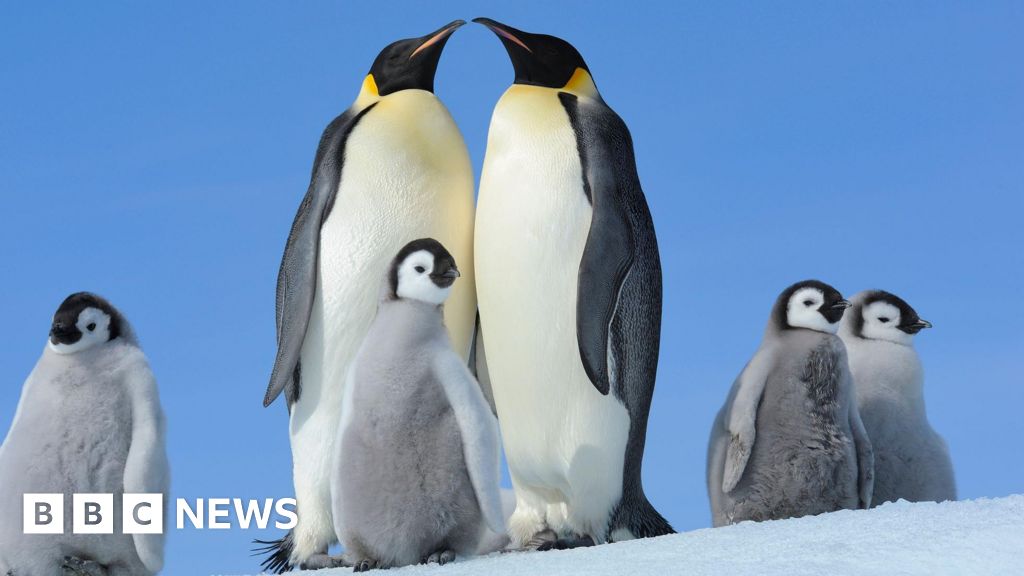
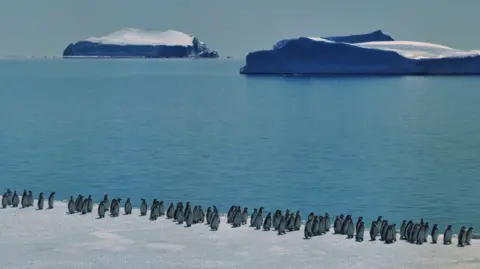
Each year, Emperor penguins undertake what is known as a "catastrophic moult," a physiological imperative where they must replace their old, worn-out plumage with a new, pristine, and entirely waterproof coat. This process is essential for their survival, as their feathers are the most complex and best insulating of any animal, crucial for thriving in the frigid Antarctic waters and air. However, this critical period demands that the birds remain on stable platforms of floating sea ice for an extended duration, typically 30 to 40 days, unable to enter the ocean to hunt. During this time, they are at their most vulnerable, as their old feathers lose their insulating and waterproofing properties before the new ones fully emerge. If they are forced into the icy water prematurely, without their protective insulation, the consequences are dire, almost certainly leading to hypothermia and death.
The precarious balance of this life cycle has been shattered by the dramatic and accelerating collapse of Antarctic sea ice. The years 2022 to 2024 witnessed a significant shrinkage in the extent of Antarctic sea ice, primarily attributed to anthropogenic climate change. This unprecedented decline has deprived thousands of Emperor penguins of the stable, expansive platforms of ice they critically need to safely undergo their moult. Without these frozen refuges, the birds are left without a sanctuary during their most vulnerable state.
Scientists, who meticulously track these majestic birds using advanced satellite imagery, are now confronting a grim reality. Dr. Peter Fretwell, a climate and science reporter at the British Antarctic Survey, a leading authority who has dedicated 20 years to studying Emperor penguins, describes the findings as an "oh my God" moment. His team can no longer locate most of the colonies they once monitored in the affected regions. The chilling implication is that potentially thousands of penguins may have perished, freezing to death in Antarctica’s unforgiving icy waters, unable to withstand the cold without their protective new plumage.
"You could see this was something game-changing for Emperor penguins. Suddenly you’re thinking, well, have we got time to save them?" Dr. Fretwell remarked, reflecting on the sudden and devastating shift in observations. The research, which has been rigorously peer-reviewed and published in the scientific journal Communications Earth & Environment, provides compelling, empirical evidence of the catastrophic impacts of the collapse in Antarctic summer sea ice between 2022 and 2024. This follows earlier reports by the BBC on the dramatic environmental changes unfolding in the region.
The study primarily focused on West Antarctica, a vital breeding ground and home to an estimated 30-40% of the global Emperor penguin population. These magnificent animals are already considered among the most threatened species on the planet, their fate intrinsically linked to the stability of the sea ice. Emperor penguins are renowned for their extraordinary migrations, often travelling thousands of kilometres to reach reliable sea ice locations during the Antarctic summer, specifically to undertake their annual "catastrophic moult."
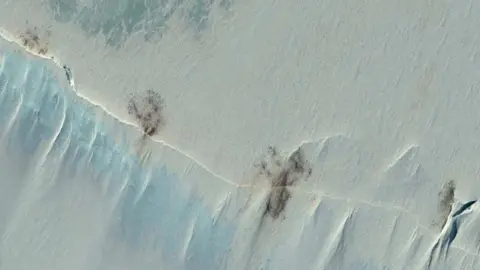
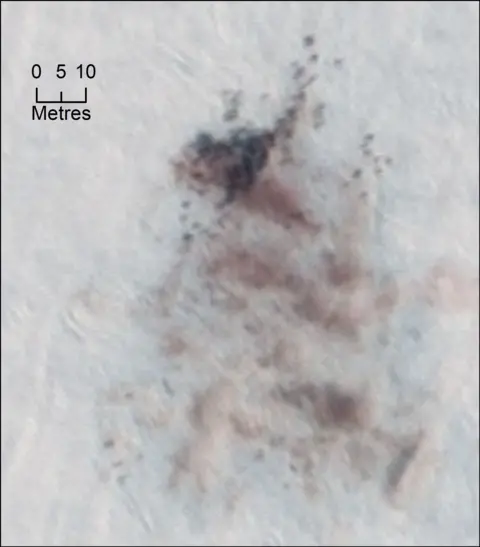
Until recently, relatively little was known about the specific locations or the full extent of this 30-40 day moulting period. However, Dr. Fretwell’s innovative use of satellite pictures from 2019-2025 provided a breakthrough. He began to spot distinctive, large brown smudges against the vast white expanse of the ice, particularly in an area known as Marie Byrd Land. These mysterious markings, upon closer inspection and analysis, were identified as enormous mounds of discarded feathers, left behind by thousands of moulting penguins. This discovery provided a novel way to track and understand their critical moulting behaviour.
Dr. Fretwell explained the biological significance of their plumage: "The penguins’ feathers are the most complicated and best insulating of any animal." Over time, these feathers become damaged and less effective, necessitating their annual replacement. The process, however, is incredibly energy-intensive, with birds typically losing up to 50% of their body mass during the moult as their metabolism works overtime to grow new feathers and sustain themselves without feeding.
This period, Dr. Fretwell emphasized, is "probably the most dangerous time for adult Emperor penguins because they haven’t got their waterproof suits on." Their survival hinges entirely on staying out of the water. Any forced immersion into the sub-zero ocean during this phase would almost certainly lead to rapid hypothermia and death, as their compromised insulation offers no protection against the extreme cold.
In the years leading up to the recent sea ice collapse – specifically 2019, 2020, and 2021 – the sea ice conditions in West Antarctica were relatively stable. During these years, satellite imagery consistently showed significant feather mounds, indicating healthy and numerous moulting colonies. However, the situation drastically changed in 2022. Antarctic summer sea ice experienced an alarming and dramatic shrinkage across much of the continent, plummeting from an average extent of 2.8 million square kilometres to an unprecedented record low of just 1.79 million square kilometres in 2023. This alarming trend persisted into 2024, with only a modest, partial recovery observed in the sea ice of West Antarctica in 2025.
When Dr. Fretwell re-examined the satellite pictures for these critical years of sea ice decline, the stark absence of the tell-tale brown smudges was profoundly disturbing. "There should have been lots of penguins there, but actually we could only see 25 groups," he reported. These "groups" can vary widely in size, from mere tens to as many as a thousand birds. "Again this year the sea ice hasn’t been too bad, but I can only see a handful of penguins really," he added, highlighting the continued and alarming disappearance.
The most terrifying conclusion is that the vast majority of these missing penguins have likely perished. While there’s a slim possibility some may have managed to travel to other, more stable locations in East Antarctica to moult, such a forced relocation would have severely disrupted their breeding cycles and exerted immense energetic costs, leading to significant population losses regardless. The sheer scale of the observed disappearance, however, points overwhelmingly to mass mortality events.
Looking ahead, the long-term survival of Emperor penguins might hinge on their ability to adapt to new, less ideal moulting sites, such as shallow ice shelves. Dr. Fretwell has observed a few isolated groups attempting this adaptation, suggesting a desperate effort to cope with the changing environment. However, this adaptation would likely come with its own set of challenges and costs, potentially disrupting established breeding and feeding patterns, further stressing an already vulnerable population.
These findings serve as a stark and urgent reminder that while the effects of global warming can sometimes appear slow and incremental, there are critical thresholds and moments of dramatic, abrupt change. "It wasn’t just a few colonies that were lost and it wasn’t a slow process," Dr. Fretwell underscored, emphasizing the sudden and widespread nature of the disaster.
The emotional toll of this discovery on the scientific community has been profound. "It is the only piece of science I’ve ever done that’s really emotionally got me," Dr. Fretwell confessed, highlighting the deep personal connection researchers often form with the species they study, and the despair felt when witnessing such rapid decline.
The next crucial step in understanding the full scope of this crisis involves comparing these findings with an imminent population count of Emperor penguins in the Ross Sea region, where the birds migrate to and from. This comparative data will provide a more precise estimate of the potential number of deaths and the overall impact on the global population.
Dr. Fretwell fears that these devastating results could significantly accelerate the predicted extinction timelines for Emperor penguins. Previously, projections suggested that most Emperor penguin colonies could be wiped out by 2100. "Now I’m asking, is that coming forwards towards us? Is it the end of the century?" he questioned, articulating the profound and urgent re-evaluation now facing conservation efforts for this magnificent species. The crisis underscores the immediate and far-reaching consequences of climate change, turning a vital survival mechanism into a potential death trap for one of Antarctica’s most iconic inhabitants.




 Ramos Leo
 atisusanti
 Nakalama John