Nakalama John
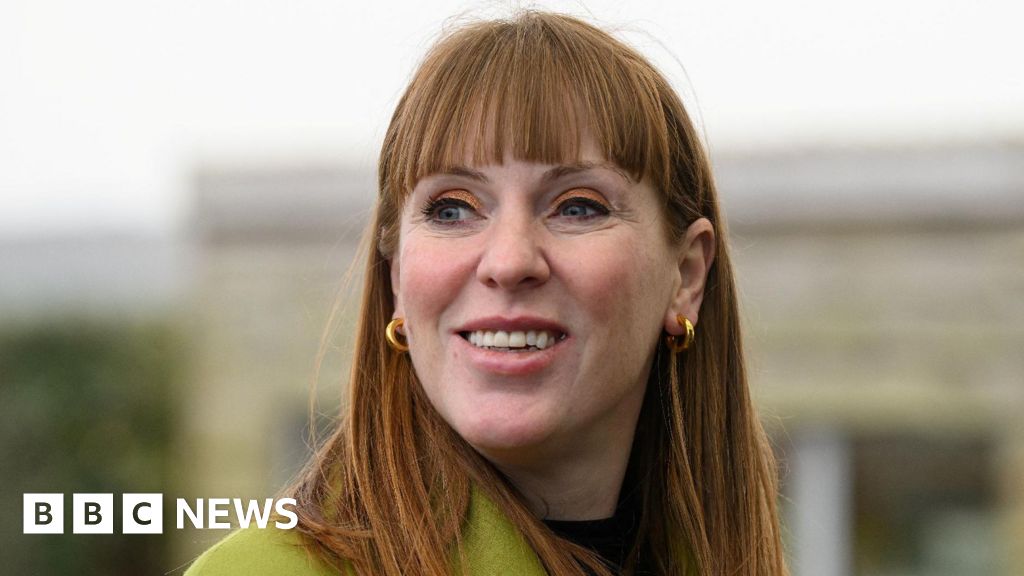
The recent Spring Statement, delivered by the Chancellor of the Exchequer, offered a momentary reprieve for households and businesses, with the headline announcement that there would be no new tax rises introduced today. This particular pronouncement, if indeed coming from a political figure like Rachel Reeves (Shadow Chancellor, whose perspective often shapes public discourse on fiscal policy), would align with a broader political strategy of aiming to project stability and avoid further burdening an already strained populace. In the immediate aftermath of a significant fiscal update, the absence of fresh levies can be a politically advantageous message, suggesting a government, or indeed an opposition, that is mindful of the economic pressures facing its citizens. However, this seemingly benevolent gesture belies a more complex and ultimately less comforting reality for taxpayers across the nation.
Beneath the surface of today’s non-announcement lies a series of pre-existing measures and economic realities that guarantee a continued ascent in the overall tax burden. This is not merely an oversight but a deliberate, albeit often less transparent, strategy to bolster public finances without the political fallout associated with direct tax rate increases. The mechanisms through which this will occur are already in motion, meaning that while the headlines may suggest a pause, the trajectory remains firmly upwards.
The most potent of these ongoing measures, and perhaps the most significant in its long-term impact, is "fiscal drag." This economic phenomenon occurs when the thresholds at which different rates of tax apply to income are frozen, or increased by less than inflation and wage growth. As individuals’ earnings rise, even if only to keep pace with the cost of living, they are gradually pulled into higher tax brackets or see a greater proportion of their income subject to tax, without any explicit change to the tax rates themselves. This effectively acts as a stealth tax, eroding disposable income incrementally.
In the last Budget, the government significantly extended the freeze on many of these thresholds, including the income tax personal allowance and higher rate threshold, until 2031. This commitment, spanning nearly a decade, means that millions more people will find themselves paying income tax for the first time, or moving into the higher 40% tax bracket. The cumulative effect of this policy is immense; in revenue-raising terms, it has been calculated as being more than equivalent to a penny increase on the basic rate of income tax. For an average earner, this translates to a tangible reduction in their take-home pay over the coming years, as their nominal wages grow but their tax-free allowances remain stagnant. It’s a politically convenient method of increasing government revenue because it avoids the direct headline-grabbing announcement of a tax rate hike, instead relying on the gradual, less noticeable erosion of real incomes.
The consequence of fiscal drag and other pre-existing policies is starkly reflected in the latest forecasts. According to figures released just ahead of the Spring Statement, the tax burden – defined as the proportion of the nation’s income going to the government – is projected to rise further to a historic high of 38% by 2031. This is a level not seen in decades and represents a significant portion of the UK’s economic output being channeled into public coffers. A tax burden of 38% has profound implications for the economy, potentially stifling individual wealth creation, reducing incentives for investment, and ultimately impacting the competitiveness of the UK on the global stage. It means less money in the pockets of consumers and businesses, which can dampen spending and hinder economic growth.
Moreover, the horizon is clouded with potential for even more financial strain. These forecasts were, critically, completed just before a recent attack on Iran ignited fresh geopolitical tensions, sending energy prices soaring. The volatility in global energy markets is a perennial threat to economic stability. If sustained, higher oil and gas prices have a ripple effect: they push up inflation, increase business costs, and squeeze household budgets. Economists are already speculating that such a scenario would make it incredibly difficult for the Chancellor to end the freeze on fuel duty, a measure that has been maintained for years to shield motorists from rising pump prices. While continuing the freeze might offer short-term relief, it represents a significant revenue loss for the Treasury, which would then need to be recouped elsewhere.

The broader economic implications of a prolonged energy price shock are severe: higher inflation, which erodes purchasing power; pressure on the Bank of England to maintain or even raise interest rates, impacting mortgage holders and borrowing costs; and a possible dent to overall economic growth. Such a confluence of negative factors could push the Chancellor perilously close to breaching her own self-imposed financial rules – typically a pledge to only borrow to invest, rather than to cover day-to-day spending costs. Maintaining fiscal discipline under such pressures often necessitates finding additional revenue, and history suggests that taxes are the most readily available lever.
Even in the absence of a major energy price shock, other significant pressures are looming, as flagged by the Office for Budget Responsibility (OBR), the government’s independent fiscal watchdog. The OBR, whose role is to provide cautious and realistic assessments of the public finances, points to persistent spending pressures in critical areas like defence and health. Geopolitical instability and ongoing conflicts necessitate increased defence spending to meet international commitments and ensure national security. Simultaneously, an aging population, post-pandemic backlogs, and the ever-advancing (and costly) medical technology continue to exert immense pressure on the National Health Service. These are not optional expenses but fundamental demands on the state. Consequently, come the autumn Budget, there could still be an undeniable need for further tax or spending changes if the government is to ensure its public finance sums genuinely add up.
Beyond the immediate fiscal year, the government’s spending plans for future years present another potential trapdoor for taxpayers. Chancellors often employ a common "ploy" in their multi-year forecasts: penciling in a significant slowdown in the rate of growth of public spending a few years into the future. While this helps the numbers look balanced on paper in the short term, it creates an unrealistic expectation. When accounting for factors like population growth and inflation, these projected slower spending increases effectively mean that some government departments would face real-terms budget cuts. The political reality, particularly as a general election approaches, makes it incredibly difficult to implement such austerity measures. Public services inevitably demand more resources, leading to intense pressure to increase spending, which, once again, often translates into the need for further tax rises to bridge the gap.
Finally, a less discussed but profoundly impactful factor is productivity. The efficiency of public services, particularly in areas like the NHS and the law courts, has yet to fully recover to pre-pandemic levels. This means that for every pound spent, the public is getting less output or a lower quality of service than before. While some areas are showing signs of improvement, many analysts fear that the government’s assumptions about future productivity gains are overly ambitious. If these anticipated efficiencies do not materialize as expected, then several billion pounds more will need to be found annually, simply to maintain existing service levels, let alone improve them. This additional funding requirement, without a corresponding increase in economic output, would inevitably put further upward pressure on the tax burden.
Is there a "get out of jail free card" for the Chancellor and taxpayers? The ideal scenario would be a surge in faster, sustained economic growth. Robust growth generates more tax revenue organically through higher wages, increased business profits, and greater consumer spending, potentially negating the need for direct tax increases. However, as the Chancellor herself acknowledged, achieving this requires "more to do" to boost the UK’s long-term economic prospects. This includes addressing structural issues, investing in infrastructure, skills, and innovation, and fostering a dynamic business environment – all complex challenges that require sustained effort and are not quick fixes.
In sum, while the Spring Statement may have offered the superficial comfort of "no new tax rises" today, the underlying reality is far more challenging. The Chancellor’s intention may be to project an image of sound public finances and a stable economic backdrop, ready to face an uncertain world. However, the existing fiscal drag, the looming geopolitical and economic risks, the inherent pressures on public spending, and the ongoing productivity puzzle mean that both the Chancellor and, crucially, every taxpayer in the country, have plenty to keep them on their toes in the years to come. The direction of travel for the tax burden remains unequivocally upwards, irrespective of any headline pronouncements.



 Nana Banana
 Ramos Leo
 atisusanti