Ramos Leo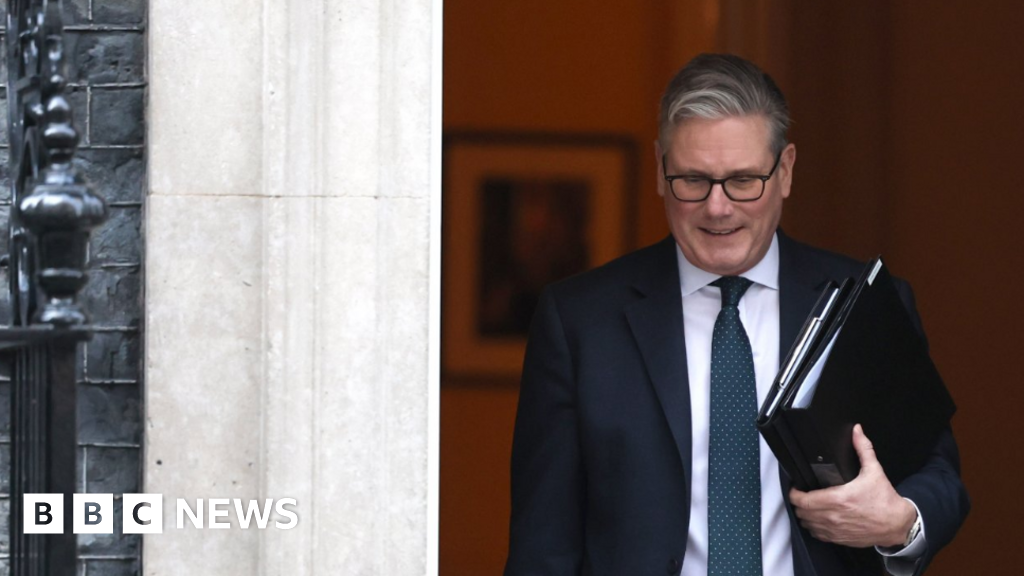
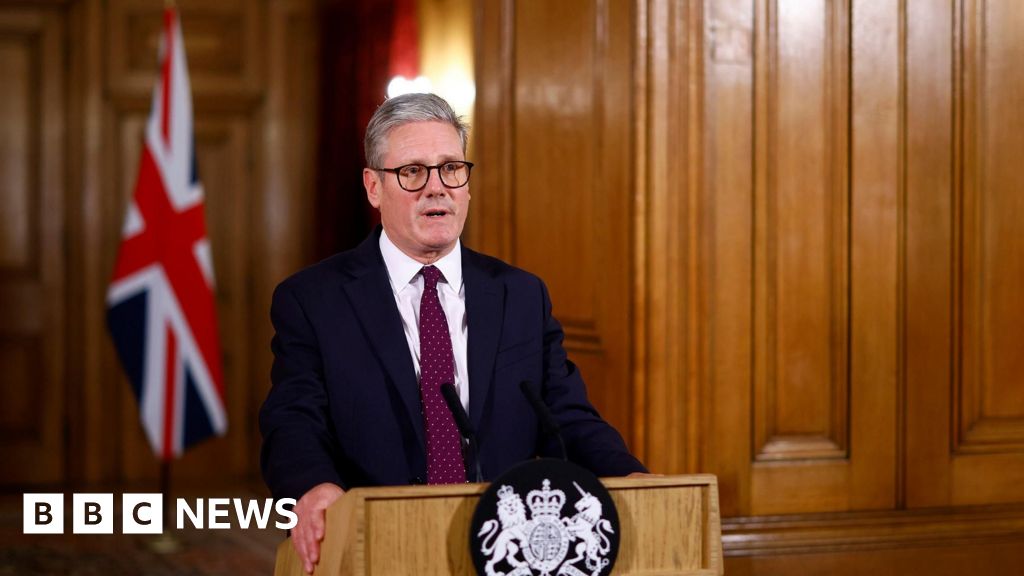
Sir Keir Starmer, in a pivotal address to MPs, firmly stated that his government "does not believe in regime change from the skies," drawing a clear line of distinction between the United Kingdom’s foreign policy approach and that of US President Donald Trump following the joint US-Israeli strikes on Iran. This declaration marked his first comprehensive statement to Parliament since the dramatic escalation of tensions in the Middle East, a situation that has sent shockwaves through global capitals and raised fears of a wider regional conflict. The Prime Minister’s remarks came amidst intense scrutiny and a fierce debate within the UK over Britain’s role in the unfolding crisis.
The immediate catalyst for the international uproar was the unprecedented US and Israeli military action on Saturday, which resulted in the targeted killing of Iran’s Supreme Leader, Ayatollah Ali Khamenei. This high-stakes operation, a significant escalation in the long-standing animosity between the Western powers and Tehran, immediately prompted a forceful demand from Washington for its allies to lend their support. Specifically, the US sought the use of critical British military installations – the strategically vital Diego Garcia base in the Indian Ocean and RAF Fairford in Gloucestershire – to facilitate its initial offensive strikes.
However, in a move that underscored a nascent independent streak in UK foreign policy, Sir Keir Starmer unequivocally refused this request. Addressing the House of Commons, he defended his controversial decision, asserting, "President Trump has expressed his disagreement with our decision not to get involved in the initial strikes, but it is my duty to judge what is in Britain’s national interest." Starmer underscored that his refusal was deeply informed by historical precedent, explicitly referencing "the mistakes of Iraq." He delineated a crucial distinction between what he termed "offensive strikes" aimed at regime change and "defensive strikes" designed to protect British interests and allies, a nuanced position that sought to navigate the complex geopolitical landscape without committing the UK to an open-ended military entanglement.
The Prime Minister elaborated on the principles guiding his cautious approach, explaining that any decision for UK military involvement must be predicated on a clear, lawful basis and a "viable thought-through plan with an objective that can be achieved or has a viable prospect of being achieved." This commitment to a rigorous legal and strategic framework, he stressed, was a direct lesson learned from past interventions, particularly the controversial 2003 invasion of Iraq, which lacked broad international consensus and a clear exit strategy. His initial refusal to allow British bases for offensive actions was a deliberate attempt to avoid repeating such perceived errors and to signal the UK’s aversion to unilateral regime change efforts.
The situation, however, dramatically shifted on Sunday following Iran’s "outrageous" and far-reaching response to the US-Israeli strikes. Tehran unleashed a barrage of missiles and drones across the region, targeting not only Israel but also Bahrain, Kuwait, Qatar, the United Arab Emirates, and Saudi Arabia. Critically, these retaliatory attacks also threatened international shipping lanes through the vital Strait of Hormuz, a choke point for a significant portion of the world’s oil supply, and posed an imminent danger to British citizens and interests across the Middle East.
This dramatic escalation transformed the calculus for the UK government. Starmer informed MPs that Iran’s actions constituted "a threat to our people, our interests and our allies," necessitating a change in the UK’s posture. Consequently, he authorized the use of British military bases, including Diego Garcia and RAF Fairford, but exclusively for "defensive" strikes aimed at neutralizing Iran’s missile infrastructure. He was at pains to clarify this distinction: "To be clear, the use of British bases is limited to the agreed defensive purposes; we are not joining the US and Israeli offensive strikes." This careful differentiation was designed to demonstrate solidarity with allies in safeguarding regional stability while simultaneously avoiding full participation in an offensive campaign that could draw the UK into a protracted and unpredictable conflict.
The geopolitical ramifications of these events are profound. The killing of Ayatollah Ali Khamenei, Iran’s longest-serving Supreme Leader and the ultimate arbiter of its domestic and foreign policy, creates an immediate power vacuum and raises significant questions about the future leadership and direction of the Islamic Republic. Succession in Iran is typically a slow, deliberative process, and the sudden removal of Khamenei could trigger internal power struggles or accelerate the regime’s nuclear ambitions. The US-Israel alliance, strengthened by their coordinated action, is clearly signalling a more aggressive stance against Iran’s regional influence and nuclear program, but this strategy risks further destabilizing an already volatile region. The targeting of shipping in the Strait of Hormuz, a critical artery for global trade, also carries severe economic consequences and underscores the broad reach of Iranian retaliation capabilities.
Domestically, Starmer’s nuanced position ignited a fierce cross-party debate. Kemi Badenoch, the leader of the Conservative Party, launched a scathing critique, accusing the Prime Minister of "dither and delay" and urging him to stand "fully behind the US." Badenoch highlighted that key allies like Australia and Canada had immediately backed America’s actions against what she termed a "despotic regime in Tehran," suggesting that Starmer’s hesitation had weakened Britain’s international standing. Her criticism underscored a traditional Conservative alignment with robust transatlantic security partnerships.
Richard Tice, deputy leader of Reform UK, echoed similar sentiments, arguing that Iran had been "a permanent threat" to Britain and that Trump’s strikes had "done the West a huge, huge favour." Tice went further, accusing Starmer of looking weak and asserting that by refusing to fully support the US, the Prime Minister had "humiliated us on the international stage." This perspective from the populist right emphasized a perceived need for strong, decisive action against perceived enemies.
Conversely, Starmer’s decisions faced criticism from parties on the left. Sir Ed Davey, leader of the Liberal Democrats, expressed grave concerns, stating that failing to stand up to Trump "makes our country less safe." Davey drew parallels to the Iraq War, warning, "We have seen before what happens when an American president launches an illegal war with no idea how or when it is going to end, and we fear for what comes next." He implicitly criticized the legality and strategic foresight of the US actions. Dr. Ellie Chowns, the Green Party’s foreign affairs spokeswoman, condemned the "deeply irresponsible and illegal attack by the US and Israel on Iran," advocating for the UK to "stand unequivocally against this reckless action" and calling for a parliamentary vote on "any UK involvement in this war." Starmer swiftly rebutted these accusations, clarifying, "We are not at war," and reiterating, "We are not getting involved in offensive action that the US and Israel are taking."
Scotland’s First Minister, John Swinney, added another layer of criticism, issuing a statement that specifically condemned Starmer’s decision to allow the US to use military bases, arguing that it "creates further risks and dangers" for Scotland and the wider UK. This reflects a broader anti-war sentiment often present in Scottish politics.
Amidst the heightened regional instability, British officials have issued urgent advice to citizens in the Middle East. Over 100,000 Britons, including holidaymakers and business people, have been urged to register their presence with the UK government. While no evacuation of British citizens is currently imminent, the Foreign Office confirmed it is actively making contingency plans in case commercial flights across the Gulf countries remain grounded or airspace restrictions are imposed, highlighting the severe practical implications of the escalating conflict.
In essence, Sir Keir Starmer is attempting a delicate balancing act: affirming the UK’s commitment to its alliance with the United States and Israel in the face of Iranian aggression, while simultaneously asserting an independent foreign policy rooted in the lessons of past interventions. His strategy seeks to avoid a full-scale entanglement in a potentially open-ended conflict in the Middle East, while upholding the UK’s role in defending international security. The coming days and weeks will test the efficacy of this approach as the region grapples with the fallout from the most significant military escalation in decades.

 George Anjay
 Nakalama John