
 Nakalama John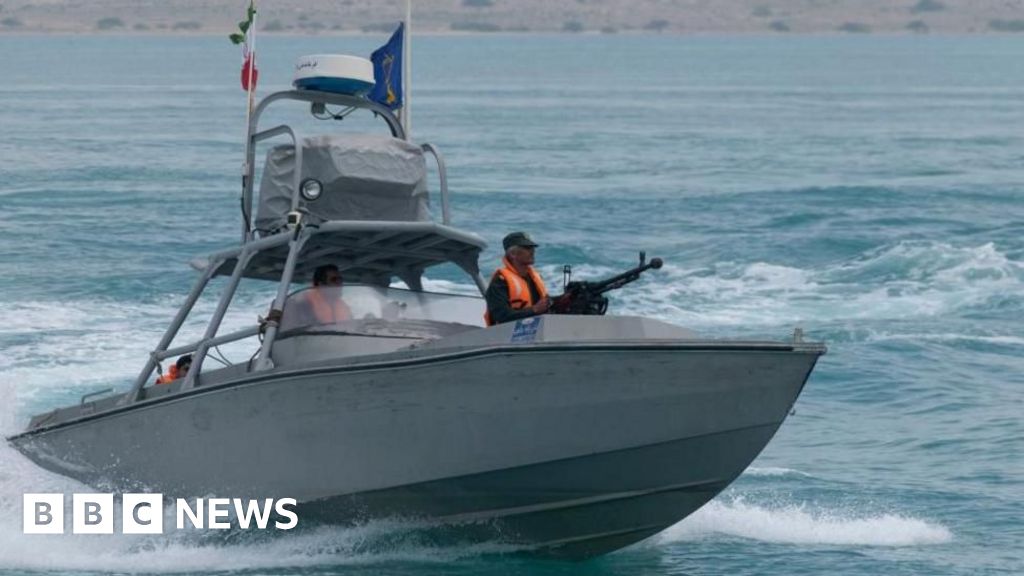
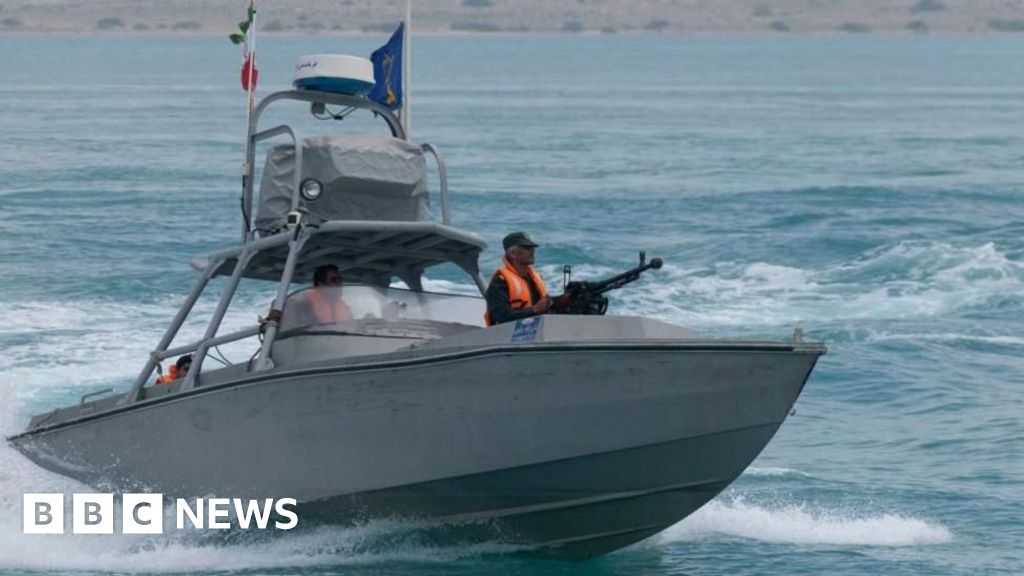
A significant maritime incident has unfolded off the Iranian coast, where a vessel has been struck by an "unknown projectile," according to reports from the UK Maritime Trade Organisation (UKMTO). This alarming development immediately amplified fears that escalating hostilities in the Middle East could trigger a dramatic surge in global oil prices, impacting economies worldwide. The British agency, responsible for monitoring and advising on trade routes, confirmed that the incident occurred with a vessel sailing north of Oman and east of the Strait of Hormuz. While the attack initially caused a fire in the engine room, authorities have reported that the blaze is now under control, preventing a potentially catastrophic environmental and economic disaster.
The precise identity and ownership of the damaged vessel were not immediately disclosed by the UKMTO. However, unnamed maritime security sources, speaking to news agency Reuters, indicated that a Marshall Islands-flagged oil tanker had sustained damage in the vicinity of the Omani coastline. This detail, if confirmed, would highlight the vulnerability of international shipping in the increasingly volatile waters of the Persian Gulf and Gulf of Oman. In a contrasting and unverified claim, Iranian state television reported that an oil tanker was sinking after being struck while attempting to "illegally" pass through the Strait of Hormuz. The BBC, like other international news outlets, has not been able to independently verify this assertion, underscoring the fog of war and conflicting narratives emerging from the region.
This maritime attack is not an isolated incident but rather a direct symptom of rapidly intensifying geopolitical tensions across the Middle East. The region was already reeling from a profound escalation over the weekend, initiated by fresh aerial attacks launched between Iran and Israel on Sunday. These retaliatory strikes followed a highly provocative and unprecedented event on Saturday: US-Israeli strikes that reportedly killed Iran’s Supreme Leader, Ayatollah Ali Khamenei. The death of Iran’s paramount spiritual and political authority represents a seismic shift in the regional power dynamic and a direct challenge to the Islamic Republic’s stability. Such a high-profile assassination has predictably triggered a wave of retaliatory actions across several Middle Eastern nations. Reports have detailed strikes in key regional hubs, including Dubai in the United Arab Emirates, Qatar’s capital Doha, Bahrain, and Kuwait. These attacks target countries that are either hosts to significant Western military assets or are staunch US allies, indicating a broad and dangerous expansion of the conflict.
The Strait of Hormuz, a narrow waterway connecting the Persian Gulf to the Gulf of Oman and the Arabian Sea, serves as the world’s most critical oil transit choke point. Approximately 20% of the world’s total petroleum liquids consumption, along with a substantial portion of liquefied natural gas (LNG), passes through this strategic corridor. Iran has long threatened to close the strait in response to perceived threats or sanctions, a move that analysts have consistently warned would have catastrophic consequences for global energy markets. While Iran has issued warnings to ships to avoid the strait, it has not officially declared its closure. Nevertheless, the mere threat and the tangible risk posed by the recent attack have had an immediate chilling effect on maritime operations. Dozens of international shipping firms have already halted their operations or rerouted vessels to avoid the strait altogether, fearing further incidents or seizures. This precautionary measure, while understandable, severely constricts the flow of vital energy resources.
The economic ramifications of these developments are already being felt and are projected to worsen significantly. While global oil markets typically open at 01:00 GMT, early indications from so-called over-the-counter trades between private buyers suggest an immediate and sharp spike in prices. Brent crude, the international benchmark, has reportedly jumped by around 10% in these preliminary trades, reaching approximately $80 (£59) a barrel. This comes on the heels of Brent crude already having risen to $73 per barrel on Friday, marking its highest price since July. Industry analysts are now issuing dire warnings, suggesting that a prolonged or further intensified conflict could easily push the price of crude oil beyond the $100 per barrel mark. Such a scenario would trigger a cascading economic crisis, fueling inflation, hampering economic recovery efforts globally, and placing immense pressure on consumers and businesses.
In an attempt to mitigate the potential price surge, the Opec+ group of oil-producing nations, which includes major players like Saudi Arabia and Russia, convened on Sunday. They agreed to increase their collective output by 206,000 barrels a day. However, many energy experts remain highly skeptical about the efficacy of this measure. Doubts stem from the fact that the agreed increase is relatively modest compared to the potential supply disruption from the Strait of Hormuz, and several Opec+ members already struggle to meet their existing quotas due to underinvestment or capacity constraints. Furthermore, the geopolitical risk premium, driven by fear and uncertainty, often outweighs the impact of marginal supply adjustments.
The immediate impact of rising crude oil prices is invariably felt at the petrol pumps. Edmund King, president of the AA (Automobile Association), issued a stark warning to motorists, predicting that the ongoing disruption could push petrol prices in the UK to levels not witnessed since the height of the pandemic and the subsequent energy crisis. In 2022, fuel prices surged to an unprecedented high of more than 190 pence per litre. Currently, the average cost hovers around 133 pence per litre. King emphasized the direct link between geopolitical turmoil and consumer prices. "The turmoil and bombing across the Middle East will surely be a catalyst to disrupt oil distribution globally, which will inevitably lead to price hikes," King told The Times. He added a sobering forecast for consumers: "So drivers beware, within the next 10 to 12 days we could be seeing record prices at the pumps." This projected increase would place an additional burden on households already grappling with a cost-of-living crisis, impacting everything from daily commutes to the cost of goods transportation.
The attack on the tanker, whether a direct strike or a result of indirect escalation, signifies a dangerous new phase in the Middle East conflict. The killing of a leader as significant as Ayatollah Ali Khamenei has fundamentally altered the calculus of regional power dynamics, potentially pushing Iran towards more aggressive and less predictable responses. The targeting of international shipping in such a critical waterway is not just an act of aggression but a direct challenge to global economic stability. As the international community watches with bated breath, the coming days will reveal whether this incident is a harbinger of wider conflict or a solitary, albeit severe, warning. The stakes – both geopolitical and economic – could not be higher.



 atisusanti
 George Anjay