Nakalama John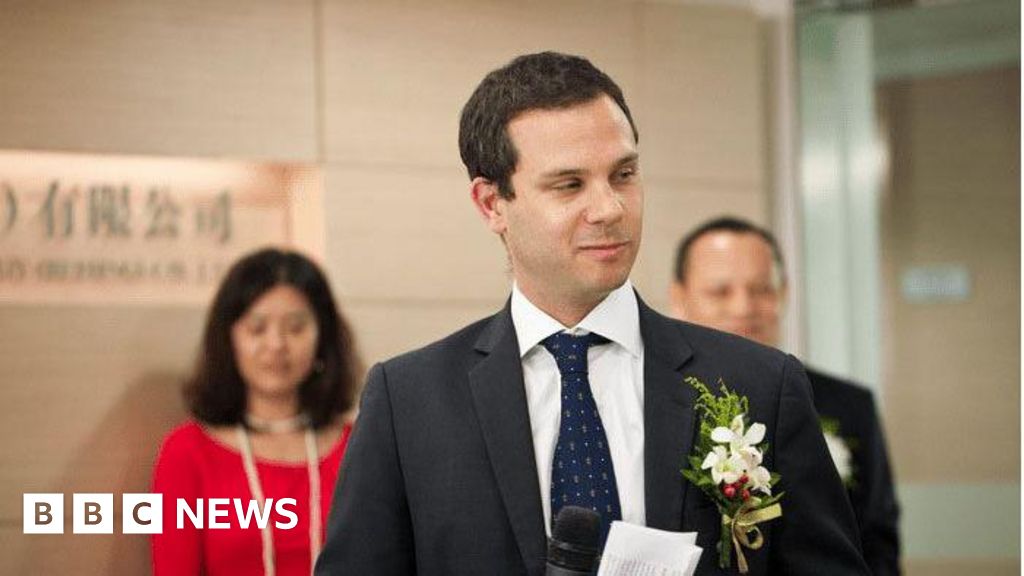
In the bustling, high-tech metropolis of Shenzhen, nestled in southern China, Prince Andrew observed as performers captivated an audience of investors and innovators with spinning dances and waving streamers. It was spring 2019, and the occasion was a lavish gala dinner for the Chinese chapter of his entrepreneurial initiative, Pitch@Palace. Unbeknownst to those present, this event would mark the last of its kind. Within a year, the then-Prince of Wales would retreat from public royal duties, his reputation severely damaged by a catastrophic television interview addressing his controversial association with the convicted American sex offender, Jeffrey Epstein.
Yet, a largely unknown third figure moved within the periphery of this unfolding drama, glimpsed only briefly in the official highlights video of the Shenzhen event: David Stern. For nearly a decade, this enigmatic German businessman had served as a crucial intermediary, connecting both Prince Andrew and Jeffrey Epstein within China, a country he navigated with expertise and saw as a realm of boundless opportunity and potential wealth. The recent release of millions of pages of documents by the US Department of Justice this year has cast an illuminating light on Stern, revealing the extent of his involvement.
These newly public documents strongly suggest that it was Epstein who initially introduced Stern into the inner circle of Andrew Mountbatten-Windsor and Sarah Ferguson, the Duchess of York. The files expose the depth of Stern’s connections to both the Yorks and the disgraced American financier. They reportedly detail how Stern facilitated introductions, transmitted sensitive documents, proposed business ventures, assisted in managing Sarah Ferguson’s significant financial burdens, and made numerous derogatory and objectifying remarks about women. In one email to Epstein in 2011, Stern apparently articulated his preferred operational style: "I stay in the background/hidden, just make the arrangements." Eight years later, at the Pitch@Palace gala, this discreet modus operandi seemingly remained his standard practice. Stern has been contacted for comment regarding these revelations but has not responded.
Warning: this article contains language and details that may offend some readers.
Stern’s name appears in over 7,000 of the Department of Justice’s recently declassified files, spanning from 2008 to 2018. Although primarily based in London for much of this period, Stern operated his own business while frequently referring to Epstein as "boss." He also appeared to skillfully ingratiate himself into royal circles, earning a directorship at Pitch@Palace in 2016 and securing a position on the board of St George’s House, a royal charity. Despite these high-profile affiliations, Stern maintained a remarkably low media profile, and many details concerning his background remain obscure.
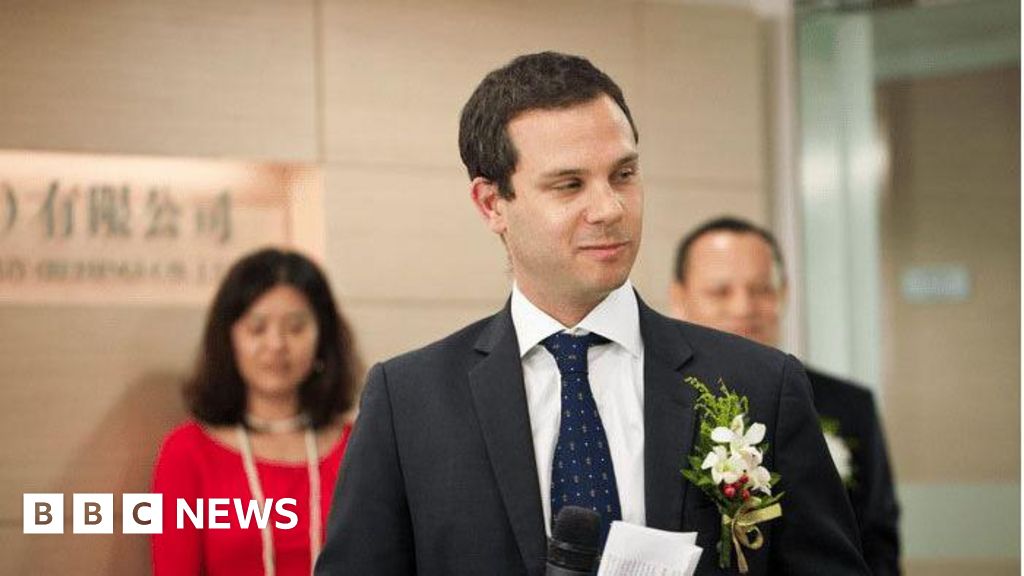
Records from Companies House indicate he was born in 1978. A concise biography, purportedly sent by Stern to Epstein, states that he pursued studies in Law and Chinese Law at the prestigious School of Oriental and African Studies (SOAS) in London. A source familiar with the matter confirmed that Stern completed a three-year Law BA at SOAS in 2000 but subsequently withdrew from a postgraduate research program in 2003. The biography further claims his fluency in Mandarin Chinese, cultivated through studies in Taiwan and China during the 1990s. His early career included a stint at Ermgassen & Co, a smaller investment banking firm, from 2000 to 2002. Following this, he founded Asia Gateway, an IT healthcare business based in Beijing. Stern claimed to have sold a majority stake in Asia Gateway to Informa, the prominent UK publishing and events conglomerate, in 2010, and continued his work with them. Informa, however, confirmed to the BBC that while they did acquire the stake, "no product ever came to market from this and the agreement expired in 2014."
Stern and Epstein: A Controversial Partnership
The earliest documented interaction between Epstein and Stern, according to the DOJ files, occurred in May 2008. These documents include a note to Lesley Groff, Epstein’s personal assistant, inviting him to consider investing in a "China-focused private equity fund." The relationship between the two men deepened significantly, even blossoming, despite Epstein’s guilty plea the following month to a conviction for soliciting prostitution from a minor. Over the subsequent two years, Stern’s emails to Epstein became a consistent stream of investment proposals punctuated by lewd references to women.
The dynamic between them was clear: Epstein, 15 years Stern’s senior, immensely wealthier, and deeply embedded within elite American social circles, was undeniably the senior partner. Stern, in contrast, presented himself as an eager young student, constantly striving to impress. Many of his emails were variations of the query, "when can I call you?" Stern reportedly addressed Epstein with deferential titles, referring to him as "my mentor" and even "my general." Epstein, in turn, offered advice on the sale of Stern’s healthcare business and admonished him for insufficient due diligence when vetting new contacts.
Stern’s correspondence frequently contained explicit references to women and sex, often utilizing the abbreviation "P." It is widely believed that Stern used this to refer to women, an abbreviation of the word "pussy," a term Epstein himself frequently employed in his communications. Epstein, for his part, typically responded with terse, business-like, and often poorly punctuated replies, or sometimes no reply at all. For instance, in 2009, Stern apparently recounted a dinner in Beijing hosted by a friend who had amassed "a fortune in steel." An email describes the "entertainment during dinner were 5 girls on the dining table… while we ate. Welcome to the new china!" In 2010, Stern reportedly proposed a visit to Little Saint James, Epstein’s private Caribbean island, where many of his horrific crimes against women were committed. "if i want action i come to LSJ – my friend J will have plenty of P for me…(so i hope!)," he wrote to Epstein. It remains unclear from the emails whether Stern ever actually visited the infamous island.
How Stern Met Andrew and Sarah Ferguson
The correspondence contained within the DOJ files strongly indicates that Epstein was the conduit through whom Stern first gained access to the Duke and Duchess of York. In February 2010, an email from "Sarah" to someone identified simply as "A" reads: "I was introduced to David Stern by Jeffrey. He came to Royal lodge for dinner. He has been helping me a great deal with an ear and advice to my way ahead. He has a great roladex [sic] for China." Given the explicit reference to Royal Lodge, Prince Andrew’s residence in Windsor, it is highly probable that the email originated from Sarah Ferguson. Stern then followed up with an email to "Your Royal Highness," stating that "The Duchess" had requested his contact and inquiring how he "may be of help."
While that email did not specify the "matter" in question, it is known that since 2009, Stern, Epstein, and Sarah Ferguson had been embroiled in a protracted and challenging struggle over her severe financial difficulties. Ferguson had apparently sought Epstein’s assistance with her substantial debts, which she estimated at £6 million, according to the emails. Stern subsequently undertook the task of persuading her to systematically itemize her creditors and liabilities.
In their private communications, Stern and Epstein exhibited extreme disrespect towards Ferguson. Stern reportedly wrote, "Unbelievable what it takes to get basic info," to which Epstein suggested treating her like a "girlfriend who has cheated." Stern’s reply indicated that this approach was "working." Prince Andrew himself became involved in the situation, purportedly writing to another friend later that year that he had "a handle on the debt situation."
Building upon this nascent relationship, Stern wrote to Epstein suggesting the establishment of a business in London aimed at "high net worth individuals, targeting Chinese (but not exclusively)." Crucially, he added, "We very discreetly make PA a part of it and use his ‘aura and access’." Stern frequently referred to Prince Andrew as "PA" in his communications. Like many of Stern’s ambitious proposals, this particular venture does not appear to have materialized.
Nevertheless, Stern’s relationship with Prince Andrew seemingly deepened and expanded. Despite Prince Andrew being compelled to publicly distance himself from Epstein following the latter’s 2008 conviction, Stern acted as a crucial go-between, forwarding documents and intelligence from Andrew. He reportedly accompanied Prince Andrew on some of his international, taxpayer-funded trips in his capacity as a trade envoy, leveraging his extensive Chinese connections to open doors. One email claims that the pair visited China in October 2011, with Stern stating, "Most meetings by now are organised by me except mayors and governors." The Court Circular, the official record of royal engagements, confirms that Andrew was indeed in China that month in his official capacity.
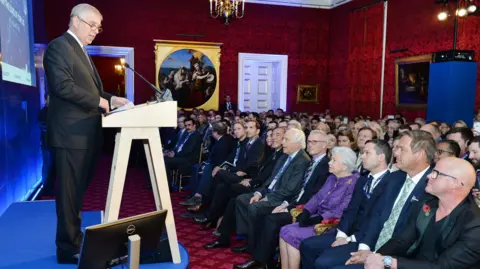
In 2016, Stern was appointed to the board of the then-Prince’s start-up competition, Pitch@Palace. He was even photographed seated next to Queen Elizabeth II at a Pitch@Palace event, a testament to his seemingly elevated status within royal circles. Pitch@Palace later became embroiled in significant controversy when Yang Tengbo, the co-founder of its China arm, was banned from the UK on suspicion of being a spy, an accusation he denies. Yang was notably seen sitting next to Prince Andrew at the 2019 Gala Dinner in Shenzhen, where Stern was also present.

Stern’s influence extended further when he was appointed to the board of St George’s House Trust, an institution established by the late Duke of Edinburgh with the mission to advance "moral, religious and social understanding." A recent report in the Daily Telegraph indicated that some existing board members harbored misgivings about Stern’s appointment, citing a lack of clarity regarding his background, but the appointment was reportedly pushed through nonetheless. St George’s House did not respond to a request for comment. In the same year, 2016, Stern extended a personal request to Epstein, asking him to be the godfather of his newborn child. Epstein declined, citing a promise to his goddaughter that he "would not be godfather to anyone else."
The Enduring China Connection
Stern’s profound knowledge of China and the exclusive access he claimed to offer appear to have been the primary factors in his sustained appeal to both Epstein and Prince Andrew throughout their relationships. In 2009, while much of the Western world grappled with the aftermath of the global financial crisis, China’s rapidly expanding economy was perceived by many, including Epstein, as a vast land of untapped opportunity. That year, Stern presented Epstein with the concept of establishing an investment office in London—one that would have "no ‘obvious’ link to China on the outside, but is extremely China focused."
Stern consistently asserted that he possessed exceptionally strong connections within China. In a 2011 email, he purportedly claimed friendships with Louis Cheung, then president of Ping An, one of the world’s largest insurance companies, and Alvin Jiang, the grandson of former Chinese President Jiang Zemin. Stern also claimed to have met Levin Zhu, the son of former Premier Zhu Rongji. It is important to clarify that it is not certain whether Stern genuinely held these connections, and there is no indication that any of these prominent Chinese individuals ever met Jeffrey Epstein. Their appearance in the Epstein files does not imply any wrongdoing on their part.
Epstein’s personal ability to operate within China was severely curtailed, as he was denied a visa due to his criminal conviction, the files suggest. Stern reportedly advised him to reapply for a visa in a different city—Paris—and strategically omit any mention of his previous conviction. He apparently told an Epstein associate, whose name is redacted, that it "will be better not to tick the boxes re being denied previously or criminal charges."
Stern’s ambitious appetite for dealmaking remained undiminished throughout the 2010s. In 2015, he represented Evergrande, then China’s largest property company, in an attempt to acquire the UK housebuilder Cala Homes, though the deal ultimately did not proceed. Evergrande later famously collapsed, sending severe shockwaves through China’s economy and beyond. Stern also co-invested in an electric vehicle start-up named Canoo, alongside Li Botan, the son-in-law of a former senior Communist Party official. That venture, too, went bust last year. The emails even suggest that Stern and Epstein discussed a fantastical plan to take over the colossal German lender Deutsche Bank with the assistance of Qatari investors—a scheme that never came to fruition.
The BBC has made multiple attempts to contact David Stern, but his current whereabouts are largely unknown. In 2023, his country of residence listed on Companies House was changed from China to the United Arab Emirates. The BBC has also repeatedly contacted Prince Andrew Mountbatten-Windsor and Sarah Ferguson regarding their links to Epstein and Stern, but they have not provided a response. Prince Andrew has consistently denied any wrongdoing in connection with Jeffrey Epstein.
The Department of Justice files indicate that Stern last met Epstein in person in November 2018, staying in one of Epstein’s New York properties. Their correspondence appears to have continued until the very end of that year, much as it had for the preceding decade—filled with discussions about China, various deal ideas, the unsettling references to "P," updates concerning "PA," and Stern’s persistent question: "When can I call you?"

 atisusanti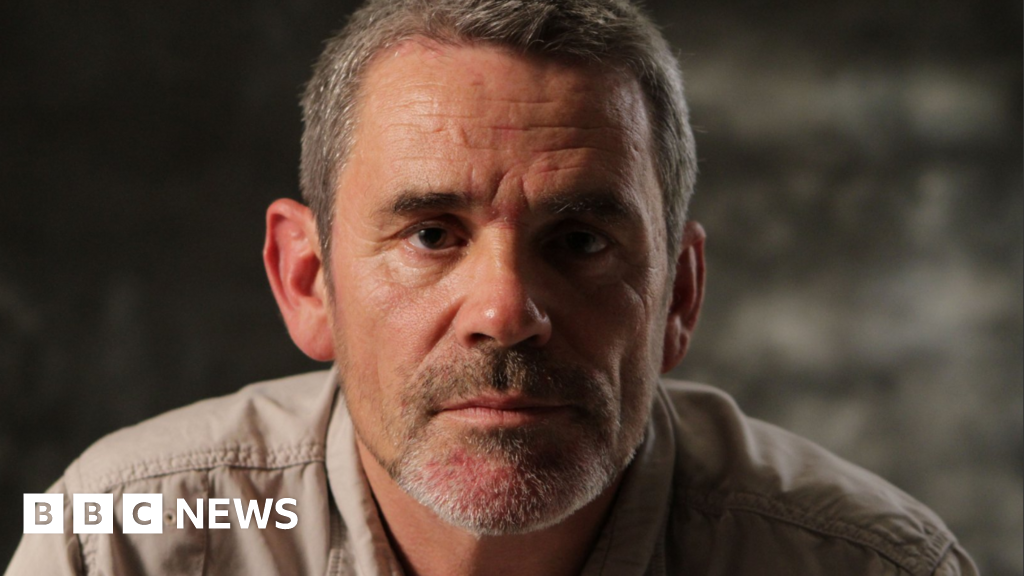
 George Anjay