
 Nakalama John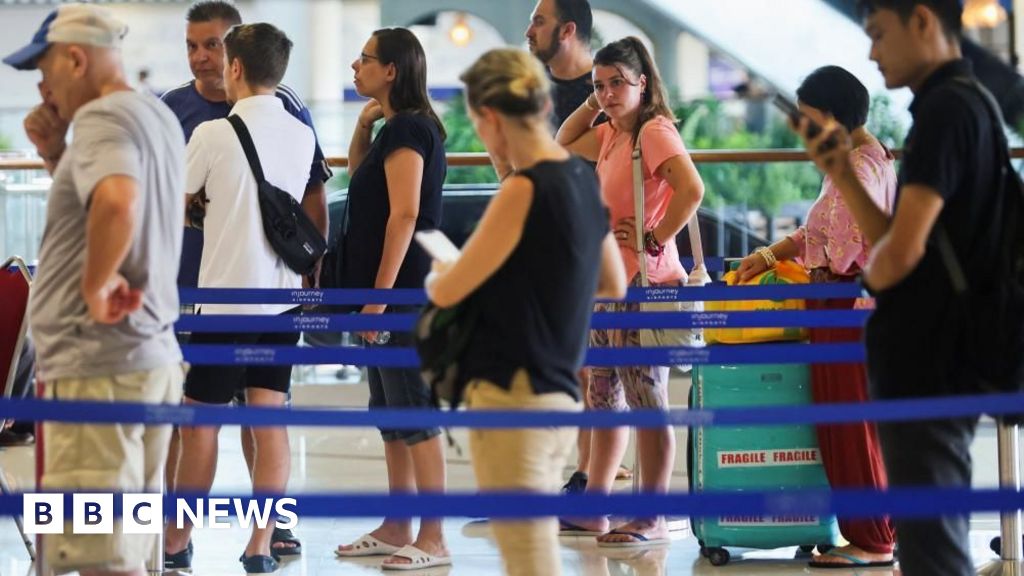
The escalating conflict in the Middle East has triggered an unprecedented wave of flight cancellations, with thousands more services grounded on Monday as the joint Israeli and US war on Iran intensifies. The aviation sector, a critical artery for global travel and commerce, is grappling with severe disruption, impacting hundreds of thousands of passengers and threatening long-term repercussions for the industry worldwide.
According to data from flight tracking service Flightradar24, more than 4,000 flights daily have been cancelled across the region since the conflict began, a figure that continues to climb. On Monday alone, aviation analytics firm Cirium reported that a staggering 79% of global flights scheduled for Qatar and 71% for the United Arab Emirates were cancelled. The impact was even more pronounced for direct conflict zones, with 81% of flights to Israel and 92% of flights to Bahrain also grounded. These nations, particularly Qatar and the UAE, host some of the world’s busiest international transit hubs, making the cancellations a significant blow to global connectivity.
Ian Petchenik, director of communications for Flightradar24, warned that this disruption "will only increase the longer the crisis continues" and that it "will have enormous repercussions for the industry." The closure of vast swathes of airspace over the Gulf and surrounding regions due to heightened security risks – including potential missile strikes and drone activity – has made safe flight operations impossible, forcing airlines to reroute or cancel services en masse.
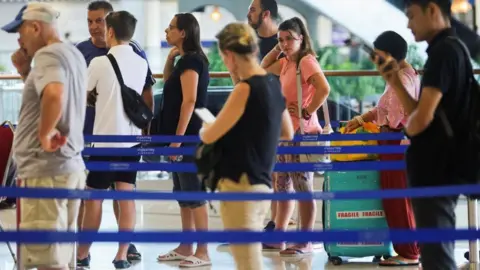
The ongoing airline disruption coincides with a concerning development for Western governments, as more than 100,000 Britons have registered their presence in the Middle East with the UK government, highlighting the vast number of expatriates, business travellers, and holidaymakers now caught in the precarious situation. Many are stranded, facing uncertain prospects for return or onward travel.
Qatar’s national carrier, Qatar Airways, confirmed the temporary suspension of its flight operations on Monday, citing the closure of Qatari airspace. In a statement posted on X, the airline affirmed, "Qatar Airways will resume operations once the Qatar Civil Aviation Authority announces the safe reopening of Qatari airspace." Similar sentiments have been echoed by other regional carriers, all prioritizing passenger and crew safety above all else.
From the UK, the impact has been equally profound. All scheduled flights to Israel and Bahrain were cancelled on Monday. Three-quarters of the day’s scheduled flights to the United Arab Emirates and more than two-thirds (69%) of flights to Qatar were also scrapped. While the majority of inbound flights were also affected, some outbound services managed to depart; FlightRadar24 noted an Etihad flight from Abu Dhabi successfully leaving for London on Monday morning, a testament to the complex and fluid nature of airspace management during a crisis.
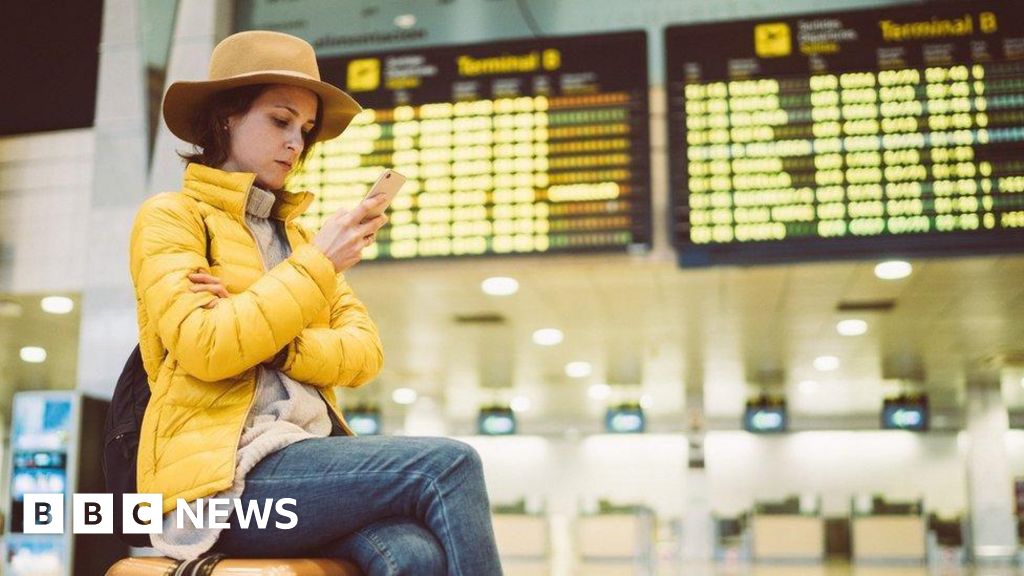
The human cost of these cancellations is palpable. Ian Scott, from Wedmore in Somerset, recounted his harrowing experience to BBC Your Voice. Traveling back from Melbourne to Venice, his Saturday morning flight out of Doha was forced to turn back mid-air due to the unfolding conflict. "We were in airport for 15 hours before evacuation to a hotel. That was full and we had to shelter underground due to close explosions," Scott explained. Since then, he has been stuck in Doha, constantly hearing blasts in the area and desperately awaiting an opportunity to leave. His ordeal is a stark illustration of the fear and uncertainty gripping thousands of travellers whose journeys have been abruptly halted by the regional instability.
Foreign Secretary Yvette Cooper addressed the situation, telling the BBC that the situation was "deeply stressful" for those affected, many of whom were traveling for holidays or business. When pressed on the possibility of a government-led evacuation, Cooper stated that the government was in close contact with airlines, airports, Middle Eastern governments, and the broader travel industry. She added that in previous similar situations, the government had worked collaboratively with airlines to facilitate the return of citizens on normal commercial flights, indicating a preference for this approach over a direct evacuation operation, which presents significant logistical and safety challenges in an active conflict zone.
The ripple effect of the Middle East’s aviation crisis extends far beyond the region itself. Paul Charles, from the prominent travel consultancy firm The PC Agency, highlighted the global ramifications. "Indeed at Sao Paolo airport yesterday I saw two Qatar Airways planes still on the ground there because they can’t fly to the Middle East at the moment," he noted. This example underscores how the hub-and-spoke model of international aviation means disruption in one major transit point, such as Doha or Dubai, creates bottlenecks and delays across continents. Passengers whose original itineraries routed them through these now-restricted airspaces are forced to seek alternative, often more expensive and circuitous, journeys. "Flights are entirely full via other countries because the passengers who were due to go to the Middle East have to reroute via somewhere else in order to find safe haven," Charles elaborated, pointing to the immense pressure on remaining available routes and the inevitable surge in ticket prices.
The economic consequences for the aviation industry are substantial. Airlines face significant financial losses from cancelled flights, compensation claims for delayed and stranded passengers, increased fuel costs due to longer rerouting, and operational challenges stemming from displaced crews and aircraft. Airports in the affected region are losing substantial revenue from landing fees, passenger services, and retail. Beyond passenger travel, the disruption to air cargo routes through the Middle East, a vital corridor for goods between Asia, Europe, and Africa, poses a threat to global supply chains, potentially leading to delays and increased shipping costs for a wide array of products. The long-term impact could see a decline in confidence in the Middle East as a reliable transit hub, prompting airlines to reconsider their strategic route planning and potentially shifting traffic to alternative, albeit less efficient, corridors.
For the hundreds of thousands of Britons and other international travellers, the situation is a test of endurance and resilience. Many are facing the prospect of extended stays in unfamiliar and potentially dangerous environments, with limited access to information and resources. The psychological toll of uncertainty, coupled with the financial burden of unexpected accommodation and rebooking costs, is immense. Governments globally are advising their citizens to avoid non-essential travel to the region and to monitor official travel advisories closely.
The duration of this crisis remains a critical unknown. The reopening of airspace is entirely contingent on a de-escalation of the military conflict and a significant reduction in the threat level. Until then, the aviation industry will continue to navigate an incredibly challenging period, striving to maintain safety while minimizing disruption for a global populace reliant on air travel. The current situation serves as a stark reminder of the interconnectedness of geopolitics, security, and the global economy, with the aviation sector often bearing the immediate brunt of regional conflicts. The hope remains for a swift resolution to the hostilities, allowing the skies to reopen and normal life, including international travel, to resume.
With additional reporting from Bernadette McCague



 George Anjay
 Ramos Leo

 atisusanti