Ramos Leo
The dispute centers on the United Kingdom’s conditional agreement to allow the United States to utilize its military bases, specifically RAF Fairford in Gloucestershire and the strategically vital Diego Garcia in the Chagos Islands archipelago. While the UK assented to the US request, it imposed a critical caveat: these bases could only be used for "defensive" strikes targeting Iranian missile sites, effectively limiting British involvement and precluding participation in broader offensive campaigns. This stipulation immediately drew the ire of President Trump, who expressed his displeasure, stating he was "not happy with the UK" and lamenting the logistical complications it created for US forces, forcing American planes to fly "many extra hours" to accomplish their missions.
Diego Garcia, a remote island in the Indian Ocean, hosts a crucial US naval support facility and air base, making it an indispensable asset for operations across the Middle East, Africa, and Asia. Its strategic location offers unmatched reach and response capabilities. The UK’s decision to restrict its use, even for an ally, highlighted a divergence in foreign policy approaches between the two nations, long considered pillars of the "special relationship." For Trump, this perceived reluctance to fully commit to US-led operations was a stark departure from the historical precedent of robust Anglo-American cooperation, embodied by the wartime leadership of Winston Churchill.
Sir Keir Starmer, addressing Members of Parliament on Sunday, defended the UK government’s position, emphasizing a commitment to international law and a nuanced understanding of geopolitical realities. He explicitly stated that the UK government "does not believe in regime change from the skies," a clear reference to past interventions that have yielded complex and often detrimental outcomes. Starmer underscored the lessons learned from the Iraq War, insisting that any military action taken by the United Kingdom must be predicated on a "lawful basis" and supported by a "viable thought-through plan with an objective that can be achieved or has a viable prospect of being achieved." This cautious approach, deeply rooted in the post-Iraq War political landscape of the UK, prioritizes parliamentary oversight, legal justifications, and a clear exit strategy, a stark contrast to the more assertive, immediate action often favored by the Trump administration.
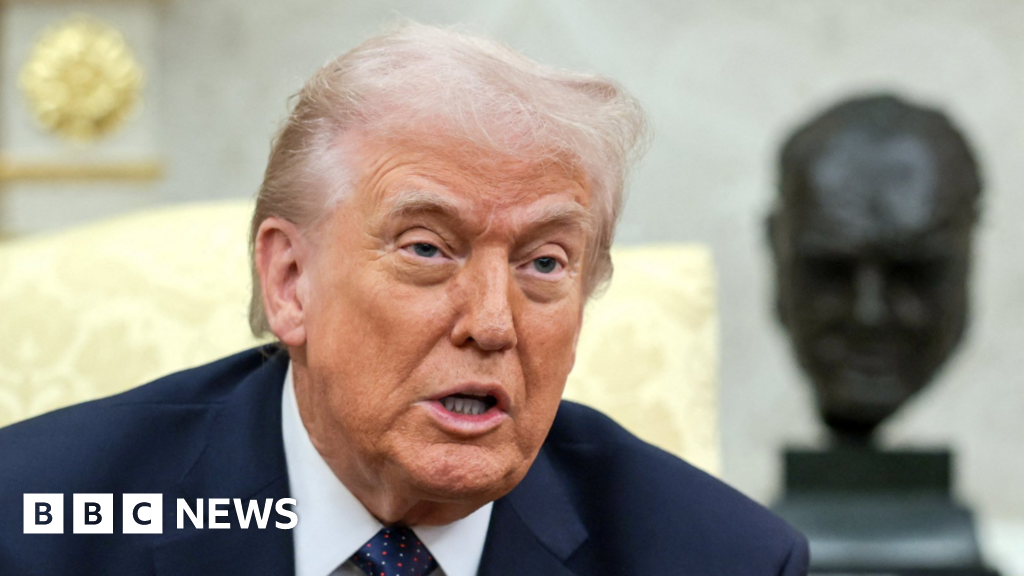
Trump, however, dismissed Starmer’s rationale, lambasting the decision regarding Diego Garcia as "shocking." He appeared to misunderstand aspects of the base’s operational agreements, commenting, "That island that you write about, the lease…. For whatever reason, he made a lease of the island. Somebody came and took it away from him and it’s taken three or four days for us to work out where we can land." This mischaracterization likely referred to the UK’s sovereign control over the territory and its right to dictate terms of use, rather than any "lease" being "taken away." He reiterated the logistical burden: "It would have been much more convenient landing there as opposed to flying many extra hours. So we are very surprised." His ultimate conclusion underscored his disappointment in Starmer’s leadership: "This is not Winston Churchill that we’re dealing with."
The escalating tensions in the region provided a tense backdrop to Trump’s remarks. Just a day prior, a British air base in Cyprus had been hit by a drone, prompting the swift deployment of the Royal Navy warship HMS Dragon to the Mediterranean to enhance defensive capabilities. This incident underscored the very real and immediate threats faced by UK assets and personnel in the Middle East, making Starmer’s cautious approach perhaps even more understandable from a domestic political perspective. The drone attack served as a stark reminder of the unpredictable nature of regional conflicts and the potential for rapid escalation, further solidifying the UK’s desire for a carefully considered, legally sound response rather than an immediate, full-throated commitment to US-led offensive actions.
The comparison to Winston Churchill is a powerful rhetorical tool in Anglo-American discourse, evoking images of unwavering resolve, steadfast alliance, and decisive leadership in times of global crisis. For Trump, Churchill represents a bygone era of robust British military and political might, consistently aligned with American interests. By declaring Starmer "no Winston Churchill," Trump was not merely criticizing a policy decision but was questioning Starmer’s very mettle and leadership qualities on the international stage. It implied a perceived weakness, a lack of the bold, strategic vision that characterized the wartime prime minister. This rhetorical flourish also played into Trump’s broader "America First" philosophy, which often views allies through the lens of their direct utility to US interests and expects unequivocal support.
Beyond the immediate dispute over Iran strikes and base usage, Trump broadened his criticism, taking aim at other aspects of UK government policy. He voiced disapproval of British energy and immigration policies, signaling a wider frustration with Starmer’s administration and potentially, the contemporary direction of the United Kingdom. "This is not the age of Churchill," Trump concluded, a statement that simultaneously lamented a perceived decline in British assertiveness and underlined his own view of a changing world order where such a leader, in his opinion, was sorely missed.
Political analysts in both the UK and the US quickly weighed in on Trump’s remarks. Many saw it as a calculated move to pressure Starmer and test the resilience of the "special relationship" under a Labour government. Others noted that such public reprimands from a former US president, especially one with a significant following and potential future political influence, could have ramifications for Starmer’s standing both domestically and internationally. While Starmer’s government has consistently affirmed its commitment to the US as its closest ally, it has also sought to articulate an independent foreign policy, one that balances strategic alliances with adherence to international law and a pragmatic assessment of British national interests. This balancing act appears to be precisely what drew Trump’s critical gaze, highlighting the enduring complexities and evolving dynamics of the Anglo-American bond in an increasingly fractured world.



 Nana Banana
 atisusanti
 Nakalama John