Nakalama John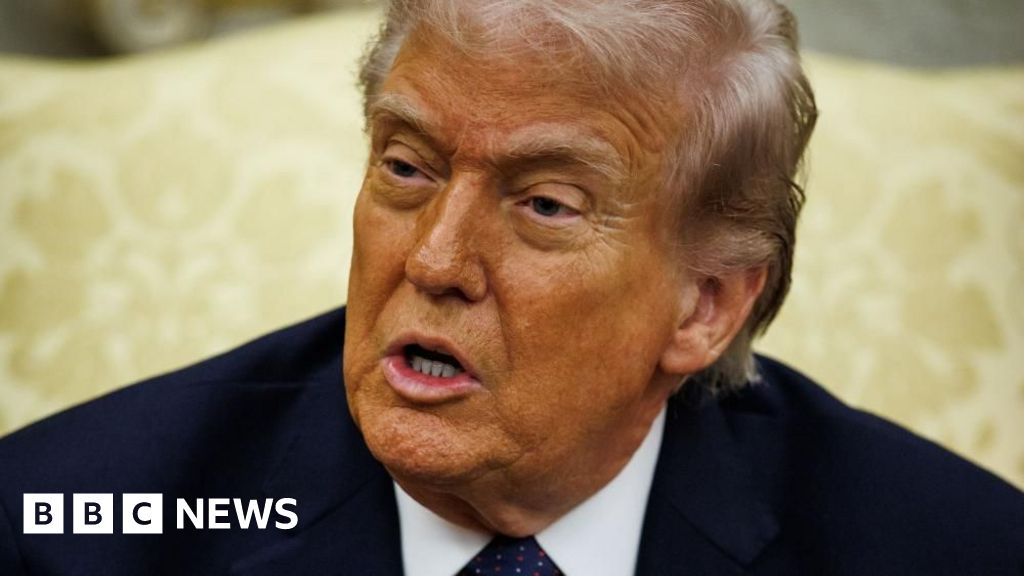
In characteristically blunt remarks, President Trump lambasted Spain, labeling its actions as "terrible" and suggesting an immediate and comprehensive halt to bilateral trade. "We’re going to cut off all trade," Trump declared to reporters, adding, "We don’t want anything to do with Spain." This aggressive stance follows Spain’s decision to bar the US from leveraging its military installations in the country as part of its strategic maneuvers in the Persian Gulf region, citing concerns over international law and the United Nations charter.
The immediate enforceability and practical implications of such a sweeping trade embargo on a European Union member state remain highly ambiguous. Experts and officials alike are grappling with the legal and logistical complexities of blocking trade with a nation deeply integrated into the EU’s single market and customs union. However, the President’s threat signals a significant escalation in transatlantic tensions, adding to an already strained relationship characterized by disagreements over defense contributions and geopolitical strategy.
Trump reiterated his capacity to implement such measures swiftly, stating on Tuesday, "I could tomorrow — or today, even better — stop everything having to do with Spain, all business having to do with Spain." This assertion was echoed by Treasury Secretary Scott Bessent, who reportedly supported the President’s view that the US possesses the legal authority to impose an embargo on Spanish imports. They presumably referenced executive powers granted to the President for national security reasons, such as those under the International Emergency Economic Powers Act (IEEPA), which allows for the regulation of international commerce in response to an unusual and extraordinary threat.
However, the administration’s top trade official, US Trade Representative Jamieson Greer, displayed a more cautious approach when pressed by the President for his opinion on the proposed plan. Greer’s response, "We’re going to talk about it with you," and his subsequent acknowledgment, "You have the strong power that the Supreme Court clarified – we know you can use it. And if you need to use it to assure national and economic security, we’ll do it," highlighted the delicate balance between presidential prerogative and the complex realities of international trade law and diplomacy. The non-committal tone suggested a need for further deliberation, potentially acknowledging the significant legal and economic hurdles involved. The White House did not immediately respond to requests for comment regarding the specifics of the trade threat or the legal framework under which it might be enacted.
Beyond the immediate military access dispute, Trump’s comments exacerbated existing tensions over defense spending. The President expressed profound frustration with the Spanish government for its persistent refusal to increase its defense expenditure to 5% of its gross domestic product. This figure is substantially higher than the 2% target set by NATO for its member states, a target many European countries have struggled to meet but some have now pledged to pursue. Spain, like several other NATO allies, has been a frequent target of Trump’s criticism for what he perceives as insufficient contributions to the collective defense burden. He has previously hinted at economic repercussions for nations failing to meet these financial commitments, framing it as an issue of fairness and burden-sharing within the alliance.
Imposing trade restrictions on Spain would present unique challenges due to its membership in the European Union. The EU operates as a single market, allowing for the free movement of goods, services, capital, and people among its 27 member states. Any unilateral trade sanctions imposed by the US on Spain would likely be viewed by Brussels as an attack on the entire bloc, potentially triggering a coordinated response from the EU. This could include retaliatory tariffs or legal challenges at the World Trade Organization (WTO), significantly complicating Washington’s trade relations with its largest economic partner. The EU’s robust internal market mechanisms mean that goods destined for Spain could theoretically be rerouted through other EU countries, making a direct and effective embargo challenging to enforce.
Economically, the potential ramifications of a trade halt would be substantial for both nations. In 2025, US exports to Spain amounted to approximately $26 billion, while imports from Spain reached about $21 billion, according to data from the US Census Bureau. A sudden cessation of this trade flow would disrupt supply chains, impact businesses, and potentially lead to job losses in key sectors. Spain’s top exports to the US include a diverse range of products, notably pharmaceutical goods, olive oil, machinery, and automotive components. US exports to Spain encompass aircraft, machinery, electrical equipment, and agricultural products. The disruption would be felt across various industries, from agriculture and manufacturing to technology and consumer goods, creating significant economic uncertainty for companies operating in both markets.
The diplomatic spat is deeply rooted in Spain’s foreign policy orientation under Prime Minister Pedro Sánchez, currently one of Europe’s prominent left-leaning leaders. Sánchez publicly condemned the US and Israel’s actions in Iran, describing them on Sunday as an "unjustified, dangerous military intervention" that violated international law. This strong condemnation from Madrid underscores a fundamental disagreement with Washington’s aggressive posture in the Middle East. Spanish officials specifically stated that allowing the US to use military bases located in southern Spain for operations in Iran would be a breach of the United Nations Charter, which emphasizes the peaceful resolution of international disputes and prohibits the use of force except in self-defense or with Security Council authorization.
Spain hosts several strategically vital US military facilities, including Naval Station Rota and Morón Air Base. These bases have historically played crucial roles in supporting US and NATO operations in the Mediterranean, Africa, and the Middle East. The refusal to grant access for Iran-related operations represents a significant diplomatic and operational hurdle for the Pentagon, highlighting the limits of allied cooperation when national interests or interpretations of international law diverge. Such a move underscores a more independent foreign policy stance by Spain, prioritizing international legal frameworks and multilateralism over unwavering alignment with US military objectives.
While Trump also criticized the United Kingdom for being "very uncooperative" with his push to use military bases for operations against Iran, he notably refrained from issuing an explicit threat to impose trade restrictions on the UK. This distinction could be attributed to the UK’s unique "special relationship" with the US, its significant military contributions, or different strategic considerations following its departure from the European Union. The divergent treatment of Spain and the UK, despite similar concerns over military base access, suggests a complex calculus at play in the Trump administration’s foreign policy, where economic leverage is selectively applied based on perceived strategic value and political alignment.
The confrontation with Spain comes at a time of heightened global instability and further strains the transatlantic alliance, which has already been tested by trade disputes, disagreements over climate change, and differing approaches to international organizations. The implications of Trump’s threat, if carried out, would extend far beyond bilateral trade, potentially reshaping geopolitical alignments and challenging the foundational principles of post-World War II international cooperation. The episode serves as a powerful reminder of the potential for economic policy to be wielded as a sharp instrument of foreign policy, with unpredictable consequences for global trade and diplomatic relations.


 George Anjay
 atisusanti
 Nana Banana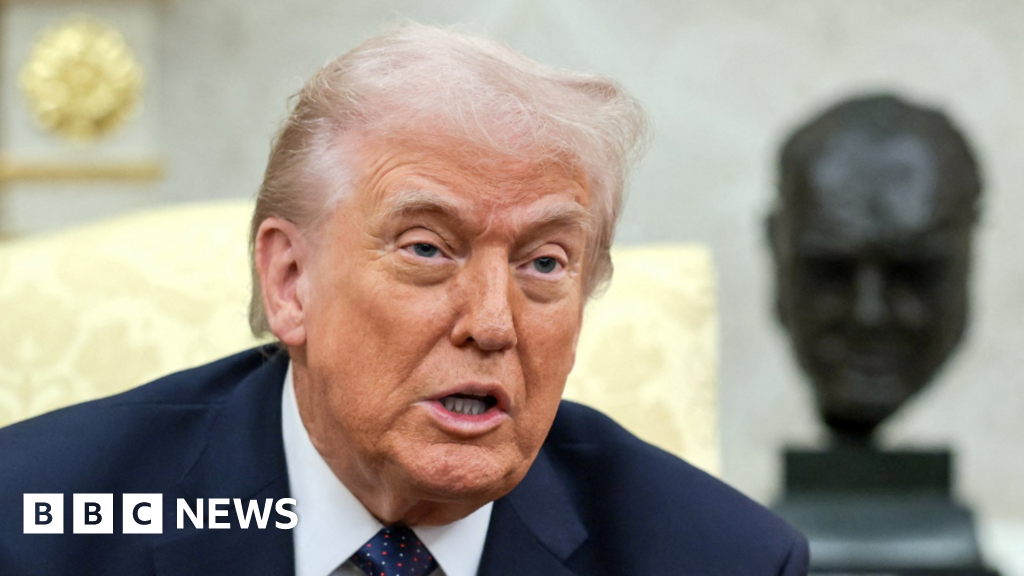
 Ramos Leo