Ramos Leo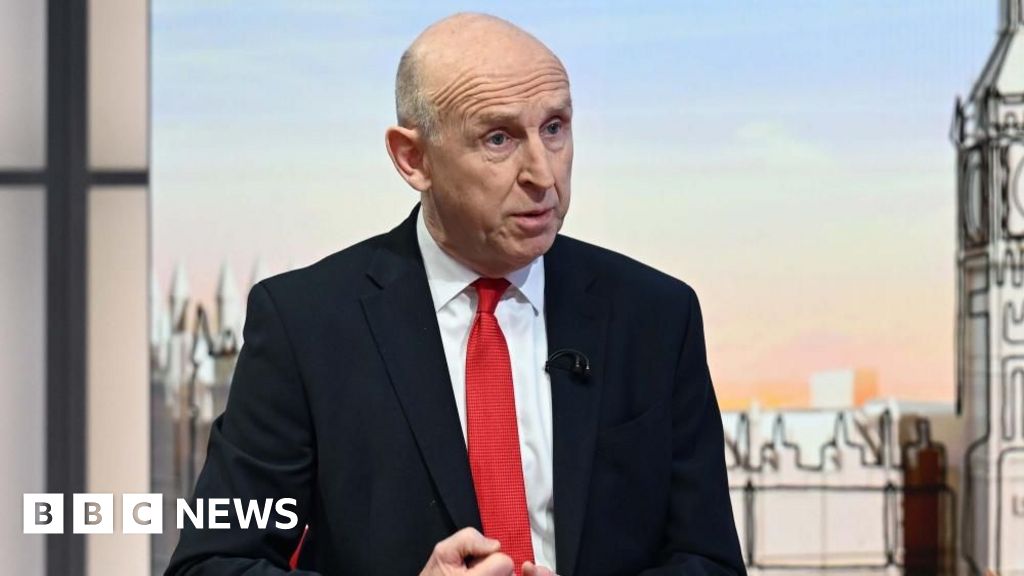
Defence Secretary John Healey has voiced grave concerns regarding the escalating regional tensions, asserting that protecting UK military personnel and civilians in the Middle East from what he termed "indiscriminate attacks" by Iran remains his paramount priority. His remarks underscored the perilous environment facing British assets and personnel in a volatile region, exacerbated by recent actions attributed to Tehran.
Speaking to the BBC’s Sunday with Laura Kuenssberg, Healey articulated the severity of the threat, stating that while "no-one will mourn" the actions and oppressive nature of the Iranian regime, whose leadership, including figures like Supreme Leader Ayatollah Ali Khamenei, has long been a source of regional instability, his immediate focus was on the safety of British citizens. This statement came amidst reports of initial US and Israeli air strikes targeting Iranian assets, though specific high-profile deaths directly attributed to these initial strikes were not confirmed. Healey’s comments, therefore, served to highlight the UK’s condemnation of Iran’s destabilising influence rather than reporting a specific casualty.
The Defence Secretary revealed a deeply concerning incident on Saturday, where British military personnel stationed at a base in Bahrain found themselves perilously close to a retaliatory missile and drone strike. "In that Bahrain military base that was hit by missiles and drones yesterday, we had 300 British personnel, some within several hundred yards of the strike," Healey detailed, emphasising the razor-thin margin separating British forces from direct engagement in the rapidly escalating conflict. The proximity of these attacks to UK personnel highlights the critical dangers faced by those deployed to maintain regional security and counter threats in the Middle East. Such incidents underscore the unpredictable and widespread nature of Iran’s retaliatory capabilities, which appear to extend beyond specific military targets, raising fears of collateral damage involving international forces and civilian populations.
Further illustrating the reach and perceived recklessness of these attacks, Healey disclosed that two ballistic missiles were also "fired in the direction of Cyprus." While he added, "Now, we’re pretty sure they weren’t targeted at Cyprus," the mere trajectory of such advanced weaponry towards a sovereign nation, which hosts significant British military installations like RAF Akrotiri, demonstrates the broad scope of the Iranian response and the potential for miscalculation or accidental escalation. Cyprus, a member of the European Union and strategically located in the Eastern Mediterranean, is not directly involved in the immediate conflict but faces serious implications from its spillover. The presence of UK military bases on the island means that any strike, even if unintentional, in its vicinity carries significant diplomatic and security repercussions.
Crucially, the UK government chose not to participate in the initial US and Israeli strikes on Iran. This decision reflects a delicate balancing act by London, aiming to support its allies while simultaneously attempting to de-escalate the broader regional conflict and avoid being perceived as a direct aggressor in an offensive capacity. However, this non-participation in offensive actions does not diminish the UK’s commitment to protecting its interests and personnel. Healey stressed that these attacks demonstrated how British military personnel and civilians were "at risk with a regime that is increasingly indiscriminate, widespread and uncontrolled in the attacks it is mounting," necessitating a robust defensive posture.
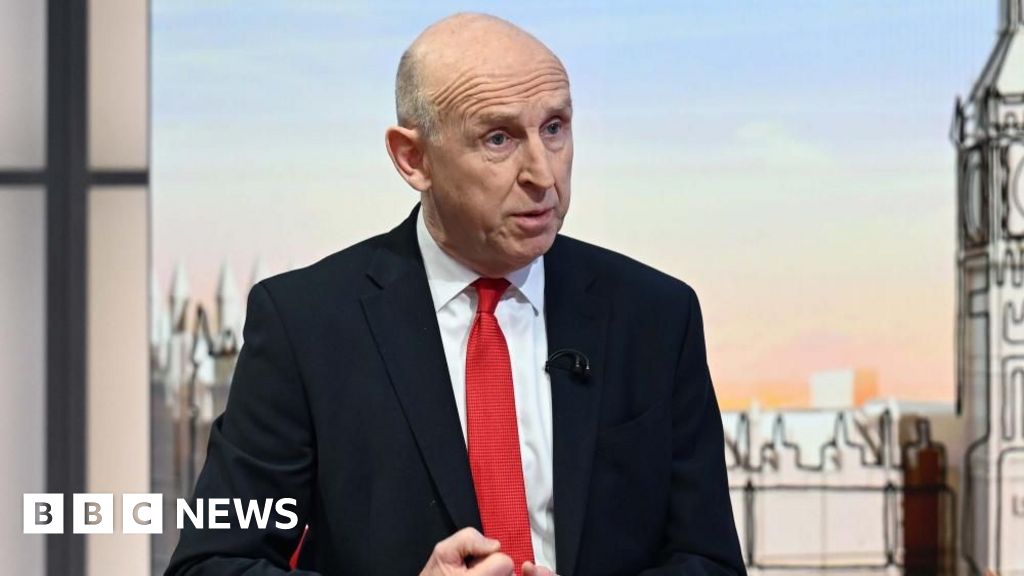
In response to the heightened global security environment, Healey confirmed that the government was actively reviewing the terror threat level in the UK. This review is a standard procedure following significant international incidents involving state-sponsored aggression or heightened geopolitical tensions, particularly when those tensions involve actors known to support proxy groups with international reach. An elevated threat level could lead to increased security measures across the country, affecting public spaces, critical infrastructure, and international travel, reflecting the government’s assessment of potential domestic or international threats to British interests and citizens.
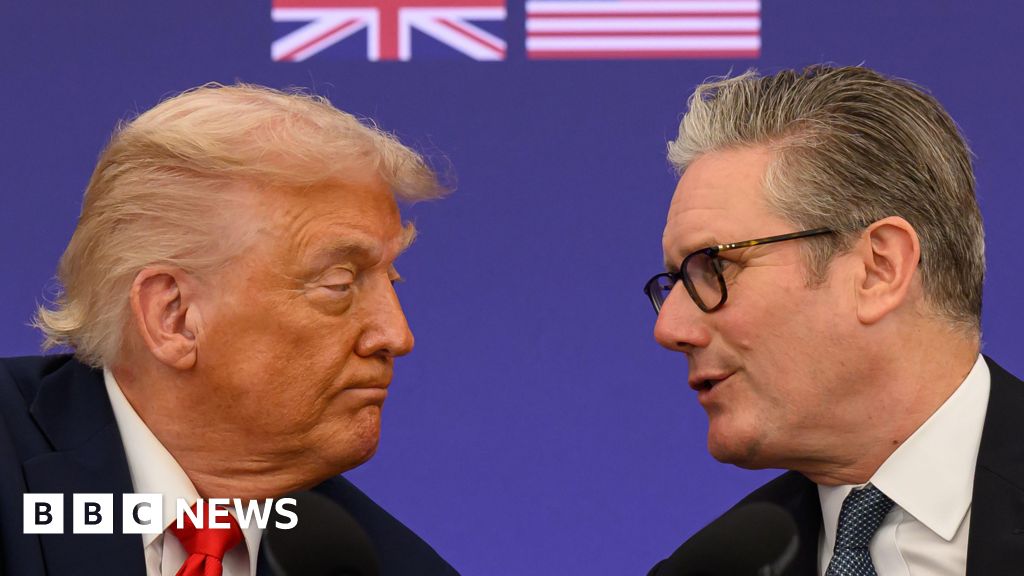
Adding a critical political dimension to the discussion, prominent Conservative MP and former Home Secretary Dame Priti Patel weighed in on the unfolding crisis. Speaking on the same programme, Patel expressed her unequivocal welcome for the US-Israeli attacks on Iran, characterising them as a necessary measure against a dangerous regime. She went on to deliver a stinging rebuke to the leader of the opposition, Sir Keir Starmer, stating it was "absolutely astonishing" that he had not been more "proactive" given the manifest threats posed by the Iranian regime to UK interests. Patel’s comments reflect a hawkish stance within conservative circles, advocating for a firmer approach against Iran and criticising what she perceives as a lack of decisive leadership from the Labour Party on such a critical foreign policy issue. Her remarks underscore the deep political divisions in the UK regarding engagement with the Middle East and the appropriate response to state-sponsored aggression.
Since Saturday morning, the Middle East has witnessed a significant escalation, with Iran launching multiple waves of missile and drone attacks against various targets. These strikes have not been confined to Israel but have extended across a broad swathe of the region, impacting Bahrain, Qatar, the UAE, Kuwait, and Iraq. The targets likely include US military bases, oil infrastructure, and other assets perceived as supporting Western or Israeli interests. This widespread targeting demonstrates Iran’s capability to project power across the Gulf and its willingness to risk a broader confrontation, testing the defensive capabilities and resolve of its adversaries and their allies. The sheer scale and geographical spread of these attacks signify a dangerous new phase in the long-standing shadow war between Iran and its regional rivals, backed by Western powers.
Healey reassured the public that the UK was attempting to do "all we can" to prevent further regional escalation. This includes tangible military actions, with British planes actively in the air throughout Saturday and overnight. These RAF assets, likely including fighter jets for air defence and surveillance aircraft for intelligence gathering, play a crucial role in monitoring the situation, deterring further aggression, and ensuring the safety of UK forces and allies. Beyond military posturing, the UK is undoubtedly engaged in intense diplomatic efforts behind the scenes, coordinating with allies such as the United States, Israel, and the Gulf states, as well as international bodies like the United Nations. The overarching goal is to de-escalate the situation, prevent a full-scale regional war, and protect global stability, which could be severely undermined by a protracted conflict in such a strategically vital area.
The implications of this escalating crisis are far-reaching. A wider conflict could destabilise global energy markets, disrupt vital shipping lanes, and exacerbate humanitarian crises. For the UK, the risks include not only the direct threat to its personnel and interests abroad but also the potential for increased domestic terror threats and economic fallout. The intricate web of alliances and rivalries in the Middle East means that any major escalation could quickly draw in multiple international actors, transforming a regional conflict into a global concern. The challenge for the UK and its allies remains to find a pathway to de-escalation that addresses legitimate security concerns without inadvertently fueling a catastrophic wider war. The current situation demands vigilant monitoring, robust defence, and sustained diplomatic engagement to navigate the treacherous geopolitical landscape.


 atisusanti
 Nakalama John
 George Anjay