
 atisusanti
OpenAI, the artificial intelligence powerhouse, is reportedly enacting significant revisions to its recently disclosed partnership with the U.S. Department of Defense. This move comes in the wake of intense public scrutiny and a notable backlash from users and observers concerned about the implications of advanced AI technologies being integrated into classified military operations, particularly in the context of the escalating US-Israel conflict with Iran. The initial agreement, described by OpenAI as having "more guardrails than any previous agreement for classified AI deployments," has come under fire for its perceived haste and potential for misuse, prompting swift action from the company’s leadership.
In a statement released on Saturday, OpenAI attempted to allay concerns, asserting that its accord with the Pentagon incorporated robust safeguards. However, by Monday, CEO Sam Altman acknowledged on the social media platform X that further amendments were necessary, specifically to ensure its systems would not be "intentionally used for domestic surveillance of U.S. persons and nationals." This crucial addition addresses a core fear among privacy advocates and the general public regarding the weaponization of AI for internal monitoring. Furthermore, the revised terms will necessitate a "follow-on modification" to the contract before intelligence agencies like the National Security Agency can utilize OpenAI’s platforms, a move designed to introduce an additional layer of oversight and control.
Altman candidly admitted that the company had erred by rushing the announcement of the deal on Friday. "The issues are super complex, and demand clear communication," he stated, reflecting on the public reaction. "We were genuinely trying to de-escalate things and avoid a much worse outcome, but I think it just looked opportunistic and sloppy." This admission highlights the delicate balance AI companies must strike between technological advancement, national security interests, and public trust.
The backlash against OpenAI’s Pentagon partnership was swift and palpable. Reports indicated a dramatic surge in uninstalls of the company’s popular ChatGPT mobile application. Data suggested a 295% increase in day-over-day uninstalls on Saturday, a stark contrast to the typical 9% daily rate. This user exodus underscores a deep-seated apprehension about the ethical boundaries of AI development and deployment, especially when linked to military applications.
Concurrently, rival AI firm Anthropic saw its own AI model, Claude, ascend to the top of Apple’s App Store rankings. This shift in user preference is particularly noteworthy given Claude’s history. The AI model had previously been blacklisted by the Trump administration due to Anthropic’s unwavering commitment to its corporate "red-line" principle: its technology should not be utilized for the creation of fully autonomous weapons. Despite this presidential directive, recent reports have emerged indicating the use of Claude in U.S. strikes within the Middle East, specifically in relation to the ongoing US-Israel war with Iran, raising further questions about the fluidity of government policy and the application of AI in conflict zones. The Pentagon, when approached for comment on its dealings with Anthropic, declined to provide any statements.
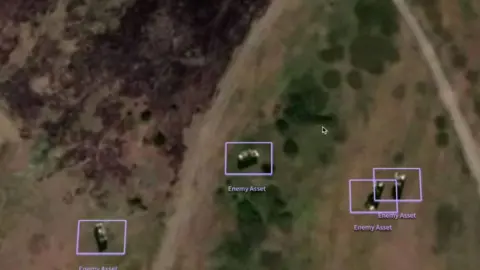
The military’s engagement with artificial intelligence is multifaceted and increasingly sophisticated. AI is employed across various domains, from optimizing complex logistical chains to rapidly processing vast volumes of intelligence data. Companies like Palantir, an American firm specializing in data analytics, are key players in this landscape. Palantir provides its advanced tools to government clients for critical functions such as intelligence gathering, surveillance, counterterrorism, and military planning. Notably, the UK Ministry of Defence recently solidified its reliance on Palantir by signing a substantial £240 million contract with the company.
The integration of AI into military operations is exemplified by projects like Palantir’s AI-powered defense platform, Maven. As described by Louis Mosley, head of Palantir’s UK operations, the software aggregates diverse military information, ranging from satellite imagery to classified intelligence reports. This consolidated data can then be analyzed by commercial AI systems, including models like Claude, to facilitate "faster, more efficient, and ultimately more lethal decisions where that’s appropriate." Such capabilities are transforming the speed and precision of military decision-making, offering a significant tactical advantage.
However, the inherent limitations and potential pitfalls of AI, particularly large language models (LLMs), remain a critical concern. LLMs are prone to errors and can generate fabricated information, a phenomenon known as "hallucination." This poses a significant risk when deployed in high-stakes military environments. Lieutenant Colonel Amanda Gustave, chief data officer for Nato’s Task Force Maven, emphasized the paramount importance of human oversight in these systems. She stressed that "a human in the loop" is always involved and that an AI would "never be the case" that it "make a decision for us." This commitment to human-in-the-loop protocols is designed to mitigate the risks associated with AI errors and ensure that ultimate authority rests with human commanders.
Palantir, while advocating for human oversight, does not endorse a complete ban on autonomous weapons, a stance that differentiates it from Anthropic’s more stringent ethical guidelines. This divergence in principles highlights the complex ethical landscape surrounding military AI. Professor Mariarosaria Taddeo of Oxford University expressed concern over Anthropic’s potential removal from Pentagon engagements, stating that "the most safety-conscious actor" might now be "out from the room." She described this development as "a real problem," suggesting that the absence of a company with robust ethical red lines could lead to a less cautious approach to AI deployment in military contexts. The implications of these shifts in partnerships and ethical stances are far-reaching, particularly as the global geopolitical climate, including the US-Israel war with Iran, continues to demand rapid technological adaptation and careful consideration of the ethical ramifications of advanced AI.




 George Anjay
 Nana Banana
 Ramos Leo
 Nakalama John
 Roy Suryo