
 George Anjay
A harrowing video, verified by the BBC, appears to capture the dramatic moment a United States F-15 fighter jet plummeted from the sky and crashed near Kuwait City. The footage was filmed from the western outskirts of the capital, near the Al Jahra area, offering a chilling perspective of the incident. In the wake of the crash, US Central Command confirmed that three F-15 jets were involved in what they described as an "apparent friendly fire incident." The military command further stated that all six crew members aboard the aircraft successfully ejected and are currently in stable condition, a testament to the pilots’ training and the aircraft’s safety systems, even in catastrophic failure.

The incident, which occurred just six hours prior to this report’s publication on March 2, 2026, at 09:43:33 GMT, has sent ripples through the Middle East, a region already fraught with geopolitical tensions. The involvement of US military assets in Kuwait, a key strategic ally, underscores the complex security landscape of the area. While the immediate cause has been attributed to friendly fire, the broader implications for regional stability and US military operations are likely to be significant.

The F-15 Eagle is a twin-engine, all-weather tactical fighter jet designed by McDonnell Douglas (now Boeing) capable of speeds exceeding Mach 2.5. It has been a workhorse of the US Air Force and many allied air forces for decades, renowned for its air-to-air combat capabilities. The fact that three such sophisticated aircraft were involved in a single incident, particularly one resulting in a crash, raises serious questions about operational procedures and coordination.
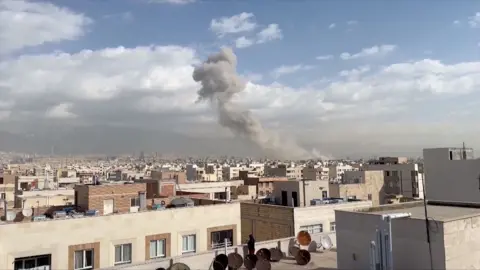
US Central Command’s statement about a "friendly fire incident" suggests a tragic misidentification or miscommunication between allied forces, a scenario that military planners strive to prevent through rigorous protocols and advanced identification systems. The investigation into the precise circumstances leading to this fratricidal event will undoubtedly be extensive, aiming to identify any systemic failures and implement corrective measures to avoid future recurrences. The safety and well-being of the six crew members who ejected are paramount, and their recovery will be closely monitored. Their stable condition, despite the extreme nature of their ejection, is a positive indicator.

Kuwait, a small but strategically vital nation bordering Saudi Arabia and Iraq, plays a crucial role in regional security architecture. It hosts a significant US military presence, serving as a logistical hub and a launchpad for operations in the Middle East. The crash occurring within its airspace, even if over a less populated area, will undoubtedly be a matter of concern for the Kuwaiti government, necessitating close cooperation with US authorities to ensure transparency and maintain public confidence.
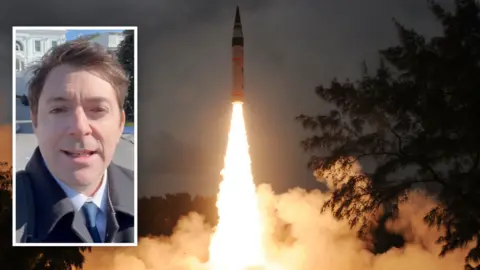
The mention of "Iran" and "Iran-US relations" among the related tags suggests that the broader context of the volatile relationship between the United States and Iran may be a backdrop to this incident, even if it wasn’t a direct cause. Tensions between the two nations have been consistently high, with periodic escalations and proxy conflicts throughout the region. Any perceived instability or misstep involving major military powers in such a sensitive area can have far-reaching consequences, potentially impacting diplomatic efforts and regional alliances.
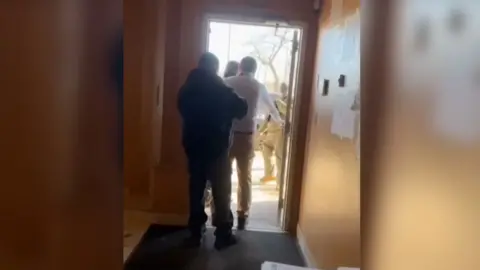
The BBC’s verification of the video footage adds a crucial layer of credibility to the unfolding events. Visual evidence is often the most compelling, and its confirmation by a reputable news organization lends weight to the narrative. The clarity of the video, showing the F-15 falling from the sky, provides a stark and undeniable account of the aircraft’s catastrophic descent.

Further details regarding the specific mission these F-15s were undertaking would be crucial in understanding the context of the incident. Were they on a training exercise, a patrol mission, or engaged in active operations? The answers to these questions will help shed light on the sequence of events that led to the tragic outcome. The presence of multiple F-15s suggests a coordinated flight, possibly a training sortie designed to simulate combat scenarios or conduct joint operations.

The "Al Jahra area" mentioned in the report is a governorate in Kuwait, located to the west of Kuwait City. Its proximity to the capital suggests that the crash occurred in an area that, while perhaps less densely populated than the city center, is still within a populated region of Kuwait. This proximity could have heightened concerns for civilian safety, although no reports of civilian casualties have been released.

The term "friendly fire" is a grim reminder of the inherent risks in military operations, especially in complex environments where multiple forces operate. It implies an accidental engagement by forces that are meant to be allied. The investigation will likely focus on factors such as radar misidentification, communication breakdowns, or errors in weapon system deployment.

The safe ejection of all six crew members is a significant positive outcome amidst the disaster. Modern fighter jets are equipped with advanced ejection seat systems designed to save pilots in extreme situations. The fact that all six individuals survived suggests that these systems performed as intended and that the crew members were able to react effectively under immense pressure. Their current stable condition indicates that they have received appropriate medical attention and are recovering from the ordeal.

The implications of this incident extend beyond the immediate military sphere. It could lead to increased scrutiny of US military operations in the region, calls for greater transparency, and potentially a review of joint training exercises and protocols with allied nations. The incident also serves as a stark reminder of the human cost of conflict and the constant vigilance required to maintain peace and security in volatile regions.

As the investigation unfolds, further information will likely emerge regarding the specific circumstances, the type of mission, and the exact sequence of events that led to the crash. The BBC’s continued reporting on this story will be vital in providing updates and context as this significant event develops. The focus will remain on the safety and recovery of the crew, the thorough investigation into the cause of the crash, and the broader implications for regional security and international relations. The incident serves as a somber reminder of the complex and often dangerous nature of modern warfare and the critical importance of precision, communication, and de-escalation in maintaining stability in a globally interconnected world. The presence of related tags like "Iran" and "Iran-US relations" also points to the delicate geopolitical balance in the Middle East, where any military incident can be amplified by existing regional rivalries and the constant undercurrent of potential conflict. The coming days and weeks will likely see further statements from US Central Command and potentially Kuwaiti authorities as they work to understand and address this unfortunate event.



 Ramos Leo
 Nakalama John

 atisusanti