
 Ramos Leo
A Comprehensive Guide to the May 2026 Elections in England, Scotland, and Wales
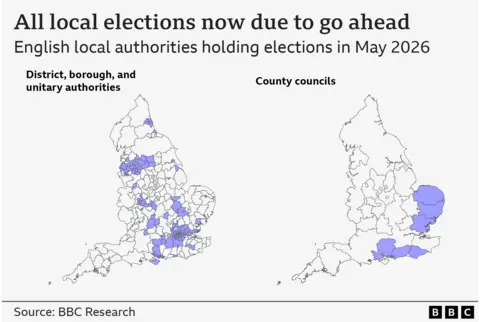
In England, approximately 5,000 seats across 136 local councils will be up for grabs. These elections gained particular prominence after the government reversed its earlier decision to delay polls in 30 English authorities. Initially, ministers had granted these councils permission to postpone their elections until May 2027, including five areas where elections had already been deferred from May 2025. The rationale for these delays was to facilitate a major shake-up of local government, transitioning from the traditional two-tier system of district and county councils to new, streamlined "unitary" councils, designed to simplify administration and service delivery.
However, in February 2026, the government announced that elections would now proceed in these 30 areas this May, following legal advice issued in the wake of a challenge mounted by Reform UK. This U-turn also came after criticism from opposition parties and a warning from the Electoral Commission, the independent body overseeing UK elections, which stated that postponing polls risked "damaging public confidence." Local election administrators have since cautioned that councils face "an uphill struggle" to be fully prepared in time for the accelerated schedule.
Local councils are the bedrock of community services, responsible for a vast array of essential provisions. These include vital care for the elderly and disabled, efficient rubbish collection and recycling schemes, housing policies, the administration of education services, and the crucial maintenance of local roads. Many councils across England are currently grappling with severe funding crises, which have necessitated difficult decisions regarding service cuts and increases in council tax, making the outcomes of these elections particularly impactful on residents’ daily lives. Voters in these council elections typically cast one vote for each available seat within their electoral area, known as a ward or division. As in general elections, the "first past the post" system is predominantly used, meaning the candidate who receives the most votes wins.
Beyond council seats, six significant mayoral contests are also scheduled for 7 May in England. These include elections for directly elected mayors in Croydon, Hackney, Lewisham, Newham, Tower Hamlets, and Watford. Directly elected mayors often hold strategic leadership roles, overseeing larger geographical areas or combined authorities and having greater executive powers than traditional council leaders. Meanwhile, elections for new mayors in Cumbria and Cheshire & Warrington have been postponed until 2027. Further mayoral polls, encompassing Greater Essex, Norfolk and Suffolk, Hampshire and the Solent, and Sussex and Brighton, have been pushed back even further, until May 2028, likely as part of the broader local government restructuring efforts.
Which Elections are Taking Place in Scotland on 7 May?
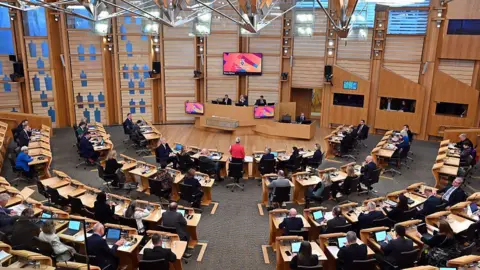
Scotland will hold its Scottish Parliament election on 7 May, a pivotal event that will determine the country’s government and its direction in key devolved areas such as health, education, justice, and the economy. All 129 Members of the Scottish Parliament (MSPs) are up for re-election. The Holyrood chamber comprises 73 constituency MSPs and 56 regional MSPs, with seven elected for each of Scotland’s eight electoral regions.
The Scottish electoral system is a form of mixed-member proportional representation known as the Additional Member System (AMS), designed to produce a more proportional outcome than pure first past the post. Each voter receives two ballot papers and casts two distinct votes. The first vote is to elect their constituency MSP, decided by the "first past the post" method, where the candidate with the most votes wins. The second vote is for their regional MSPs. Here, voters choose either a political party or an individual candidate from a regional list. Regional seats are then allocated using a formula, typically the D’Hondt method, which takes into account both the number of votes a party receives in the region and the number of constituency seats they have already won in that region. This aims to ensure that the overall number of seats a party holds in the Parliament is roughly proportional to its share of the regional vote.
Usually, the political party that secures the most MSPs forms the Scottish government, and its leader becomes the First Minister. Due to the proportional nature of the system, coalition or minority governments are common. The Scottish Parliament, officially opened in 2004, was established in 1999 following the devolution referendum. Initially, Scotland already had its own distinct legal and education systems. Since then, Holyrood’s responsibilities have significantly expanded to include a much broader range of issues, such as health, housing, policing and prisons, and many aspects of transport, welfare, and tax. The Scottish Parliament can pass laws in any areas not "reserved" to the UK Parliament at Westminster, encompassing critical policy areas like NHS Scotland’s operation, the national curriculum, and public transport infrastructure.
Which Elections are Taking Place in Wales on 7 May?
In Wales, the 2026 Senedd election marks the most significant change to the Welsh Parliament (Senedd Cymru) since powers began to be transferred to Wales in 1999. This election will be instrumental in determining who governs Wales and shapes policies across many key issues affecting Welsh citizens.
For the 2026 election, the Senedd is undergoing a major reform of its electoral system. Instead of the previous mixed-member system, all 96 members will be elected from 16 larger multi-member constituencies, with each constituency returning six members. Under this new system, voters will cast a single vote for a political party or an independent candidate. Political parties can list up to eight candidates for each of these new constituencies. The 96 seats will then be allocated to parties and independent candidates according to their share of votes received within each constituency, using the D’Hondt method to ensure a more proportional distribution of seats. This represents a move towards a fully proportional electoral system for the Senedd.
The party that wins the most seats in the Senedd election would typically expect to lead the Welsh government. However, no single party has ever won an outright majority in the Welsh Parliament, and the new electoral system, with its enhanced proportionality, makes it highly unlikely that any party will achieve a majority in this election. This often necessitates the formation of coalition governments or minority administrations. Any Member of the Senedd (MS) can nominate another member to be First Minister. If multiple candidates are nominated, MSs will vote to decide who fills the role.
The National Assembly for Wales opened its doors in 1999. Renamed Senedd Cymru or Welsh Parliament in 2020, its responsibilities have grown considerably. It now holds legislative and executive powers over critical areas including health, schools, transport, and farming, alongside specific tax-raising powers. These responsibilities enable the Senedd to shape distinct Welsh policies, such as those relating to the Welsh language, the unique challenges of rural communities, and the delivery of public services tailored to the needs of Wales. The Senedd building, designed by architect Richard Rodgers, was officially opened on St David’s Day in 2006, symbolizing the growing autonomy of Wales.
How Can I Vote in the May Elections?
There are three primary methods for eligible citizens to cast their vote in the upcoming May elections:
- In person: At a designated polling station on election day.
- By post: Receiving your ballot papers through the mail and returning them before election day.
- By proxy: Appointing someone you trust to vote on your behalf.
Eligibility criteria vary slightly by election. You must be 18 years old to vote in the local elections in England. However, in Scotland and Wales, the voting age for Scottish Parliament and Senedd elections is 16. In all instances, you must be registered at an address within the specific area where you intend to vote. Furthermore, voters must be either a British or Irish citizen, or a qualifying foreign national. The rules for qualifying foreign nationals differ based on your country of origin and the specific type of election (e.g., Commonwealth citizens and EU citizens are often eligible for local elections).
To enhance accessibility, some innovative voting locations are being trialled. Voters in Milton Keynes will have the opportunity to cast their ballot in the centre:mk shopping centre. Similarly, voters in Cambridge, North Hertfordshire, and Tunbridge Wells will be able to vote in person at a variety of diverse locations in the days leading up to 7 May, including the preceding weekend, offering greater flexibility.
What Is the Deadline for Registering to Vote?
To ensure you can vote in person on 7 May, you must be successfully registered on the electoral register by 23:59 BST on Monday 20 April.
It is important to note that the rules regarding postal and proxy votes have recently changed, requiring renewal every three years. Any postal or proxy votes that were set up before 31 October 2023 have now expired. If you are already registered to vote and wish to request a postal vote, the deadline for application is 17:00 BST on Tuesday 21 April. If you are already registered and prefer to apply for a proxy vote, the deadline is 17:00 BST on Tuesday 28 April.
What ID Do I Need to Vote?
Voter identification requirements differ across Great Britain for these elections. You do not need to show photo ID to vote in person in the Scottish Parliament or Senedd elections on 7 May. For these elections, out-of-date ID can be used as long as you are still recognisable from the photograph.
However, for the local council and mayoral elections taking place in England, voters are now required to show an accepted form of photo identification at polling stations. This change was implemented for local elections from May 2023. Accepted forms of ID include a UK driving licence, passport, a Blue Badge, an older person’s bus pass, or a Young Scot card. A full list of accepted ID can be found on the Electoral Commission website. If you do not possess an accepted form of photo ID, you can apply for a free Voter Authority Certificate (VAC). The deadline to apply for a Voter Authority Certificate for the May elections in England is 17:00 BST on Tuesday 28 April.

 George Anjay
 Nana Banana
 atisusanti
 Nakalama John
 Roy Suryo