
 Nakalama John
The escalating geopolitical tensions in the Middle East, particularly those involving Iran, have ignited significant concerns about a potential surge in global energy prices, directly impacting motorists and wider economies. The immediate jump in crude oil prices following recent developments has raised the distinct possibility of higher fuel costs for consumers, prompting a close watch on international markets and regional stability.
At the heart of this concern lies the Strait of Hormuz, a narrow yet profoundly crucial waterway situated at the mouth of the Persian Gulf. Iran has recently issued warnings to vessels regarding passage through this strategic choke point, through which an astonishing 20% of the world’s total oil and gas supply is shipped daily. Any sustained disruption or threat to this vital maritime artery would not only impede the flow of energy resources but also trigger a profound ripple effect across global supply chains, leading to price increases for a multitude of goods. While the full extent and duration of the conflict remain highly uncertain at this stage, the potential for a lasting impact on oil, gas, and broader energy costs is a significant worry for policymakers and consumers alike.
How quickly will rising oil prices show in fuel prices?
The journey from crude oil extracted from the ground to the petrol or diesel dispensed at the pump is a complex, multi-stage process. Crude oil is the fundamental ingredient in both petrol and diesel, meaning any upward movement in its global price will inevitably translate into higher costs at the forecourt. This transition, however, is not instantaneous. It typically takes a few weeks for changes in wholesale crude oil prices to filter down to retail fuel prices. This lag is due to several factors, including the time it takes for new, more expensive crude to be processed, transported, and sold, as well as the inventory cycles of refineries and retailers.
Motoring organisations are already cautioning drivers about impending increases. The AA, a prominent motoring group, has suggested that over the coming weeks, fuel costs could revert to the higher levels observed at the beginning of the year. This would mark a reversal of the recent trend, where UK forecourt prices have generally been declining. The precise magnitude and duration of any future price hikes will, critically, depend on the intensity and longevity of the regional conflict. Beyond the raw cost of crude, several other elements contribute to the final price drivers pay: refining costs, distribution expenses, retailer margins, and significant taxation, including fuel duty and Value Added Tax (VAT) in the UK. Furthermore, as oil is priced in US dollars, fluctuations in the GBP/USD exchange rate can also influence pump prices for UK consumers.
Currently, based on AA data, the average price for petrol stands at approximately 133.2p per litre, with diesel at 142.7p. Simon Williams, a spokesperson for rival motoring group the RAC, elaborated on potential scenarios: "The oil price would have to rise significantly and stay that way for some time to have a dramatic effect." He projected that if crude oil were to climb and stabilise at the $80 per barrel mark, drivers could anticipate an average petrol price of around 136p. A sustained rise to $90 would push prices closer to 140p a litre, while a return to $100 per barrel could see petrol nearing 150p. However, Williams underscored the preliminary nature of these predictions, emphasizing that it is "all too soon to know" the long-term trajectory.
Where does the UK get its oil and gas from?
The United Kingdom, despite its domestic North Sea production, remains heavily reliant on imports for both oil and gas. While the North Sea provides a significant portion of the UK’s oil, much of this crude is exported due to the specific types of crude produced and the UK’s refinery capabilities, which are often better suited to process different grades of oil or are simply not sufficient to handle all domestic output. Consequently, the UK then imports refined petroleum products or different crude grades that match its refineries’ specifications.
The lion’s share of the UK’s energy imports originates from stable, non-Middle Eastern sources, primarily the United States and Norway. This diversification helps to mitigate direct supply risks from the Strait of Hormuz. However, the crucial point is that oil and gas are globally traded commodities. The price the UK pays for its imports is determined by global market rates, not just the cost from its direct suppliers. Therefore, any major disruption in a key global supply region, such as the Strait of Hormuz, impacts the global price of oil, which in turn affects what the UK pays, regardless of where its specific barrels originate. Global benchmarks like Brent Crude (to which North Sea oil is tied) react swiftly to such geopolitical events, directly influencing the cost for all buyers.
What could the impact be on food prices?

The repercussions of persistently higher fuel costs extend far beyond the petrol pump, threatening to ripple through the entire economy and directly impact the prices of everyday goods on supermarket shelves. Transport costs are an intrinsic component of the supply chain for almost every product, particularly food. When petrol and diesel become more expensive, the cost of moving raw materials, processing goods, and distributing finished products across the country increases for businesses. These elevated operational costs are then frequently passed on to the consumer by shops and supermarkets, contributing to a broader rise in the cost of living.
Moreover, the impact on food prices could be more direct. Benjamin Goodwin, a partner at banking advisory firm PRISM Strategic Intelligence, highlighted a critical link to agricultural inputs. "Some elements of crude oil are used in fertiliser, and so there could be a cost implication in terms of food prices," he told the BBC. Specifically, natural gas, a derivative often linked in price to crude oil, is a key component in the production of ammonia, which is essential for nitrogen-based fertilisers. An increase in energy costs therefore directly inflates the cost of agricultural production, affecting everything from staple crops to livestock feed. Beyond fertilisers, farming machinery, food processing plants, and refrigeration all rely heavily on energy, making the food sector particularly vulnerable to energy price shocks. However, Goodwin tempered expectations by noting that if the disruption to energy markets proves to be short-lived, it is unlikely to result in an immediate or dramatic increase in food prices. A sustained period of elevated energy costs, however, would almost certainly trigger noticeable inflation in food commodities.
Will my energy bills rise?
For millions of UK households, the immediate impact of rising wholesale energy costs on their domestic gas and electricity bills is somewhat cushioned. This protection comes primarily from the energy price cap, set by the regulator Ofgem. Under this mechanism, the unit prices for gas and electricity for households on standard variable tariffs are fixed for quarterly periods. The prices governing bills from April have already been determined, meaning consumers are shielded from any immediate wholesale market volatility until at least July.
However, the impacts of the current regional conflict and any sustained increase in global oil and gas prices could potentially be reflected in the subsequent price cap adjustment, covering the three months from July onwards. Energy suppliers, in the meantime, might also re-evaluate and adjust the prices of new fixed-term energy tariffs offered to customers, making new deals potentially more expensive.
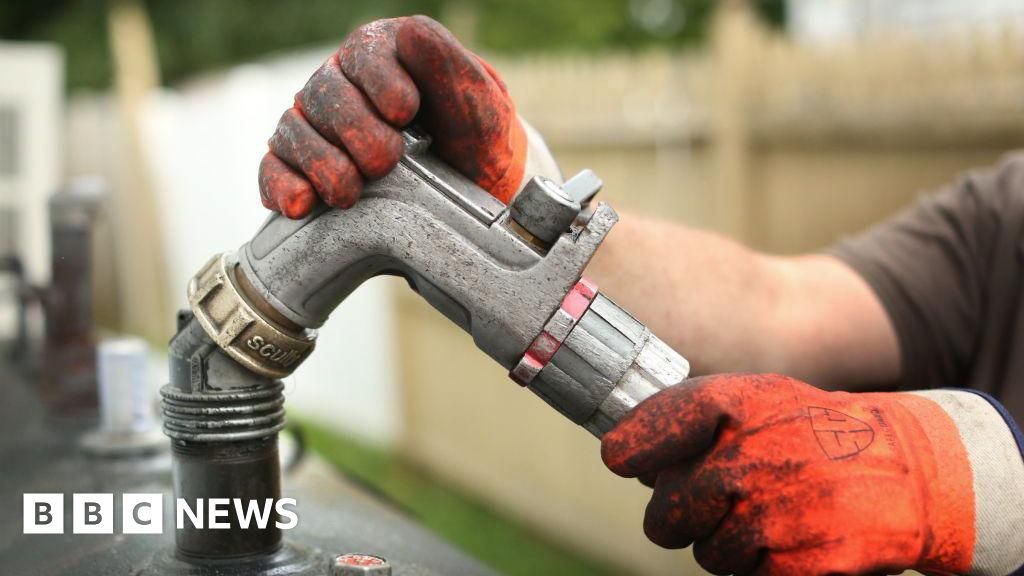
Beyond the main grid, households that rely on heating oil, particularly common in Northern Ireland and many rural areas across the UK, face a more direct and immediate impact. Heating oil prices are typically much more responsive to fluctuations in wholesale crude oil prices. As such, the latest global uncertainty has already led to sharp increases in the cost of heating oil, putting immediate financial pressure on these households. Furthermore, while the UK has diversified its gas supply, relying heavily on pipeline imports from Norway and Liquefied Natural Gas (LNG) imports, global competition for LNG can intensify if concerns about Middle Eastern energy supplies grow, potentially driving up wholesale gas prices.
How will this affect UK inflation and interest rates?
The UK economy has seen inflation, which measures the pace of price rises, ease considerably from the multi-decade highs experienced in the aftermath of Russia’s full-scale invasion of Ukraine. This moderation in inflation has paved the way for the Bank of England to consider cutting interest rates later this year, having held them steady at 5.25% for several consecutive meetings. However, the current geopolitical developments present a fresh challenge to this outlook.
Much depends on how long crude prices remain elevated. Subitha Subramaniam, chief economist and head of investment strategy at Sarasin & Partners, warned of a potential "cascade effect" if oil prices persist at higher levels. "It will start to cascade into other prices such as food, agriculture, industrial commodities and that’s just going to really bleed into inflation," she explained. This broad-based increase in costs across the economy would exert renewed upward pressure on the overall inflation rate, making it harder for the Bank of England to achieve its 2% inflation target.
The Bank’s Monetary Policy Committee (MPC) is scheduled to meet again in a couple of weeks. However, this timeframe is likely insufficient to fully assess the long-term impact of higher oil prices on inflation. Given the inherent uncertainties, Subramaniam suggested that "the prudent course for the Bank of England would be to remain on hold." Any significant and sustained rise in inflation due to energy costs would complicate the MPC’s decision-making, potentially delaying or even reversing plans for interest rate cuts. This, in turn, could impact borrowing costs for mortgages and other loans, affecting consumer spending and business investment, and thereby influencing the broader trajectory of economic growth.
The situation underscores the profound interconnectedness of global energy markets and geopolitical stability, highlighting how events in one region can swiftly reverberate through economies worldwide, influencing everything from the cost of filling a car to the price of a weekly shop and the nation’s monetary policy.


 George Anjay
 Nana Banana
 Ramos Leo
 atisusanti
 Roy Suryo