atisusanti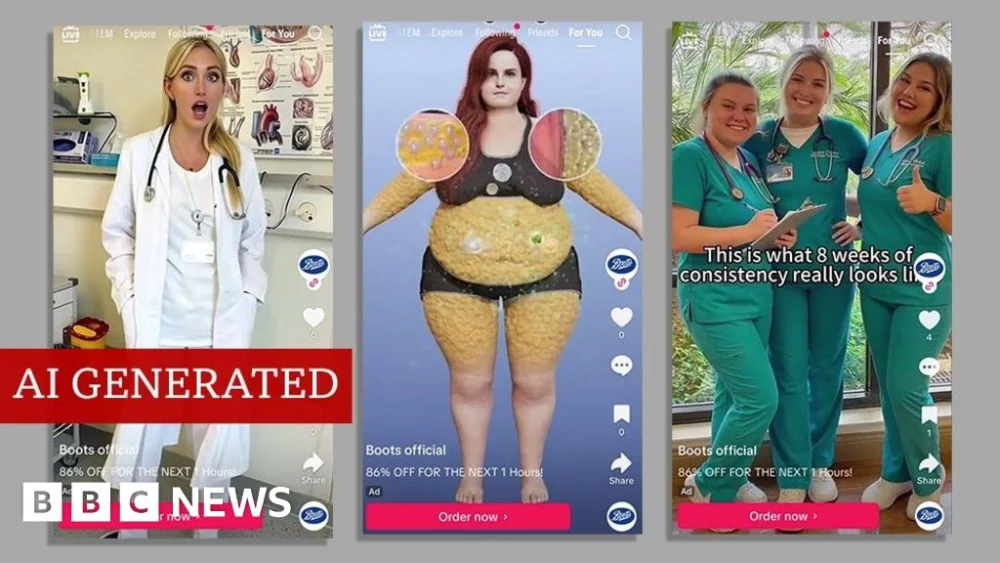
Fake advertisements peddling prescription-only weight loss drugs, deceptively branded to appear as if they originated from the esteemed British health and beauty retailer Boots, have been systematically removed from the popular social media platform TikTok following a formal complaint lodged by the company. The insidious advertisements featured seemingly genuine healthcare professionals from Boots, exuding an air of trustworthiness and authority, but a closer examination revealed that these individuals were entirely fabricated, brought to life through the sophisticated capabilities of artificial intelligence. The advertising of prescription-only weight loss drugs to the general public is a strictly prohibited and illegal activity, underscoring the gravity of these fraudulent campaigns.
A spokesperson for Boots confirmed to the BBC that the company was acutely aware of the existence of these misleading videos and had promptly escalated the matter by lodging a formal complaint with TikTok. In response to this intervention, TikTok stated that it had indeed taken action and removed the offending videos from its platform. However, a subsequent investigation by the BBC unearthed a concerning loophole in TikTok’s content moderation, revealing that while the initial wave of fraudulent videos had been purged, the account responsible for their dissemination, which appeared to be operating from Hong Kong, remained active. This allowed for the immediate re-uploading of the exact same AI-generated advertisements, despite their prior removal.
Following this discovery, TikTok was once again alerted to the continued presence of the deceptive content. It was only after this second notification that the user account was ultimately deleted from the platform. The proliferation of these fake advertisements coincides with a period of increased public interest and limited availability of weight-loss injections. While these medications have been accessible through the National Health Service (NHS) in England since the close of June, their distribution is tightly controlled. They are not available for purchase over-the-counter, and patients must satisfy stringent eligibility criteria to qualify for a prescription, highlighting the risks associated with obtaining them through unregulated channels.
Prior to the eventual removal of the fake Boots account, its illicit videos were strategically linked to an external website where individuals could purchase weight loss drugs. This website was meticulously designed to appear credible, featuring customer testimonials and endorsements from purported doctors. However, the content was either generated using AI or pilfered from other online sources, further eroding any semblance of authenticity. The AI-generated TikTok videos themselves depicted a scenario where individuals, presented as health workers, were shown consuming a vial of a blue liquid. The narrative then purported to fast-forward several months, showcasing a dramatic and seemingly effortless weight loss in these individuals, a common tactic in misleading health advertisements.
Sam Gregory, an expert in artificial intelligence, provided critical insight into the escalating threat posed by such technologies, explaining to the BBC that "AI now makes it trivially easy to generate a convincing series of videos or images showing an apparent change in a plausibly real generic health professional, or to impersonate specific health professionals wholesale." He further emphasized the critical question of platform accountability, stating, "The underlying question is how quickly and comprehensively platforms act when they detect – or are notified of – scams that clearly breach their terms of service. Major brands like Boots will get prioritised over an individual business owner who’s been targeted." This highlights a potential disparity in enforcement based on the profile of the targeted entity.
Further exacerbating the deceptive nature of the campaign, other videos uploaded by the same account on TikTok appeared to have repurposed content originally posted by genuine individuals chronicling their own weight-loss journeys. This stolen content was utilized without permission, further blurring the lines between authentic personal experiences and fabricated marketing. A common thread across all these videos was the meticulous replication of branding and naming conventions mirroring those of the official Boots account on TikTok, which uses the handle "@BootsOfficial." In a clear statement of distinction, Boots reiterated that it exclusively conducts its social media advertising through its legitimate account, "@BootsUK."
The fraudulent website also conspicuously displayed warnings purportedly issued by the MHRA (Medicines and Healthcare products Regulatory Agency), the UK’s governmental body responsible for ensuring the safety and efficacy of medicines and medical devices. These warnings, however, seemed to be strategically placed to lend an air of officialdom to the illicit operation, rather than to genuinely protect consumers. A spokesperson for the MHRA unequivocally stated to the BBC that "weight loss medicines should only be obtained from a registered pharmacy against a prescription issued by a healthcare professional." They further underscored the severe health risks associated with obtaining these medications through any other means, emphasizing that "Taking these medicines sourced in any other way carries serious risks to your health with no guarantees about what they contain."
In response to the growing concerns surrounding AI-generated content and the potential for misuse, TikTok stated its commitment to "strengthen" its detection methods for such material. The platform reiterated its firm stance against "the depiction, promotion, or trade of controlled substances," indicating a multi-pronged approach to combating deceptive and harmful content. The incident serves as a stark reminder of the evolving landscape of online misinformation and the critical need for robust platform moderation, vigilant consumer awareness, and clear regulatory oversight in the age of rapidly advancing AI technologies. The ease with which AI can generate convincing visual content poses a significant challenge to trust and authenticity online, particularly within the sensitive domain of health and wellness. The successful removal of these fake ads, though delayed, highlights the ongoing battle between technological innovation and the imperative to protect the public from malicious exploitation.




 Roy Suryo