
 Ramos Leo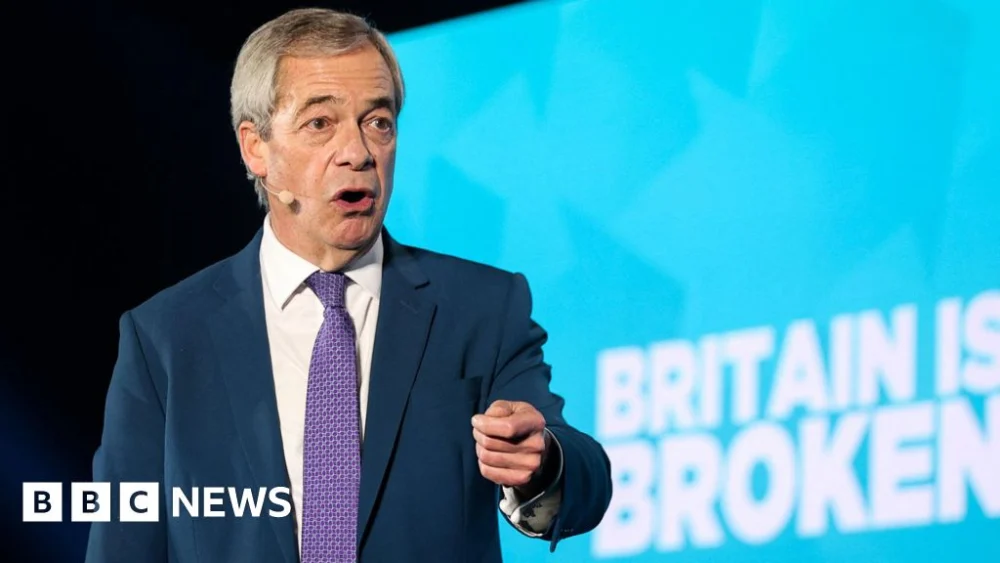
The commissioner’s report, a publicly available document on the parliamentary website, details the findings of an inquiry that scrutinised Farage’s compliance with the stringent rules governing MPs’ financial declarations. Mr. Greenberg confirmed that Farage had issued an apology for the administrative oversights and had given assurances that he would adhere strictly to the registration deadlines in the future. This commitment was a crucial factor in the commissioner’s determination that further punitive action was not warranted.
The financial interests that Farage neglected to report within the prescribed period encompassed a diverse range of income streams, reflecting his multifaceted career beyond Westminster. These included payments from prominent media and technology entities such as GB News, where he hosts a popular show, as well as from Google and X (formerly Twitter), platforms where he maintains a significant presence and engages in various commercial activities. Additionally, payments from the Cameo app, which allows public figures to create personalised video messages for a fee, were among the undeclared interests. The highest single payment identified in the commissioner’s report was a substantial £91,200 from Direct Bullion, a gold dealer for whom Farage serves as a brand ambassador, highlighting the significant scale of his external commercial engagements.
In his formal response to the parliamentary commissioner, Nigel Farage expressed profound regret for the breaches, stating he was "sincerely sorry" and reiterating that there had been "no malicious intent" behind the delays. He attributed the lapses primarily to a "gross administrative error," explaining that he felt he had been "extremely let down by a very senior member of staff" who was responsible for managing these declarations on his behalf. This delegation of responsibility, he implied, was a necessary consequence of his own limitations.
During a meeting with Commissioner Greenberg on 11 December 2025, Farage elaborated on his difficulties, admitting he had been "a little bit shocked" by the extent of the administrative oversight. He candidly confessed to a lack of technological proficiency, stating, "You may say, why don’t I enter those things myself. Well I don’t do computers… so I rely on other people to do those things for me. I’m not, I’m afraid, computer literate, which makes me yet more an oddball than perhaps I was before." This admission provided a personal context to his reliance on staff for the meticulous task of financial reporting.
Furthermore, Farage cited what he described as "severe growing pains" as a contributing factor to the administrative chaos. He explained, "Our political lives have exploded in the last 18 months in ways that we could never have comprehended. We are overwhelmed in every sense. Even my MP e-mail gets 1000 emails a day. And we’ve basically failed to cope with, or to be frank, not just with this, but with many other things too." This statement alludes to the rapid ascent of Reform UK and his own increased political prominence, suggesting that the sudden surge in demands had overwhelmed his support infrastructure and processes. The sheer volume of correspondence alone, he contended, was indicative of the operational challenges his office faced.
Farage also expressed a broader critique of the existing parliamentary system for registering interests, arguing that it was "not designed for anybody in business." This perspective underscores his view that the rules, while intended for transparency, may not adequately accommodate the realities of high-profile individuals with significant external commercial ventures, who also serve as MPs. He maintained that his outside income was not derived from his parliamentary role but rather from his personal brand, stating, "I’m not making any money as a result of being an MP, quite the opposite, I’m making it because I’m Nigel Farage and I’ve got other interests." He further claimed that his substantial external earnings allowed him to claim "zero personal expenses" as an MP, implying that his financial independence ultimately benefited the taxpayer by reducing his reliance on parliamentary allowances.
Following a thorough investigation, the parliamentary commissioner for standards, Daniel Greenberg, had the authority to either close the case or recommend a sanction for the MP, potentially referring the matter to the Committee on Standards for further disciplinary action. In his detailed report, Mr. Greenberg acknowledged that his decision to close the case without recommending sanctions was "finely balanced," particularly given the high monetary value of some of the undeclared interests and the sheer number of breaches. However, he ultimately concluded that he was satisfied the breaches had indeed been "inadvertent." This crucial finding meant he would not be referring the case to the Committee on Standards, thus sparing Farage from potential suspension or other formal penalties. The distinction between inadvertent and deliberate breaches is paramount in the commissioner’s framework, with the former typically resulting in rectification and apology, while the latter can lead to more severe consequences.
The rules governing the declaration of financial interests are fundamental to maintaining transparency and public trust in Parliament. Rule five of the parliamentary code of conduct explicitly mandates that new MPs must register all their financial interests received in the 12 months preceding their election. Crucially, the rule also states that all MPs "must register any change in those registrable interests within 28 days." This strict deadline is designed to ensure that the public and fellow parliamentarians are consistently aware of any potential conflicts of interest or external financial influences on an MP’s decision-making. Farage’s numerous failures to adhere to this 28-day deadline ranged significantly, with delays spanning from a mere four days to an extensive 120 days, underscoring the systemic nature of the administrative lapses.
The revelation of these breaches, even if deemed inadvertent, inevitably drew sharp criticism from opposition parties, who seized the opportunity to question Farage’s priorities and commitment to his parliamentary duties. A spokesperson for the Labour Party issued a scathing rebuke, stating that Farage "isn’t on the side of working people – he’s just lining his pockets when he should be standing up for his constituents." This criticism directly challenged Farage’s public persona as a champion of ordinary Britons, framing his external earnings as a distraction from his responsibilities to his electorate.
Similarly, Daisy Cooper, the Liberal Democrat deputy leader, weighed in with strong condemnation, sarcastically dubbing him "Five Jobs Farage." She added, "Five Jobs Farage is spending far too much time jetting off to talk our country down in the US and cashing in from his GB News show." This attack not only highlighted the multiple sources of Farage’s income but also played on the perception that his international media engagements and commercial ventures detract from his focus on domestic issues and his role as an MP. The implication was clear: an MP with such extensive outside interests cannot fully dedicate themselves to their constituents’ needs.
The parliamentary code of conduct is a cornerstone of ethical governance, designed to uphold the integrity of the House of Commons and ensure that MPs act in the public interest, free from undue influence. The requirement for timely and accurate declaration of financial interests is not merely a bureaucratic formality; it is a vital mechanism for accountability. It allows voters, journalists, and other MPs to scrutinise potential conflicts and assess the impartiality of those who legislate on behalf of the nation. While the commissioner’s finding of "inadvertent" breaches spared Farage formal sanction, the sheer volume and value of the undeclared interests, coupled with the extended delays, raise broader questions about the capacity of high-profile, commercially active MPs to consistently meet the exacting administrative standards of parliamentary life. The incident underscores the perpetual tension between the demands of a political career, particularly for a figure with Farage’s public profile and commercial ventures, and the imperative for absolute transparency in parliamentary affairs. The episode serves as a salient reminder of the ongoing scrutiny MPs face regarding their financial probity and the public expectation that their primary allegiance lies with their constituents and the integrity of their office.



 Roy Suryo

 Nakalama John
 atisusanti
