
 Nana Banana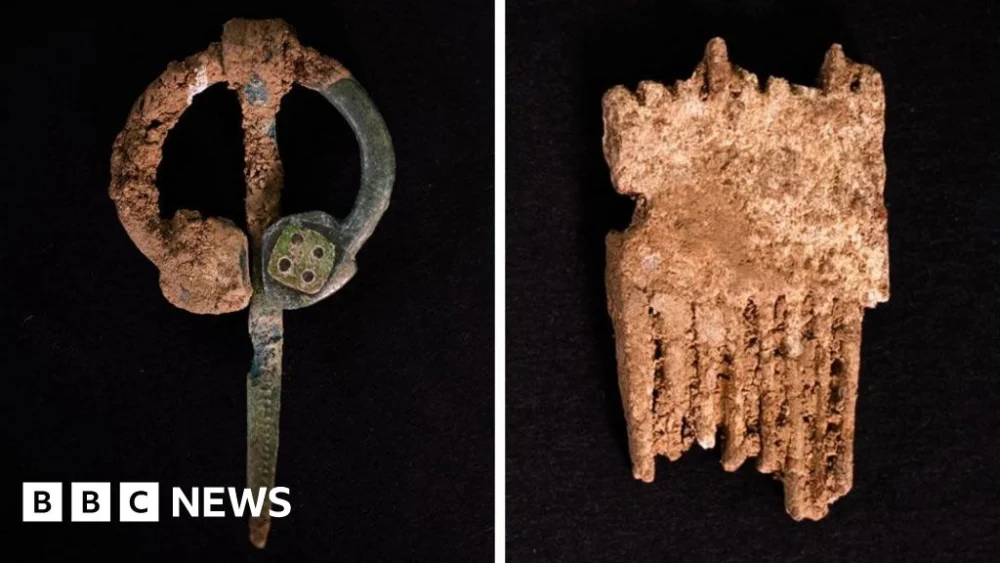
Located within the historic grounds of Fonmon Castle, just a stone’s throw from Cardiff Airport, the site has been the focus of intense archaeological investigation for the past four years. So far, a remarkable 58 skeletons have been exhumed, and what immediately struck the research team was the overwhelming predominance of female remains. This demographic anomaly has puzzled experts since the project began, prompting a search for clues about who these women were and why they were buried in such a distinctive manner. The skeletal analyses conducted to date suggest that while these individuals led challenging lives, often marked by physical hardship, the associated grave goods hint at a community that was not without access to wealth and luxury, further deepening the intrigue.
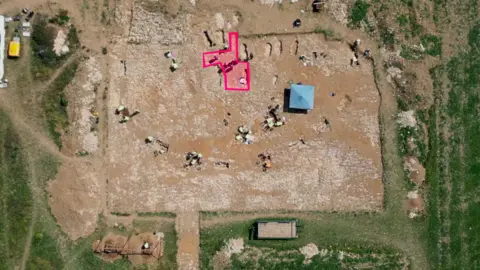
The latest dig season has yielded a significant breakthrough with the identification of what is believed to be the footprint of a small structure. Dr. Andy Seaman, a lead archaeologist from Cardiff University overseeing the dig, expressed excitement about this development. "It’s producing fragments of building stone, so it might be structural. We might be thinking of a small shrine or a chapel," he explained. The potential building’s central placement within the cemetery, with graves clustered closely around it, strongly supports Dr. Seaman’s evolving hypothesis. "I do think that we have a site which may be an early religious community," he stated, suggesting that the structure was likely a focal point for the spiritual life and reverence of those interred.
The location of this potential building appears to have been highly coveted for burial. Cardiff University archaeologist Tudur Davies noted the peculiar clustering of graves around the feature. "It’s a highly desired location for people to be buried in," he observed. The desire to be interred as close as possible to this sacred spot was so profound that archaeologists have uncovered multiple individuals buried within the same shallow grave cut into the limestone bedrock. "Sometimes two, three, four individuals have been buried on the same spot, again and again," Davies added, highlighting a burial practice that suggests a pragmatic approach to space and perhaps a strong spiritual imperative. "There doesn’t appear to be as much of a taboo over putting bodies in the same place and just moving those still there to one side." This unconventional practice underscores the perceived sanctity of the central area and offers a glimpse into the community’s beliefs about death and the afterlife, possibly indicating a belief in the spiritual benefits of proximity to the holy site.

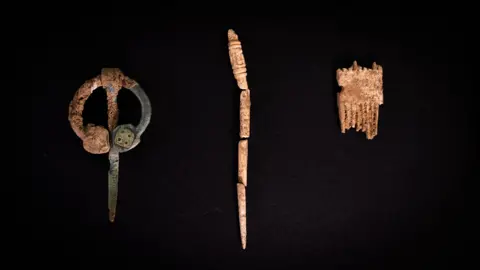
Beyond the architectural evidence, the artefacts recovered from the site are painting a more vivid picture of the people who lived and died here. These objects, now meticulously cleaned and analysed in Cardiff University’s laboratories, range from personal adornments to everyday tools, each telling a piece of the story. Conservator Nicola Emmerson has been diligently working on a particularly ornate copper brooch, painstakingly removing centuries of dirt. "We’d have to do some more analysis, but it’s probably bronze," she noted, adding, "Also we think it was possibly gilded, which would be a coating of gold over the top." The brooch’s terminals, Emmerson revealed, were adorned with green enamel, indicating a high level of craftsmanship and a desire for aesthetic beauty. "This would have been a very decorative brooch. I think it’s a very special find for the site," she concluded, suggesting it was an item of significant value and status, perhaps indicating the wearer’s importance within the community or connections to wider trade networks.
Accompanying this medieval "bling" are other exquisite personal items. The team unearthed a pin crafted from bone, featuring a detailed, intricate pattern, along with a comb meticulously carved from antler. Such objects speak to a sophisticated sense of personal grooming and an appreciation for finely made, if utilitarian, articles. The presence of these domestic yet decorative items suggests a community that was not entirely austere, but rather one that valued certain comforts and personal adornments, possibly reflecting their social standing or the patronage they received.

Among the most captivating finds are the exquisite, multicoloured glass beads. Measuring approximately 3mm across, each bead is a miniature work of art, showcasing a remarkable level of skill in glassmaking. These tiny treasures, ranging in hues from deep red to vibrant orange, light blue, yellow, and green, were likely not just simple ornaments. Their small size and delicate nature suggest they could have been intricately stitched onto clothing, perhaps as embellishments on robes or head coverings, or incorporated into more elaborate pieces of jewellery, such as necklaces or bracelets. The vibrant colours and the very material of glass would have been considered luxurious in this period, potentially indicating trade links or access to skilled artisans capable of producing such delicate items. Fragments of other glassware were also discovered amongst the graves, further underscoring the presence of refined goods within the community.
Crucially, the domestic items found at the site offer a counterpoint to the decorative pieces, grounding the community’s existence in daily life. Dr. Seaman highlighted the discovery of a quern stone, an essential tool for grinding flour to make bread. This find, along with fragments of pottery and glass used for eating and drinking, paints a picture of a self-sufficient community engaged in the fundamental aspects of daily living. "It’s clearly not just a place for the dead. There’s a living community here as well," Dr. Seaman asserted. This evidence strongly suggests that the cemetery was not merely an isolated burial ground but was intrinsically linked to a vibrant, functioning settlement nearby. Dr. Seaman posits that this was an enclosed community, living in close proximity to the cemetery, deliberately separated from broader society. This enclosure could have served various purposes, from providing protection and fostering a focused spiritual life to adhering to specific ascetic practices common in early Christian monastic traditions.
Despite the significant strides made in understanding the site, several intriguing questions persist, forming the remaining pieces of this medieval puzzle. While the vast majority of skeletons belong to women, the presence of a few male remains and some children raises further queries. Who were these men? Were they spiritual leaders, benefactors, family members, or perhaps male converts associated with the female community? And the children – were they offspring of some of the women, or perhaps orphans brought into the care of the religious community? The precise relationships and roles of these non-female individuals within a predominantly female community remain to be fully elucidated.
Perhaps the most stark and unsettling mystery revolves around two women whose remains were discovered tossed unceremoniously into a ditch, one with her hands and feet tied. This profoundly disrespectful burial stands in stark contrast to the careful interments of the other individuals and demands explanation. What circumstances could have led to such a fate? Were these women victims of violence, executed for a crime, or perhaps social outcasts? The binding of hands and feet suggests a deliberate act, possibly a punishment, a form of ritualistic disposal, or an attempt to prevent their return as malevolent spirits. This particular discovery hints at a darker, more complex side of community life, challenging any simplistic notions of a purely peaceful religious order and reminding researchers of the harsh realities and social complexities of the early medieval period.
The team’s ongoing work is now focused on exploring whether this site represents an example of very early Christianity in Wales, a period about which historical records are notoriously sparse. "It’s a period where the history is not yet written," Dr. Seaman remarked, emphasizing the profound historical significance of the Fonmon Castle site. "We don’t really understand early church sites… how they functioned, what they looked like, how they were organised." While later periods of Christian history are well-documented, the formative years of Christianity in the British Isles, particularly in regions like Wales, remain largely obscure. This archaeological project offers a unique and "really exciting opportunity" to fill in these critical gaps, providing tangible evidence of religious life during a pivotal era. The archaeologists are scheduled to resume their excavations later this year, hopeful that future digs will unearth more clues, piece together the remaining fragments of this fascinating narrative, and ultimately reveal the full story of the intriguing women buried in this ancient Welsh cemetery.


 Roy Suryo
 Nakalama John

 atisusanti