Nana Banana
What once resided firmly in the realm of science fiction – the vision of an orbital factory, hundreds of kilometres above Earth, meticulously crafting advanced materials – is now a tangible reality, thanks to pioneering efforts by a Cardiff-based company. Space Forge, a leading innovator in in-space manufacturing, has taken a significant leap by successfully sending a microwave-sized factory into orbit. Crucially, they have demonstrated that its integrated furnace can be activated, reaching staggering temperatures of around 1,000C, a critical milestone for extraterrestrial industrialisation.
This ambitious endeavour aims to revolutionise the production of advanced materials, specifically focusing on semiconductors. These vital components are the silent workhorses powering modern electronics, indispensable across diverse sectors from critical communications infrastructure and high-performance computing to advanced transport systems. By fabricating these materials in space, Space Forge intends to supply Earth with semiconductors of unparalleled quality, enhancing performance and reliability in countless applications.

The inherent conditions of the space environment are uniquely suited for manufacturing certain materials, particularly semiconductors. These materials derive their extraordinary properties from a highly ordered, precise 3D atomic structure. On Earth, gravity exerts subtle yet pervasive forces during crystal growth, introducing imperfections and disrupting the pristine arrangement of atoms. However, in the microgravity environment of space, these gravitational influences are virtually eliminated. This allows atoms to align with exceptional precision, forming crystal lattices that are far more uniform and free from defects. Furthermore, the vacuum of space provides an ultra-clean processing environment, preventing airborne contaminants that plague terrestrial manufacturing from infiltrating the delicate material synthesis process.
The combined benefits of microgravity and vacuum translate into semiconductors with superior performance characteristics. As Josh Western, CEO of Space Forge, elucidates, "The work that we’re doing now is allowing us to create semiconductors up to 4,000 times purer in space than we can currently make here today." This monumental increase in purity and structural integrity promises to unlock new frontiers in technological capability. These ultra-high-quality semiconductors are not merely incremental improvements; they represent a step change. They are poised to become the foundational components in next-generation technologies, from enhancing the efficiency and speed of 5G mobile phone towers and accelerating the charging capabilities of electric vehicles to underpinning the sophisticated avionics in the latest aircraft. Beyond these, their potential applications extend into areas such as quantum computing, advanced AI processors, high-frequency communications, and even critical medical devices where performance and reliability are paramount.
The journey of this trailblazing mini-factory began with its launch aboard a SpaceX rocket in the summer. Since then, the dedicated team at Space Forge’s mission control in Cardiff has been meticulously testing its various systems, monitoring its performance, and gathering invaluable data. Veronica Viera, the company’s payload operations lead, shared a profound moment with reporters, showcasing an image beamed back directly from the satellite. The image, captured from within the furnace itself, depicted plasma – gas heated to approximately 1,000C – glowing brightly. Viera described witnessing this image as "one of the most exciting moments of my life," underscoring the significance of this successful demonstration. "This is so important because it’s one of the core ingredients that we need for our in-space manufacturing process," she explained. "So being able to demonstrate this is amazing." The vivid glow of the plasma confirmed that the furnace was not only reaching its target temperature but was also creating the precise high-energy environment necessary for the sophisticated material synthesis processes planned for future missions.
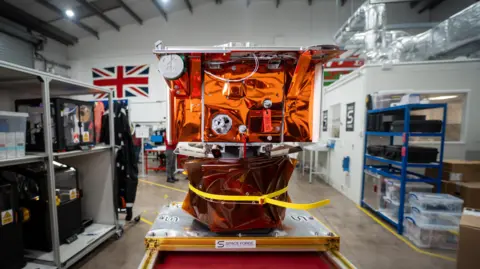
Building on this successful validation of core technologies, Space Forge is now charting a course for even greater ambitions. The team is already in the planning stages for a larger, more sophisticated space factory – one capable of producing semiconductor material sufficient for an estimated 10,000 chips. This scaling up of operations will be critical for achieving commercial viability and making a substantial impact on the global supply chain for advanced electronics.
A pivotal aspect of their future missions will involve perfecting the technology required to safely return these valuable, space-manufactured materials to Earth. This presents a formidable engineering challenge, as spacecraft re-entering Earth’s atmosphere endure extreme temperatures and stresses. To address this, Space Forge is developing an innovative heat shield, aptly named Pridwen – a nod to the legendary shield of King Arthur, symbolising protection and resilience. This advanced heat shield will be deployed on future missions to safeguard the spacecraft and its precious cargo from the intense thermal and aerodynamic forces experienced during atmospheric re-entry. The ability to precisely control the re-entry trajectory and ensure a gentle landing will be crucial for protecting the integrity of the delicate semiconductor materials.
Space Forge’s pioneering work is part of a broader, burgeoning trend in the global space industry: in-space manufacturing. Numerous other companies and research institutions are also looking skywards, exploring the unique advantages of microgravity and vacuum to produce a diverse array of materials and products. These include everything from novel pharmaceuticals and high-purity ZBLAN fibre optics (which offer superior data transmission capabilities compared to silica fibres) to artificial tissues for medical research and even perfectly formed protein crystals for drug discovery. The absence of gravity-induced sedimentation and convection allows for the growth of larger, more perfect crystals and cells, which can yield breakthrough insights and products.
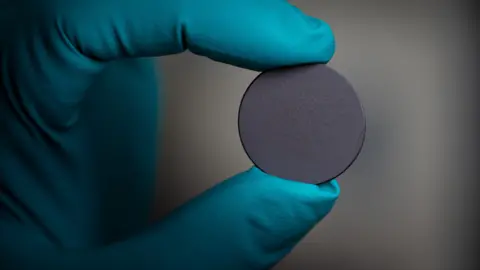
Libby Jackson, head of space at the Science Museum, succinctly captures the essence of this transformative era: "In-space manufacturing is something that is happening now." She acknowledges that while "it’s the early days and they’re still showing this in small numbers at the moment," the implications are profound. Jackson emphasizes that "by proving the technology it really opens the door for an economically viable product, where things can be made in space and return to Earth and have use and benefit to everybody on Earth. And that’s really exciting."
The economic and strategic implications of this nascent industry are vast. Space manufacturing could alleviate global supply chain vulnerabilities, create new high-tech industries, and position nations like the UK at the forefront of the new space economy. The development of reusable re-entry systems, combined with increasingly affordable launch costs, is steadily reducing the barriers to entry for commercial space activities. As technology matures, the vision of autonomous orbital factories, churning out bespoke materials and complex components with unparalleled precision, moves closer to becoming a cornerstone of Earth’s industrial landscape, promising a future where the advantages of space are harnessed directly for terrestrial benefit.




 Roy Suryo