Nana Banana
A groundbreaking study, meticulously analysing DNA from ancient cat bones unearthed at archaeological sites across Europe, North Africa, and Anatolia, rewrites a significant chapter in the story of human-animal cohabitation. The findings indicate that the intimate relationship between cats and humans, which now sees felines dominating internet culture and residing in millions of homes worldwide, truly began only a few thousand years ago, significantly later than the often-cited 10,000 years ago.

"They are ubiquitous, we make TV programmes about them, and they dominate the internet," remarked Professor Greger Larson of the University of Oxford, a leading voice in the field of ancient DNA research. "That relationship we have with cats now only gets started about 3.5 or 4,000 years ago, rather than 10,000 years ago." This revised timeline positions cat domestication considerably after that of dogs, whose journey alongside humans began tens of thousands of years earlier. While dogs were actively selected and bred for specific tasks like hunting and guarding, cats seem to have largely self-domesticated, drawn to human settlements by the abundant rodent populations attracted to stored grains.
All modern domestic cats are direct descendants of a single ancestral species: the African wildcat (Felis lybica). For decades, scientists have grappled with the precise details of how, where, and when these agile predators shed their innate wildness to embrace a life intertwined with humans. To unravel this mystery, researchers meticulously extracted and analysed genetic material from cat bones spanning millennia. By dating these ancient samples and comparing their DNA profiles with the vast gene pool of contemporary domestic cats, they constructed a comprehensive genetic roadmap of feline evolution and dispersal.

The new evidence compellingly overturns the long-standing hypothesis that cat domestication coincided with the dawn of agriculture in the Fertile Crescent, a region in the Near East often referred to as the Levant. Instead, the genetic signatures point to a later genesis, several millennia after the first agricultural settlements, primarily within northern Africa. "Instead of happening in that area where people are first settling down with agriculture, it looks like it is much more of an Egyptian phenomenon," Professor Larson elaborated.
This revised geographical origin resonates strongly with historical and archaeological records from ancient Egypt, a civilisation famously known for its reverence for cats. Egyptian art frequently depicts felines as cherished companions, protectors against pests, and even sacred animals. The practice of mummifying cats, often adorned with collars and buried with their owners, further underscores the profound cultural and emotional significance these animals held in ancient Egyptian society. The new genetic data provides a robust scientific foundation for this historical observation, suggesting that Egypt was indeed a crucial hotspot for the initial domestication process, likely driven by the cats’ invaluable role in controlling rodents in grain stores.
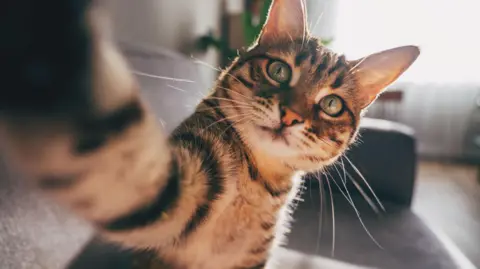
Once these early domestic cats established a symbiotic relationship with humans in northern Africa, their journey across the globe began. Prized for their exceptional pest control abilities and their surprisingly adaptable nature, cats were soon transported far and wide. They became ubiquitous "ship cats," effectively safeguarding valuable cargo from rodent infestation during long sea voyages, a role that greatly facilitated their global distribution. This maritime dispersal allowed them to reach new continents and cultures, spreading the genetic legacy of their African wildcat ancestors.
The research indicates that cats only reached Europe around 2,000 years ago, a much later arrival than previously assumed. They accompanied Roman legions and settlers, spreading throughout the Roman Empire and subsequently into the United Kingdom. From there, their eastward expansion continued along the ancient trade routes of the Silk Road, eventually making their way into China and beyond. Today, the descendants of these intrepid travellers are found in virtually every corner of the world, with the notable exception of the inhospitable continent of Antarctica.

Adding another fascinating layer to the narrative, the scientists uncovered an intriguing "new twist" regarding feline-human interactions in East Asia. Long before the arrival of the African wildcat’s domesticated offspring, a distinct species of wild cat briefly coexisted with human populations in China. These were leopard cats (Prionailurus bengalensis), small, beautifully spotted wild felines resembling miniature leopards. Archaeological finds, including a leopard cat skull discovered in a Han-dynasty tomb in Xinzheng City, Henan Province, China, indicate that these cats lived alongside humans in Chinese settlements for approximately 3,500 years.
This early human-leopard cat relationship is best described as "commensal," a biological interaction where two species live together, with one benefiting and the other largely unaffected or even receiving a minor benefit. Professor Shu-Jin Luo of Peking University in Beijing, a co-author of the study, explained, "Leopard cats benefited from living near people, while humans were largely unaffected or even welcomed them as natural rodent controllers." Unlike their African wildcat counterparts, however, the leopard cats in China never underwent full domestication. They maintained their wild instincts and genetic independence, and their transient association with humans eventually faded, perhaps due to their inherent wildness or the later introduction of the more pliable Felis catus from the west.
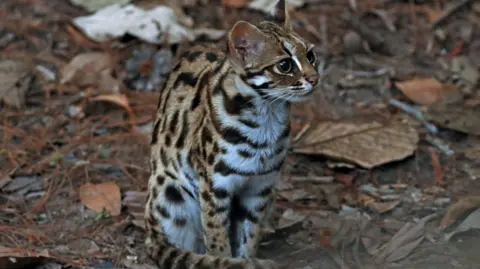
Interestingly, this ancient, unfulfilled partnership has found a modern echo. In recent decades, breeders have successfully crossed leopard cats with domestic cats to create a distinctive hybrid known as the Bengal cat. Recognised as a new breed in the 1980s, Bengal cats possess the striking, wild appearance of their leopard cat ancestors combined with the temperament of domestic felines, offering a contemporary connection to a prehistoric interaction.
This comprehensive research, published across two prestigious scientific journals, Science and Cell Genomics, significantly refines our understanding of the origins and spread of one of humanity’s most cherished and enigmatic companions. It highlights the unique path cats took to join our homes, a journey shaped more by their opportunistic nature and our burgeoning agricultural societies than by direct human intervention, ultimately revealing that the era of the pampered pet is a more recent phenomenon than many cat lovers might have imagined.




 Roy Suryo

 Nakalama John
 atisusanti
 Ramos Leo