
 George Anjay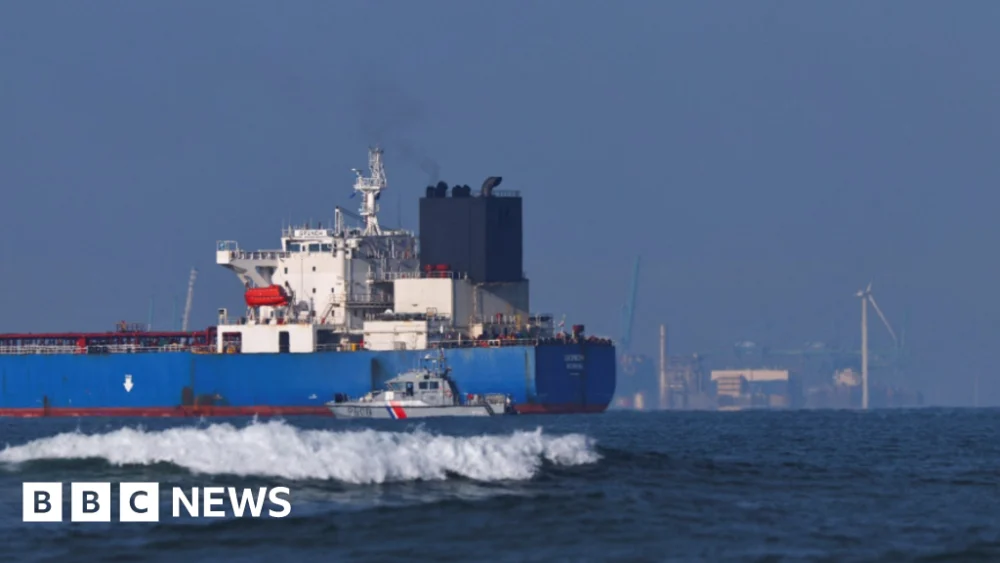
French authorities have taken the Indian captain of a suspected Russian shadow fleet tanker, the "Grinch," into custody days after the vessel was intercepted and seized in the Mediterranean Sea. The interception, carried out by the French navy on Thursday, marks a significant development in the ongoing efforts by Western nations to enforce sanctions against Russia and disrupt its alleged illicit oil trade.
President Emmanuel Macron, announcing the seizure, emphasized France’s commitment to upholding international law and ensuring the effective enforcement of sanctions. He stated that the "Grinch" was "subject to international sanctions and suspected of flying a false flag," indicating a deliberate attempt to circumvent international regulations. The tanker had been traversing the Mediterranean, having departed from the Russian Arctic port of Murmansk. It is currently under guard and moored at a southern French port near Marseille, a strategic location for maritime operations.
While Moscow has yet to issue an official statement regarding the incident, President Macron articulated the broader geopolitical context, suggesting that the shadow fleet, of which the "Grinch" is believed to be a part, plays a crucial role in "financing Russia’s war of aggression against Ukraine." This assertion highlights the strategic importance of disrupting such operations, which are seen as a vital source of revenue for the Russian state, enabling it to sustain its military actions.
The Marseille prosecutor’s office confirmed that the 58-year-old captain, an Indian national, has been taken into custody. The remaining crew members, also of Indian nationality, are reportedly being "kept on board" the vessel while investigations proceed. The primary objective of the ongoing investigation, as stated by the prosecutors, is to "verify the validity of the flag used by the tanker." Initial reports from French media suggest that the "Grinch" was sailing under the flag of the Comoros Islands, a common practice for vessels seeking to obscure their true ownership and origin to evade sanctions.
In response to the seizure, nautical and air exclusion zones have been established around the anchorage site, a measure designed to ensure security and facilitate the investigation process without external interference. This heightened security presence underscores the sensitive nature of the operation and the potential implications for international maritime law and sanctions enforcement.
The seizure of the "Grinch" is not an isolated incident. It follows a pattern of increased vigilance and action against vessels suspected of violating international sanctions related to Russia’s energy exports. In early January, British armed forces collaborated with the United States in a separate operation to seize a Russian-flagged tanker in the Atlantic Ocean. US officials stated that this tanker had violated sanctions by transporting oil destined for both Venezuela and Russia. These coordinated efforts demonstrate a growing international resolve to tackle the complex issue of sanctions evasion through sophisticated maritime networks.
Furthermore, France has a recent history of intercepting vessels suspected of sanctions violations. In October of the previous year, French authorities seized another sanctioned tanker, the "Boracay," off its west coast. While the "Boracay" was later released after a few days, the incident signaled France’s active role in enforcing international sanctions.
The phenomenon of "shadow fleets" has become increasingly prevalent in recent years. Nations such as Venezuela, Iran, and Russia have been accused of leveraging these covert shipping networks to circumvent international sanctions imposed on their oil exports. The opacity of these operations makes them difficult to track and police, posing a significant challenge to global efforts to control the flow of sanctioned commodities.
The strategic implications of these shadow fleets are substantial. By enabling sanctioned countries to continue exporting oil, they undermine the economic pressure intended to influence their behavior. This illicit trade not only provides financial resources to these regimes but also distorts global energy markets and can potentially lead to environmental risks if vessels operate with lax safety standards.
Financial intelligence firms are closely monitoring this trend. S&P Global, a leading provider of financial information, estimates that approximately one in five oil tankers worldwide is currently engaged in the smuggling of oil from sanctioned countries. This staggering figure highlights the scale of the problem and the sophisticated infrastructure that has been developed to facilitate these clandestine operations. The "Grinch" incident, therefore, represents a crucial moment in the ongoing struggle to dismantle these shadow fleets and ensure accountability for those who seek to circumvent international sanctions. The detention of the captain is a step towards understanding the intricate network and potentially identifying other actors involved in this complex and concerning trade. The investigation will likely delve into the vessel’s ownership, its cargo, its intended destination, and the financial transactions associated with its voyages, all with the aim of exposing and disrupting the mechanisms that allow these shadow fleets to operate. The outcome of this investigation could have significant ramifications for how international sanctions are enforced in the maritime sector and for the future of global energy security.



 Roy Suryo

 Nakalama John
 atisusanti
 Ramos Leo
