Nana Banana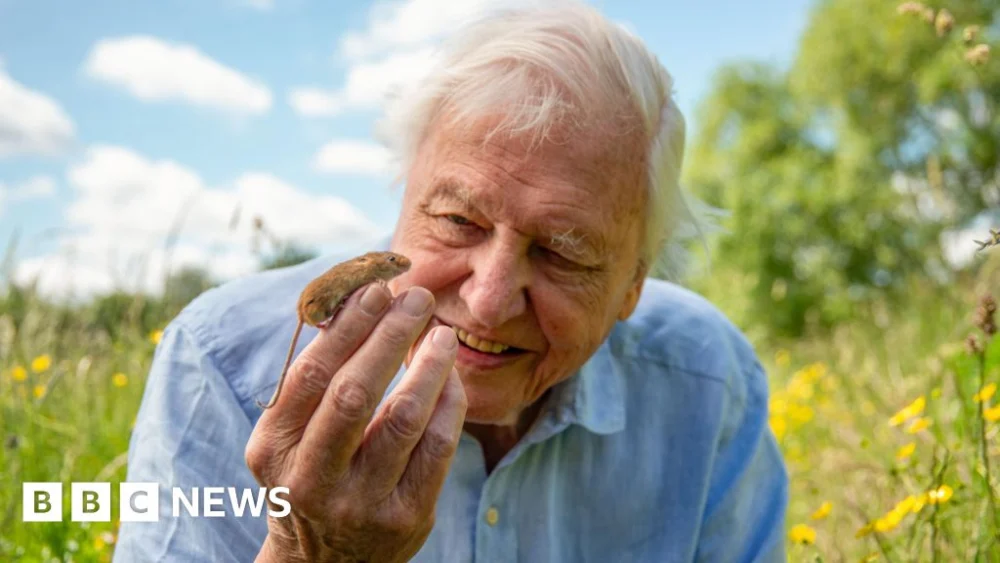
Lying on his side on a dark summer night earlier this year, Sir David Attenborough, a man whose voice has narrated the planet’s wildest wonders for over seven decades, is watching a hedgehog snuffling around an urban garden. "I think they’re lovely things," he says softly, with a chuckle, his voice a remarkable blend of boyish wonder and the profound wisdom accumulated over 99 years. Considered by many as the most famous broadcaster and conservationist of our time, Sir David has circled the globe repeatedly, bringing the brilliance of the natural world into millions of homes. Now, in a poignant and deeply personal one-off documentary titled "Wild London," he has come home – not just to his house, but to the often-overlooked wild heart of the sprawling metropolis he calls his own.
For seven decades, Sir David has resided in Richmond, a picturesque borough in south-west London, a place that has served as both his anchor and his inspiration. Richmond Park, with its ancient oaks, vast open spaces, and herds of red and fallow deer, has been a constant "refuge" and "source of inspiration" throughout his illustrious career. It is here, amidst the familiar landscapes of his long-time home, that he begins and ends his heartfelt exploration in "Wild London," anchoring the global explorer firmly in his local habitat. The choice to focus on London, a city of nearly nine million people, might seem counterintuitive for a man who has witnessed the most spectacular wildlife on every continent. Yet, as Gaby Bastyra, executive producer at Passion Planet, the company behind the film, observes, Sir David "could live anywhere in the world… but he’s always come home to London." The programme, she explains, is an "appreciation of his place – and he loves it," revealing a profound personal connection often overshadowed by his grander expeditions.
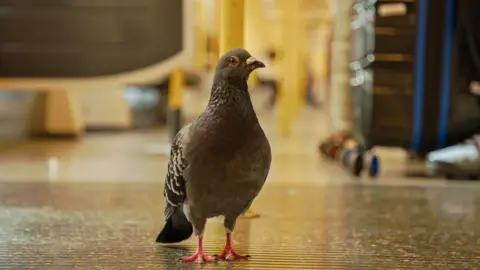
The question naturally arises: can the capital’s wildlife truly compare to the awe-inspiring encounters Sir David has had with majestic mountain gorillas in Rwanda, the astonishing mimicry of a lyrebird in Australia, or the breathtaking spectacle of a blue whale breaching beside his small boat in the open ocean? "Wild London" resoundingly answers with a passionate yes. The documentary is abundant with animal curiosities, showcasing the resilience and adaptability of nature in an urban environment. From the surprisingly common sight of pigeons hopping on to the Hammersmith and City line – a daily commute for some feathered city dwellers – to a hidden snake colony thriving by a bustling canal, the film unveils a secret world pulsating beneath the city’s concrete skin.
Sir David, with his characteristic gentle persuasion, draws our awareness to the daily dramas unfolding all around us, often unseen, amidst and above the urban sprawl. In one particularly compelling scene, through the dappled light filtering through summer leaves, glimpses of a bullish, noisy beast emerge. The suspense builds, making one anticipate a preying tiger stalking the Indian jungle. Instead, the camera reveals a happily mooching Dalmatian dog in Dagnam Park, Romford, unknowingly closing in on a days-old fallow deer fawn. David Mooney, chief executive of the London Wildlife Trust, which co-produced "Wild London," admitted he was completely "enthralled" by that "juxtaposition." He clarified, "That’s not to say that dogs are a problem. It’s just wildlife is interacting with us at all times." This interaction, he stresses, highlights the "raw experiences of nature" that the London Wildlife Trust has championed for a long time, emphasizing how wild encounters are an inherent part of city life, whether we notice them or not. Indeed, fallow deer are known to roam beyond the park’s boundaries, venturing onto streets and into front gardens in areas like Harold Hill, Romford, blurring the lines between urban and wild.
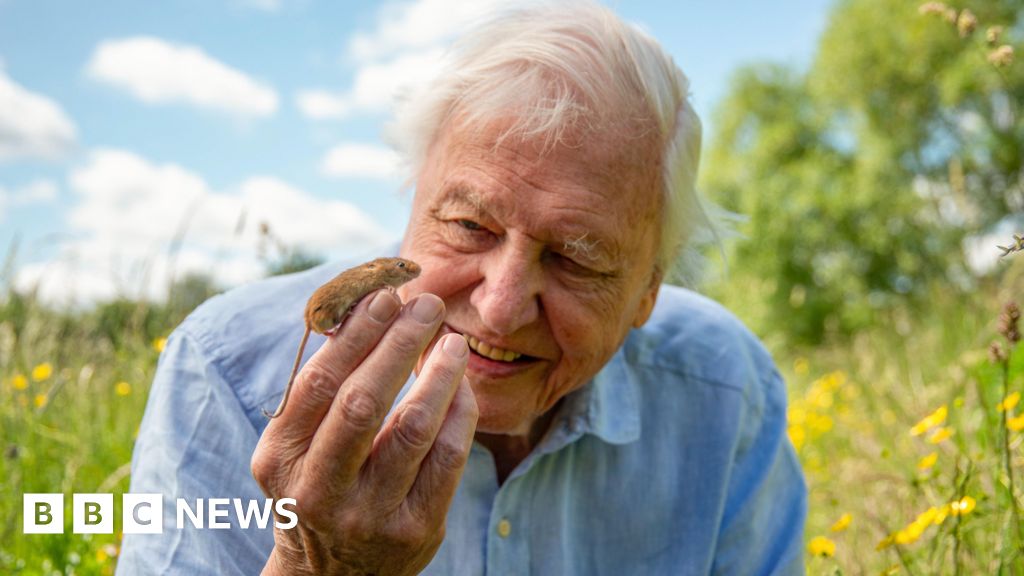
Perhaps the most poignant moments in "Wild London," broadcast just months before Sir David’s centenary, are those where he displays a particular, almost paternal, tenderness towards the animals he meets. At the iconic Houses of Parliament, a symbol of human governance, he is seen holding a delicate peregrine falcon chick while it is being ringed for identification. The tiny raptor tips its head back, looking up at him with bright, curious eyes as he murmurs softly, "Now we can recognise you anywhere – yes, yes you." It’s a moment of profound connection between the giant of the natural world and a tiny, powerful predator thriving in the heart of the city. Later, in Greenford, west London, Sir David gently cradles an even tinier harvest mouse, its minuscule form almost disappearing in his cupped hands, before carefully releasing it into a meadow. He encourages it to scramble onto a wildflower with an affectionate, "Welcome to your new home – there you go." The mouse, however, momentarily resists, clinging to the warmth and safety of his cupped hands, a testament to the trust and calm he exudes. Joe Loncraine, director of "Wild London," who has collaborated with Sir David on numerous nature documentaries, noted these unique interactions. "There were some moments I think that deliver the kind of interactions with him and an animal that I hadn’t seen in a while," Loncraine said. "There was something about the warmth that came across. And I think his enthusiasm for what was happening was so infectious."
Sir David was also greatly impressed by The Ealing Beaver Project, a pioneering rewilding initiative which, he notes in the film, has had such a "positive impact" in west London. Observing these industrious creatures, which were hunted to extinction in the UK centuries ago, he remarks with genuine astonishment: "If someone had told me when I first moved here that one day I would be watching wild beavers in London, I would have thought they were mad. But there they are, right behind me." He uses this remarkable comeback as a powerful example of how, through conscious effort and rewilding initiatives, we are "securing a brighter future for both animals, and us, too" in our unique metropolis – a city widely recognized as the world’s greenest major city, boasting an impressive array of parks, woodlands, and waterways that provide vital habitats.
David Mooney articulates Sir David’s core message perfectly: "His message is: people have to take note of it – if people notice it, they will begin to love it – if people love it, they’ll want to protect it. And if people protect it, we’ll be on a path to nature recovery." "Wild London," arriving late in such a revered canon of nature documentaries, serves as Sir David’s gentle but firm nudge, encouraging us all to pause and marvel at the nature on our very doorsteps, amidst the relentless frenzy of daily life. Joe Loncraine sums up the film’s essence succinctly: "We can be rushing about our jobs, commuting to work, picking the kids up from school, going to the shops – and not really notice. There can be really quite beautiful animals right there – so it’s just about taking that moment to have a look." For Sir David Attenborough, London isn’t just a place of residence; it’s a vibrant, ever-surprising ecosystem, a microcosm of the natural world he has dedicated his life to exploring, teaching, and protecting. And that is precisely why, for this global adventurer, there’s truly nowhere else he’d rather be.




 Roy Suryo