Roy Suryo
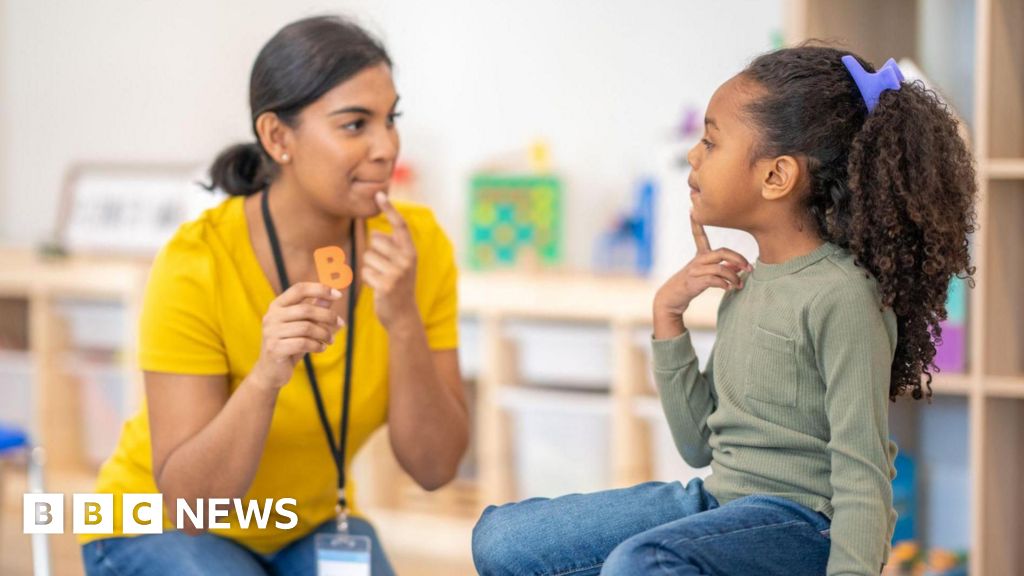
Tens of thousands of children in England are enduring "catastrophic" year-long waits for essential NHS community care, including vital services like hearing support, speech and language therapy, and disability assistance, a stark BBC investigation has revealed. The analysis highlights a deeply concerning reality: a staggering quarter of the 300,000 children currently on waiting lists have been waiting for over 12 months, a timeframe that jeopardizes their critical developmental stages. NHS leaders and medical professionals are issuing urgent warnings, likening these protracted delays to a crisis that is not only damaging children’s immediate health but also their long-term potential. They are imploring the government to accord the same level of urgency and priority to addressing these community care backlogs as has been dedicated to the overwhelming hospital waiting lists. In response, the government acknowledges the unacceptability of these long waits, asserting that its ambitious 10-year plan will significantly enhance access to care through increased investment in community services.
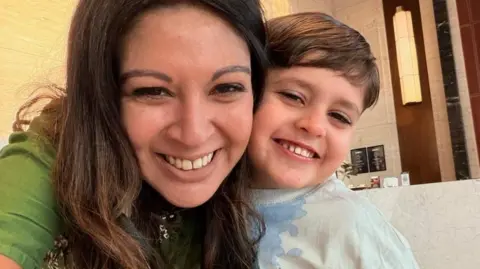
The human cost of these extensive waiting periods is vividly illustrated by the experience of Tiya Currie, a 46-year-old mother from London. Her six-year-old son, Arun, has faced significant speech challenges since he was a toddler. Tiya’s attempts to secure timely NHS support were met with a frustrating cycle of "waiting list after waiting list," leaving her feeling "completely in the dark and tearing my hair out." The prolonged stress and uncertainty took a heavy toll. After two agonizing years of waiting, Tiya and her husband made the difficult decision to deplete £4,000 of their savings to fund private speech therapy and a formal diagnosis for Arun. This diagnosis revealed that Arun has Developmental Language Disorder (DLD), a condition characterized by persistent difficulties in understanding or using spoken language.
"It absolutely crushes me that there are so many people out there who need access to speech and language therapists, but aren’t getting it due to long waiting lists and it not being affordable," Tiya lamented. While Arun’s progress has markedly improved with private therapy and tailored school support, Tiya’s experience underscores the critical need for enhanced early intervention and accessible resources for children. "I know how stretched NHS services are, but children should be prioritised because they’re still developing and they need that support now, not in years’ time," she emphasized, highlighting the unique urgency of developmental needs.

The scale of the problem is alarming, with community waits for under-18s escalating dramatically over the past three years. Since the beginning of 2023, there has been a six-fold surge in children waiting more than a year, with the current figure exceeding 77,500 children across England. This contrasts sharply with adult waiting times, where only 1% of patients experience year-long waits in community settings, compared to a staggering 26% of children. While these figures are specific to England, the Royal College of Paediatrics and Child Health (RCPCH) reports that similar prolonged waiting times are being observed across the United Kingdom.
The children most affected by these prolonged waits often have complex needs, including learning and physical disabilities. Younger children awaiting autism or ADHD assessments are among those facing significant delays, while for older children, mental health services are increasingly becoming a bottleneck. Elliot Howard-Jones, chair of the Robinson Group, an organization representing specialist community NHS services, expressed grave concern about the detrimental impact of these delays on children’s developmental trajectories. "Getting this support is fundamental to their development journey – that’s why waits are so harmful," he stated. He illustrated this with the example of a child with hearing difficulties whose delayed support could lead to disruptive behavior and disengagement in school. "For an adult, waiting is annoying, painful and difficult. But for a child, waiting means your peer group moves on while you don’t. You fall behind and never catch up." Howard-Jones stressed the urgent need for increased focus and investment in community services, drawing a parallel to the efforts being made to address the hospital backlog, which has been a central focus of political manifestos and has seen NHS trusts receive additional funding for progress.
These warnings are echoed by other senior figures within the NHS. Richard Kirby, chair of the community network for both the NHS Confederation and NHS Providers, highlighted that demand is significantly outstripping capacity. "Without more help, children will continue to wait longer and fall further behind – that is a situation none of us should accept," he warned. Dr. Ronny Cheung of the RCPCH attributed the crisis to "chronic underinvestment and a lack of focus on children’s health and services," which has left staff unable to cope with escalating demand. "Long waits are unacceptable for any patient, but for children and young people the waits can be catastrophic," he stated. "Many treatments need to be given by a specific age or developmental stage to prevent long-lasting complications, and for many children these long waits mean we miss crucial chances to intervene in time."
The heartbreaking stories of families struggling to access essential care and therapies are a common occurrence, with a significant number forced to bear the financial burden of private treatment, according to Kate Lawson, head of policy at disability charity Sense. "It’s essential that the government addresses this issue to give every child the best start in life," she urged. The Department of Health and Social Care has acknowledged the unacceptable nature of these delays. In response, they have introduced a new target for community health services to work towards seeing patients within 18 weeks, aligning with the current expectations for hospital care. A spokesperson for the department further stated that under the government’s 10-year NHS plan, substantial investment will be channeled into community services. "Our vision for neighbourhood health will bring care closer to babies, children and young people, with more staff, better digital tools and services working together so children get the right support in the right place," they explained, outlining a commitment to a more integrated and accessible approach to child healthcare. This commitment, however, faces the immense challenge of reversing years of underinvestment and addressing a burgeoning demand that threatens to leave a generation of children behind. The stark reality for thousands of families is that the foundational years of their children’s development are being compromised by the persistent failures within the community care system. The economic and social implications of untreated developmental issues, exacerbated by these long waits, are profound and will likely be felt for years to come. The call for prioritizing children’s community care is not merely a plea for better services; it is an urgent demand for safeguarding the future potential of an entire generation.



 Nakalama John
 atisusanti
 Ramos Leo