
 Nana Banana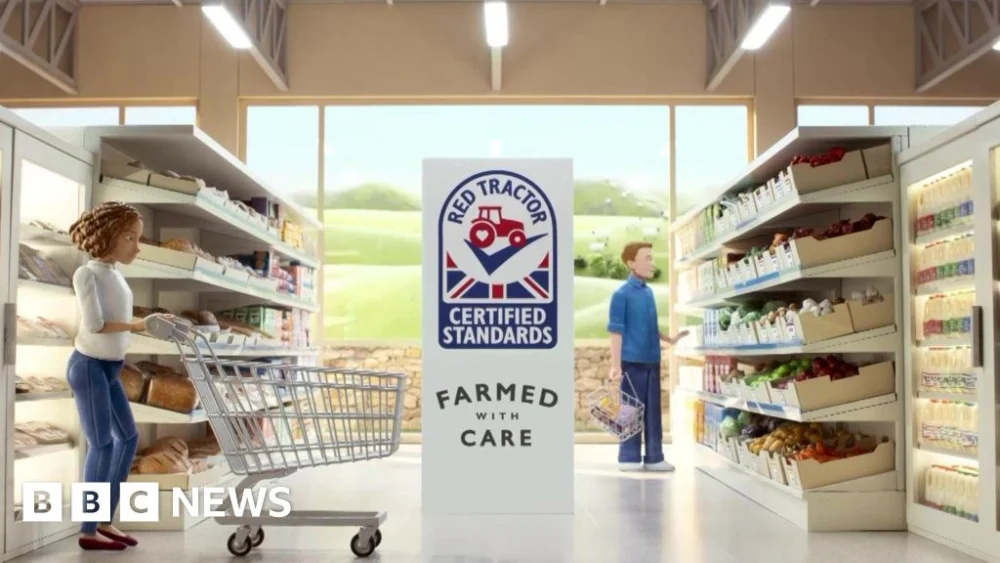
A prominent television advertisement by Red Tractor, the UK’s most ubiquitous certifier of farm products found on supermarket shelves, has been formally banned by the Advertising Standards Authority (ASA). The ruling comes after a lengthy investigation determined that the campaign exaggerated the scheme’s environmental benefits, effectively misleading the public about the ecological standards upheld by its certified farms. This landmark decision marks a significant moment in the ongoing battle against corporate greenwashing, especially within the agricultural sector.
The ASA, the UK’s independent advertising regulator, concluded that Red Tractor had presented "insufficient evidence" to substantiate the environmental claims implied within its advertisement. Specifically, the watchdog found that Red Tractor could not adequately demonstrate that its vast network of farms consistently complied with basic environmental laws, let alone achieved a high degree of environmental protection. This verdict sends a clear message to certification bodies and brands about the imperative of truthful and verifiable environmental assertions in their marketing.
The complaint against Red Tractor was lodged in 2023 by the environmental advocacy group River Action, which has been vocal in its concerns about agricultural pollution and river health. River Action vehemently argued that the advert created a false impression of environmental stewardship, suggesting a level of ecological care that was not borne out by independent assessments. Following the ASA’s decision, the charity accused Red Tractor of "greenwashing" and urged major supermarkets to reconsider their reliance on the scheme.
Red Tractor, however, has robustly contested the ruling, describing the watchdog’s decision as "fundamentally flawed." The organisation maintains that its primary focus has always been on food safety, animal welfare, and traceability, rather than environmental standards. This stance highlights a critical disconnect between the public perception fostered by the advertisement and Red Tractor’s self-defined mandate.
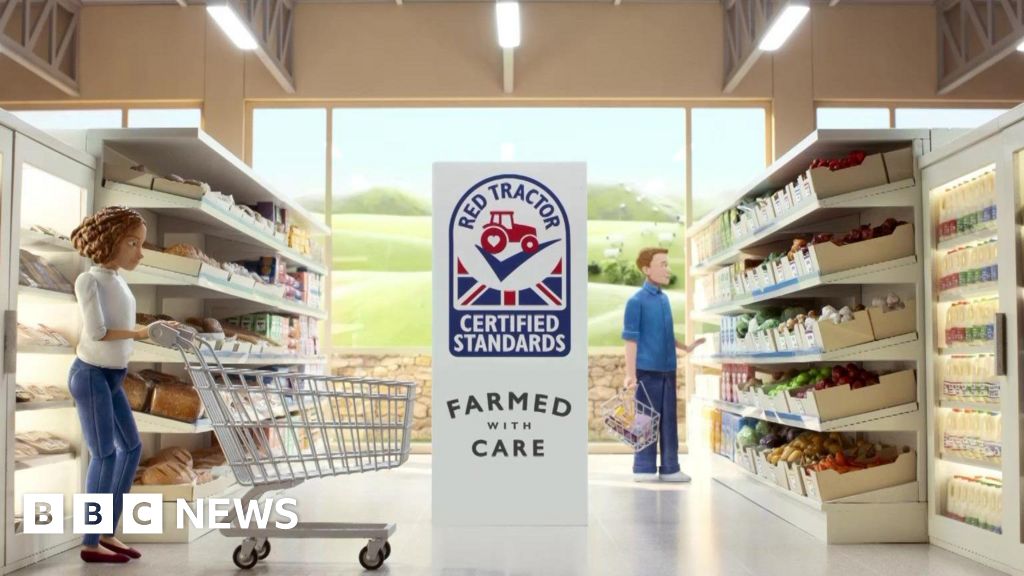
The contentious advertisement, first aired in 2021 and subsequently run for two additional years, featured an animated sequence depicting a woman pushing a trolley through a supermarket. The voiceover declared: "From field to store all our standards are met. When the Red Tractor’s there, your food’s farmed with care." Below the iconic Red Tractor logo, text affirmed "certified standards" and "farmed with care." River Action contended that this phrasing, coupled with the overall tone and imagery, implicitly communicated to consumers that Red Tractor farms upheld "a high degree of environmental protection."
Crucial to River Action’s complaint was a damning report released in 2020 by the Environment Agency, the principal environmental regulator in England. This report meticulously examined the number of breaches of environmental law observed on Red Tractor-certified farms over the preceding five years. Its unequivocal conclusion was that these farms were "not currently an indicator of good environmental performance." This independent assessment served as powerful evidence, directly contradicting the aspirational claims made by Red Tractor’s marketing campaign.
After an extensive investigation spanning more than two years—making it one of the longest-running cases for the ASA—the authority sided with River Action. The ASA’s final ruling stated that Red Tractor had failed to provide "sufficient evidence" that its farms consistently adhered to fundamental environmental regulations and achieved positive environmental outcomes to justify the claims embedded in its advertisement. Consequently, the advert was deemed "misleading" and to have "exaggerated" the true environmental benefits of the scheme. The immediate implication is that the advertisement, last shown in 2023, is now banned from future use unless it undergoes substantial revisions to align with the ASA’s findings.
Amy Fairman, Head of Campaigns at River Action, expressed profound satisfaction with the ASA’s verdict. "What this shows is that for their environmental credentials Red Tractor has been misleading the public and their suppliers," Fairman stated. She called upon major food retailers to "really examine and take stock of what is on their shelves," urging them to scrutinize the environmental bona fides of the products they sell under the Red Tractor label. Fairman underscored the critical importance of challenging such misleading advertisements, especially given the severe environmental risks posed by agricultural pollution.
Indeed, the impact of agriculture on the UK’s natural environment, particularly its waterways, is a growing concern. A 2022 report by the Environment Audit Committee highlighted that agricultural practices are one of the most significant factors impeding the ecological health of rivers, affecting a staggering 40% of them. Runoff from slurry, a mixture of animal waste and water, and the widespread use of pesticides are major contributors to water pollution, harming aquatic ecosystems and biodiversity. For environmental groups like River Action, ensuring that assurance schemes accurately reflect their environmental performance is not merely a matter of advertising ethics but a vital step towards protecting the nation’s precious natural resources.
Despite the ASA’s definitive ruling, Red Tractor remains unyielding in its defence. Jim Mosley, CEO of Red Tractor, firmly rejected the ASA’s finding, telling the BBC: "They believe that we have implied an environmental claim. Nowhere in the voiceover or the imagery is any environmental claim actually made." Mosley further argued that the ASA’s own research indicated only a minority of consumers would interpret the advert as signifying robust environmental standards. He reiterated that Red Tractor’s "core purpose is food safety, animal welfare, and traceability." While acknowledging that the scheme incorporates "some environmental standards," he stressed that they constitute "a small part," and that the responsibility for enforcing broader environmental legislation rests "entirely with the Environment Agency."
When directly questioned whether this meant Red Tractor was unaware if its certified farms complied with environmental law, Mosley’s candid response was, "Correct." This admission is particularly striking, as it exposes a fundamental gap between the public’s likely perception of a "certified standards" label and the actual scope of Red Tractor’s oversight regarding environmental compliance. It raises serious questions about consumer trust and the efficacy of the scheme as an indicator of sustainable farming.

The ASA’s ruling also brings into sharp focus the role of supermarkets, which heavily promote Red Tractor-certified products. Many major retailers explicitly link the Red Tractor logo to environmental benefits in their marketing materials. For instance, Natalie Smith, Tesco’s head of agriculture, recently commented on the 25-year anniversary of Red Tractor, stating: "Certification schemes play a key role in providing reassurance for customers, and over the past 25 years, Red Tractor has established itself as a mark of quality, standing for… environmental protection." Similarly, Morrisons’ website boldly asserts: "100% of the fresh pork, beef, lamb, poultry, milk and cheddar cheese we sell in our stores comes from farms certified by Red Tractor, or an approved equivalent scheme, giving customers assurance… environmental protection."
This direct contradiction between Red Tractor’s CEO admitting a lack of environmental compliance knowledge and supermarkets’ explicit claims of "environmental protection" under the Red Tractor banner presents a significant challenge for retailers. When questioned by the BBC, Morrisons did not provide a comment. Tesco offered a somewhat generic response, stating: "We recognise there is still more to do, and it’s essential that the Government and industry work together to drive change," while also referring inquiries to their industry body. The British Retail Consortium, representing major supermarkets, affirmed that "retailers remain committed to working with Red Tractor" but noted that they are also "owners of the scheme," suggesting a complex web of relationships and shared responsibilities.
This case is not isolated; it reflects a broader trend of increased scrutiny on corporate environmental claims, often termed "greenwashing." Regulatory bodies worldwide are intensifying efforts to ensure that companies’ sustainability pledges are transparent, accurate, and verifiable. The ASA’s ban on the Red Tractor advertisement underscores the growing intolerance for misleading environmental marketing and the expectation that claims about ecological benefits must be substantiated with robust evidence.
Moving forward, this ruling places considerable pressure on Red Tractor to either revise its advertising to accurately reflect its scope or to significantly enhance its environmental standards and their enforcement. For supermarkets, it necessitates a careful review of their own marketing language regarding Red Tractor products and a re-evaluation of the scheme’s role in their sustainability strategies. The outcome of this case will undoubtedly influence how food assurance schemes operate and communicate their benefits, ultimately shaping consumer trust and driving the broader conversation about genuine environmental stewardship within the agricultural supply chain. The need for clear, verifiable standards and transparent communication has never been more critical as consumers become increasingly discerning about the environmental impact of their food choices.




 Roy Suryo

 Nakalama John
 atisusanti
 Ramos Leo
