Nakalama John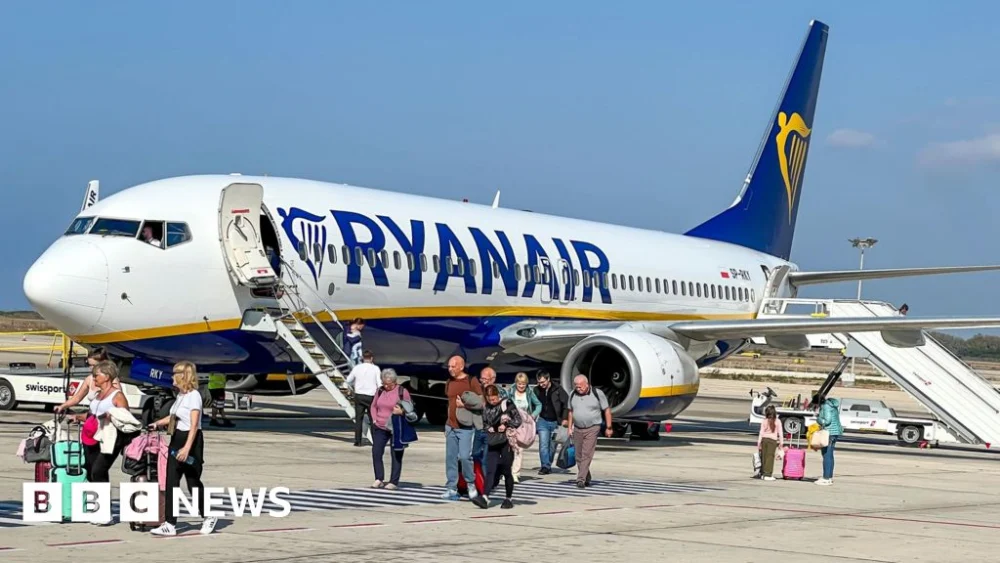
In its latest quarterly results, covering the three months ending December, Ryanair reported an average fare increase of 4%, bringing the average ticket price to €44 (£38). This modest increase in average fares, coupled with a 9% rise in total revenue to €3.21 billion, signals healthy operational performance. The airline also saw a 6% increase in passenger traffic, carrying 47.5 million travellers during the quarter. These positive indicators reflect the airline’s ability to attract and serve a growing customer base, leveraging its extensive network and cost-efficient model.
However, the period was marked by a steep decline in pre-tax profits, which plummeted by an alarming 83% to €24.4 million, down from €143.7 million in the corresponding period of the previous year. This significant drop was primarily attributed to an extraordinary fine of €256 million (£222 million) imposed by Italy’s competition watchdog. The Italian Competition Authority (Autorità Garante della Concorrenza e del Mercato, AGCM) sanctioned Ryanair for what it described as "abusing its dominant position" in the market by actively impeding travel agencies from accessing and selling its flight services.
The AGCM’s investigation concluded that Ryanair had implemented an "elaborate strategy" designed to make it exceedingly difficult, if not impossible, for both online and traditional travel agencies to purchase its flights directly through its website. This strategy reportedly involved various tactics that blocked or hindered purchases, or made them "economically or technically burdensome." Such actions were deemed particularly impactful when flights needed to be combined with services from other airlines or integrated with tourism and insurance products, thereby limiting consumer choice and market competition. Ryanair, however, has vehemently denied the allegations, labelling the fine as "baseless" and expressing strong confidence that it would be overturned upon appeal. The airline maintains that its direct-to-consumer sales model is inherently competitive, arguing that by cutting out intermediaries, it can offer lower fares, ultimately benefiting consumers. This legal battle highlights the ongoing tension between airlines seeking to control their distribution channels and regulatory bodies aiming to ensure fair competition and consumer access.
The growth in traveller numbers during the quarter was significantly bolstered by strong bookings observed over key holiday periods. The October half-term school holidays, traditionally a busy travel window, along with the Christmas and New Year festive season, contributed substantially to the airline’s passenger volume. These periods are crucial for the travel industry, often dictating the "fare outlook" for airlines as demand typically peaks, allowing for higher pricing. Ryanair’s ability to capitalize on these peak travel times underscores its strategic scheduling and competitive pricing, which remain attractive to consumers seeking affordable travel options for leisure and family visits.
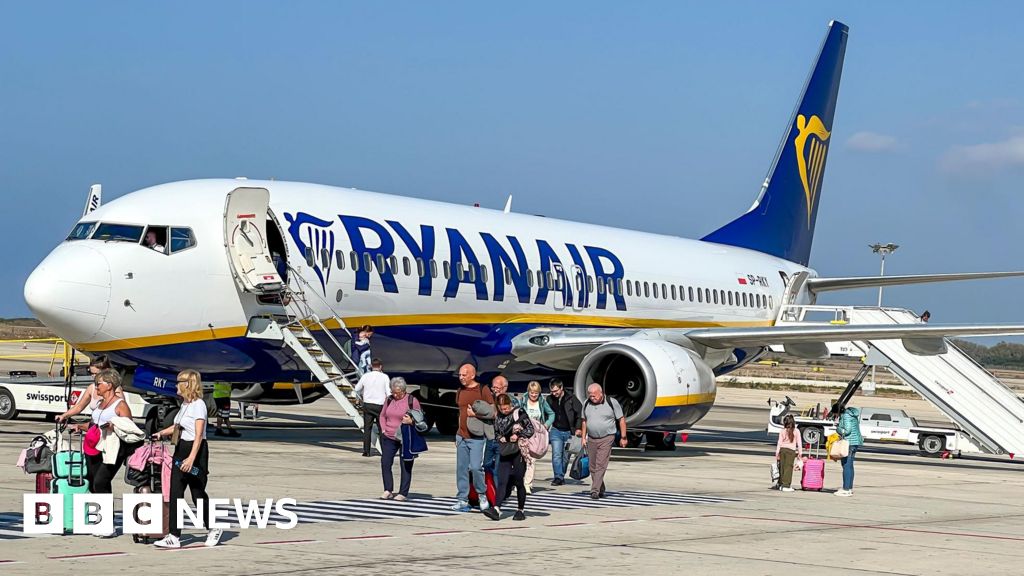
Looking ahead, Ryanair’s outspoken chief executive, Michael O’Leary, provided an updated full-year net profit forecast, suggesting it could reach as much as €2.23 billion. However, O’Leary cautioned that this optimistic projection remains "exposed to adverse external developments." He specifically cited the potential for escalation in ongoing geopolitical conflicts, particularly in Ukraine and the Middle East, as significant risks. Such conflicts can lead to disruptions in air travel, increased fuel prices, and dampened consumer confidence, all of which could negatively impact the airline’s financial performance. The aviation industry remains highly sensitive to global events, and Ryanair, despite its robust position, is not immune to these broader external pressures.
In a more lighthearted moment, Ryanair made headlines recently following an online exchange between Michael O’Leary and Elon Musk. O’Leary had publicly rejected the idea of integrating Musk’s Starlink technology to provide Wi-Fi services on Ryanair flights, citing cost and practicality concerns. This sparked a brief but widely publicized online spat between the two prominent figures. Amusingly, the airline later claimed that the publicity generated from this exchange had led to a slight rise in bookings, with Ryanair publicly thanking Musk for the unexpected boost. This anecdote highlights the airline’s knack for generating media attention, even from seemingly trivial incidents, and leveraging it to its advantage.
Central to Ryanair’s long-term strategy is its ambitious plan to grow passenger numbers to 300 million by 2034. A significant component of this expansion hinges on a new fleet of 300 Boeing 737 Max 10 planes. The first delivery of these new aircraft, comprising 15 planes, is anticipated in spring 2027. O’Leary expressed confidence to analysts, stating that the initial delivery was more likely to be "early rather than late," a somewhat surprising assertion given Boeing’s recent track record.
Boeing has faced considerable challenges in recent years, struggling with on-time deliveries and a series of crises related to quality and manufacturing standards. These issues have significantly impacted airlines worldwide, including Ryanair, one of Boeing’s largest customers. In 2024, Ryanair had previously stated that these delivery delays had contributed to capacity constraints, which in turn pushed up its fares. The airline’s dependence on new aircraft deliveries for its expansion plans means any further delays could hamper its growth ambitions and continue to exert upward pressure on ticket prices.
Despite the broader industry concerns surrounding Boeing’s production capabilities, O’Leary maintained a positive outlook regarding the Max 10 order, telling reporters on Monday that he expected the aircraft to be delivered on time. The Max 10 model is a crucial part of Ryanair’s future fleet strategy, as it offers significant operational advantages. It is more fuel-efficient than the airline’s current fleet of 737 Next Generation planes, which will help reduce operating costs and environmental impact. Furthermore, the Max 10 has 21% more seats, allowing Ryanair to carry more passengers per flight, thereby increasing capacity and potentially lowering unit costs. This enhanced efficiency and capacity are vital for the airline to achieve its ambitious passenger growth targets and maintain its competitive edge in the budget travel market. The successful integration of these new, larger, and more efficient aircraft is fundamental to Ryanair’s strategy of offering low fares while expanding its network and passenger base across Europe.




 George Anjay
 Ramos Leo
 Nana Banana