
 Nana Banana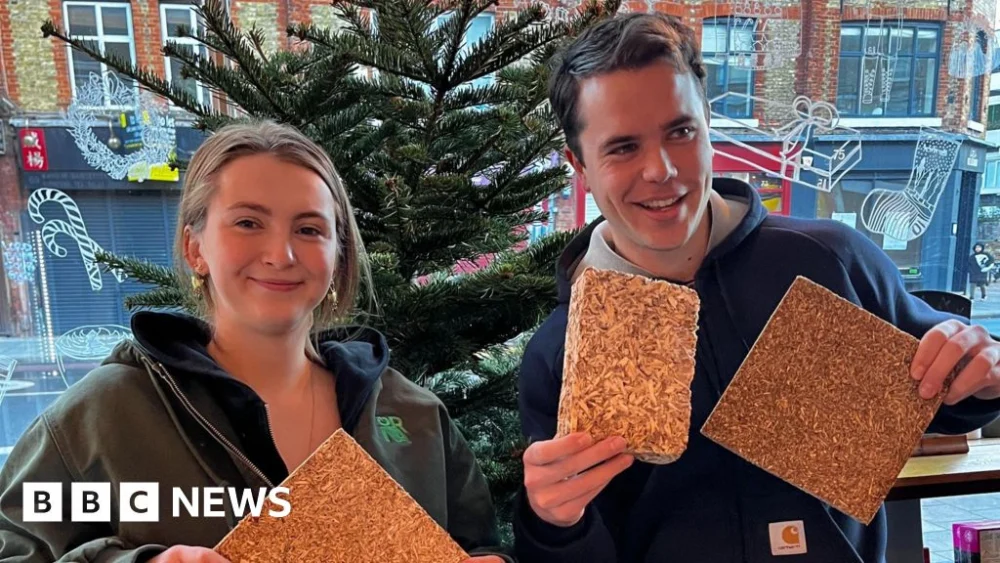
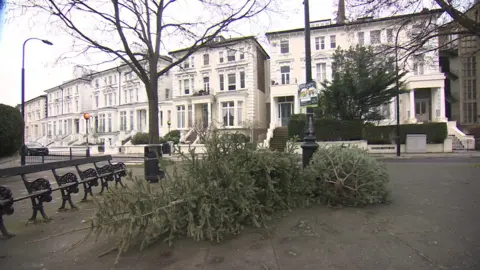
As the festive glow recedes and the final remnants of Christmas cheer are packed away, London’s streets annually transform, becoming temporarily lined with the skeletal remains of countless Christmas trees. These discarded evergreens, once vibrant symbols of holiday joy, now stand awaiting collection by diligent council workers, prompting an increasingly urgent conversation about their ultimate fate, environmental impact, and the innovative solutions emerging to tackle this seasonal waste challenge. The sheer volume is staggering; industry estimates suggest that approximately seven million Christmas trees across the UK are condemned to landfill each year, contributing significantly to a larger problem of waste and resource inefficiency.
The environmental implications of this annual mass disposal are profound. When organic matter like Christmas trees decomposes in landfill sites, it does so anaerobically (without oxygen), producing methane – a potent greenhouse gas that is many times more effective at trapping heat in the atmosphere than carbon dioxide over a 20-year period. Beyond this harmful gas emission, landfilling represents a squandering of valuable organic material that could otherwise enrich soil, provide energy, or be transformed into new products. The Carbon Trust highlights this stark reality, noting that while a real Christmas tree generally produces about 3.5kg of carbon dioxide emissions during its growth and transport, a typical 2-meter tree sent to landfill without its roots can have a carbon footprint soaring to 16kg. This comparison underscores the critical importance of responsible disposal, and explains why an artificial tree, when reused over several years (typically 10-20 years to offset its production footprint), can sometimes result in lower overall emission levels, depending on its material and manufacturing origin. However, the burgeoning sustainable schemes in the capital are striving to ensure real trees remain a genuinely eco-friendly choice.
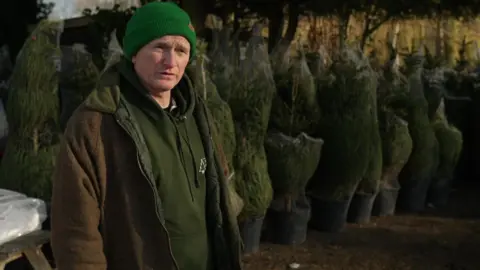
In response to this growing awareness and the urgent need for more sustainable alternatives, a vibrant ecosystem of schemes is flourishing across London, offering residents compelling options to minimize their festive footprint. One such innovative approach reimagines the traditional tree purchase as a rental service, breathing new life into the festive tradition. London Christmas Tree Rental champions the concept of a living Christmas tree, moving away from the "use once and discard" model. All trees provided by the company are carefully potted, cared for throughout the year, and then returned after the festive season to continue growing, ready for reuse the following year. "Just simply, rent, water, return," explains Jonathan Mearns, the visionary founder behind this green initiative, encapsulating the simplicity and elegance of the solution.
The process for customers is straightforward and engaging. Through the company’s website, individuals can select their preferred tree size and collection/return dates. They then visit one of London Christmas Tree Rental’s four strategically located hubs – including a popular spot in Dulwich, south-east London – to personally choose their tree. Customers are then entrusted with its care, ensuring it receives adequate water throughout the holiday period, before returning it post-Christmas. Once returned, the trees are transported back to a dedicated farm, where they are meticulously nurtured, ensuring their health and vitality for future festive seasons. This continuous cycle not only significantly reduces waste but also promotes carbon sequestration as the trees grow, absorbing CO2 from the atmosphere year after year.
A unique and heartwarming aspect of this service is the opportunity for customers to be reunited with the very same tree they rented in previous years. Mearns recounts stories of customers’ surprise and delight: "Sometimes people come back and say, ‘is that really my tree?’ We get pictures and we’ll compare, and they’ll say actually it is, it’s just grown a little bit, so people love it." This personal connection fosters a deeper appreciation for nature and the circular economy, transforming a seasonal purchase into an annual reunion with a growing member of the family. A satisfied customer, reflecting on their four years with the service, told BBC London, "I just like the idea, it’s more environmentally friendly." This sentiment resonates with a growing number of Londoners keen to embrace more responsible consumption habits without sacrificing the cherished traditions of Christmas. The company’s growth, now spanning multiple hubs, attests to the increasing demand for such conscientious choices, demonstrating that sustainability can be both practical and emotionally rewarding.
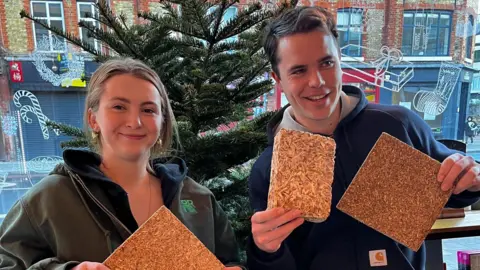
While tree rental offers a solution for living trees, another groundbreaking scheme, The ORNA Group, addresses the fate of cut trees that have already served their purpose. Operating out of Peckham, south-east London, ORNA is dedicated to pioneering methods of repurposing these discarded evergreens, transforming them into valuable construction materials. Hugo Knox, one of ORNA’s co-founders, shares that the inspiration for this innovative venture stemmed directly from his first-hand experience in the Christmas tree industry. "Back in November 2019, I left my first job coming out of university," he recalls. "I rang up one of my close friends, Max. I said, look, ‘it’s Christmas, Christmas trees, shall we give it a go?’"
What began as a door-to-door Christmas tree delivery and installation service in Camberwell quickly expanded into a seasonal business, but it also opened Knox’s eyes to the overwhelming scale of post-Christmas waste. "From that I learned a lot about Christmas tree waste and saw all of the waste first-hand in the streets of London, and that’s what led to ORNA Group," he explains. This direct encounter with the problem fueled his determination to find a solution, leading to the establishment of a company focused on circular economy principles. ORNA Group’s mission is to divert these trees from landfill and convert them into functional, sustainable building resources, thereby closing the loop on a traditionally linear consumption model.
At the heart of ORNA’s operation is a sophisticated workshop where the transformation takes place. Real trees, meticulously collected from homes and businesses across London, undergo a fascinating metamorphosis. Material scientist Caelo Dineen Vanstone, another of the start-up’s co-founders, outlines the intricate process. "When it arrives here, it’s mostly unprocessed," she notes. "The trees have come straight out of houses or businesses in different forms, but it comes here chipped up into the right consistency." This initial chipping is crucial, breaking down the bulky branches and trunks into smaller, manageable fragments. These wood shavings are then combined with carefully selected natural binders, a proprietary blend that ensures structural integrity and durability in the final product.
The core of the process involves a unique "cooking and modifying" phase for these natural ingredients, preparing them to bond effectively with the tree waste. This mixture is then combined "to create a homogenous wet material" – a malleable pulp that holds the promise of future form. This material is then pressed and cured, often under heat and pressure, to form solid boards, panels, or other construction components. The resulting materials boast a range of properties, from sound insulation to aesthetic appeal, making them suitable for various architectural and design applications, such as interior wall panels, furniture elements, or decorative finishes. This innovative approach not only reclaims waste but also offers a sustainable alternative to conventional building materials, reducing demand for virgin resources and lowering embodied carbon in construction.
Beyond their material innovation, ORNA Group is deeply committed to community engagement and education. The project actively collaborates with young people, demonstrating how seemingly small actions can collectively contribute to significant positive change. "We’re not trying to change the world quite yet," Dineen Vanstone humbly states, reflecting a pragmatic yet hopeful outlook. "But it’s just about trying to make our street corner a little bit nicer and trying to do something positive rather than doing something that’s going to impact our future generations in a negative way." Through workshops and educational outreach programs, ORNA Group inspires the next generation to think creatively about waste, fostering a sense of environmental stewardship and empowering them to be part of the solution.
While these innovative start-ups offer exciting new pathways, traditional recycling methods remain vital. Most London boroughs operate robust schemes where real Christmas trees can be collected and recycled, drastically reducing the number ending up in landfill. These council services typically involve chipping the trees, transforming them into valuable mulch or compost that can be used in parks, gardens, and green spaces across the capital. Some councils also divert chipped wood to biomass energy plants, where it can be burned to generate renewable electricity. Residents are encouraged to check their local council’s website or visit London Recycles for specific information on designated collection days and drop-off points, ensuring their tree receives a proper, environmentally sound end-of-life. These widespread schemes, alongside emerging innovations, form a comprehensive network designed to handle the post-Christmas influx, demonstrating London’s commitment to a greener future.
The movement towards a more circular economy for Christmas trees in London is a testament to growing environmental consciousness and entrepreneurial spirit. From renting living trees that grace homes year after year to transforming discarded evergreens into the building blocks of tomorrow, the capital is showcasing diverse and effective strategies to tackle seasonal waste. These initiatives not only mitigate environmental harm but also foster community engagement and inspire future generations to embrace sustainable practices. As Londoners continue to celebrate the festive season, they now have more options than ever to ensure their Christmas trees truly get a new lease of life, contributing to a greener, more sustainable city for all.


 Roy Suryo

 Nakalama John
 atisusanti
 Ramos Leo
