
 Ramos Leo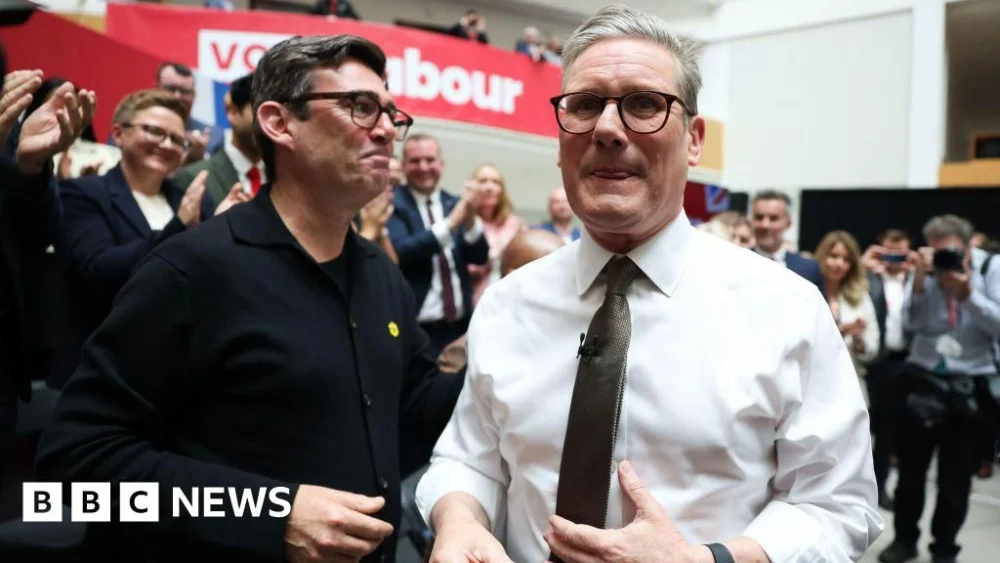
Speaking to reporters aboard his plane en route to China, Sir Keir firmly refuted allegations that Burnham had been informed in advance of the party’s intention to block his candidacy. "I know who was talking to Andy on Saturday and that wasn’t said," the Prime Minister stated, directly addressing claims circulating in various media outlets that the popular mayor had received prior notification of his impending exclusion. Burnham himself has also publicly denied receiving any such advance warning, deepening the mystery surrounding the communication breakdown.
The controversy stems from the National Executive Committee’s (NEC) decision on Sunday to formally block Burnham’s application to stand as Labour’s candidate in the Gorton and Denton constituency. The official rationale provided by the party’s ruling body was to "avoid an unnecessary mayoral election," which would be triggered should Burnham successfully return to Westminster, necessitating another costly contest to replace him as Mayor of Greater Manchester. This justification has, however, been met with skepticism in some quarters, leading to speculation about underlying political motivations.
The vacancy in the Greater Manchester seat arose after long-serving Labour MP and former minister Andrew Gwynne stepped down on Friday, citing pressing health grounds. Gwynne’s resignation, while regrettable, immediately opened up a pathway for ambitious Labour figures to potentially return to Parliament. Burnham, a prominent figure in the Labour Party and a former government minister, is widely regarded as a formidable political talent and a potential future leadership challenger to Sir Keir Starmer, should he decide to make a return to national politics in Westminster.
When pressed by journalists about whether he would welcome Burnham’s return to the House of Commons, Sir Keir offered a somewhat guarded response. "That’s a matter for Andy," he said, before adding that Burnham was doing a "first-class job" as the elected Mayor of Greater Manchester. This seemingly complimentary remark could be interpreted in multiple ways: as genuine praise for Burnham’s regional leadership, or as a subtle signal that the party leadership prefers him to remain in his current devolved role, rather than challenge the existing order in Westminster.
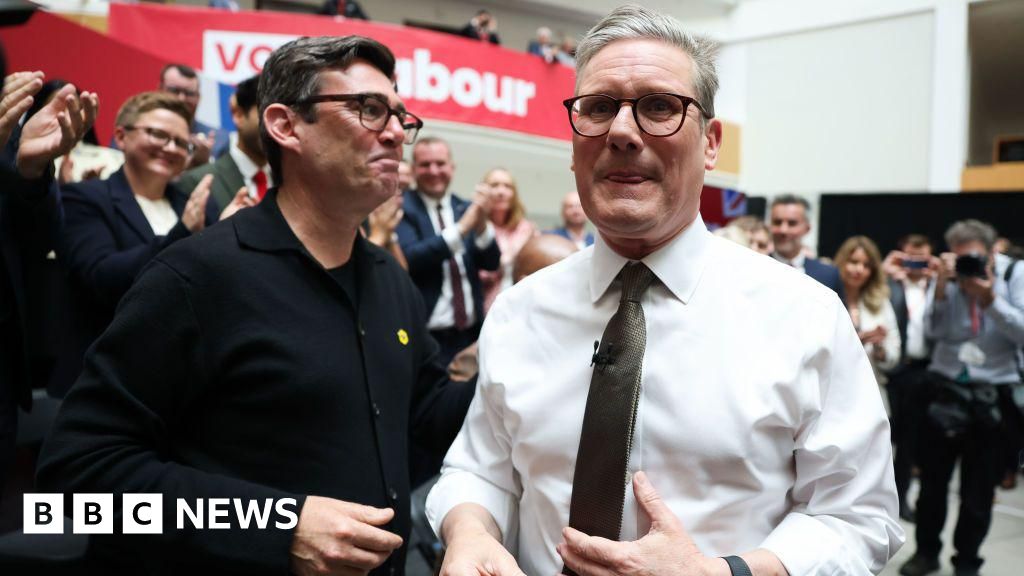
Beyond the internal party machinations, the by-election itself presents a significant challenge for Labour. Sir Keir framed the contest as a critical battle against Reform UK, the ascendant right-wing party. "You can see from their [Reform’s] candidate what politics they’re going to bring to that constituency, the politics of division, of toxic division, of tearing people apart," Sir Keir asserted, launching a strong attack on Reform UK’s approach. He continued, "That’s not what that constituency is about, it’s not what Manchester is about, so this is a straight fight between Labour and Reform and there’s only one party that can stop the politics of Reform in the by-election and that’s the Labour Party."
The Reform UK candidate for the Gorton and Denton by-election is Matt Goodwin, a well-known academic-turned-political campaigner. Goodwin’s selection underscores Reform UK’s strategic focus on engaging with voters in traditionally Labour-held northern constituencies, often by highlighting issues such as immigration, cultural identity, and perceived failures of the political establishment. His candidacy adds a layer of intellectual heft to Reform UK’s campaign, potentially making them a more formidable opponent than previously anticipated in such a by-election.
Adding to the complexity of the electoral landscape, the Workers Party of Britain has also announced its candidate. Shahbaz Sarwar, a sitting councillor on Manchester City Council, representing the Longsight ward, will stand for the Workers Party in the Gorton and Denton by-election. The presence of multiple opposition parties, including those on the left, could further fragment the vote, although Labour’s substantial majority in the last general election suggests a difficult path for any challenger.
The NEC’s decision to block Burnham was made by a 10-member panel of Labour’s ruling body over the weekend. Their justification hinged on the "disproportionate" financial and logistical cost to the party of holding a subsequent mayoral election if Burnham were to vacate his current post. This argument, while seemingly pragmatic, has sparked wider debate about the balance between central party control and local democratic choice, particularly when dealing with popular and powerful regional figures like Andy Burnham. Sir Keir Starmer himself was among the eight NEC members who voted in favour of barring Burnham, indicating a unified front from the party leadership on this issue.
Burnham’s steadfast denial of receiving prior notice from Downing Street about the impending block adds a layer of intrigue to the situation. "It is simply untrue to say that I was told that I would be blocked," he told reporters, emphasizing his engagement in conversations with individuals in Number 10 throughout the weekend. This suggests either a failure of communication, a deliberate obfuscation, or a misunderstanding regarding the nature of those discussions, leading to a public disagreement between a prominent mayor and the Prime Minister.
The electoral history of Gorton and Denton provides crucial context for the by-election. At the 2024 general election, Labour secured the constituency with a commanding 13,000-vote majority, a testament to its long-standing dominance in the area. However, the by-election dynamic can often differ significantly from a general election. Reform UK emerged as the second-placed party in 2024, securing approximately 5,000 votes, narrowly surpassing the Green Party, which finished third. This second-place finish positions Reform UK as a credible, albeit distant, challenger in the upcoming contest, particularly if traditional Labour voters are disillusioned or opt to stay home.
The decision to block Andy Burnham has far-reaching implications beyond the immediate by-election. It highlights the central leadership’s desire to maintain tight control over candidate selection, especially in situations that could disrupt existing political structures or elevate potential rivals. For Starmer, it reinforces his authority within the party, demonstrating a willingness to make tough decisions, even if they involve a popular figure like Burnham. However, it also risks alienating sections of the party membership and supporters who might view the move as undemocratic or as an attempt to stifle internal debate and ambition.
For Andy Burnham, the blockage represents a significant setback to any immediate plans for a return to Westminster. While he remains a powerful and respected figure in Greater Manchester, this incident underscores the challenges ambitious regional leaders face when their aspirations clash with the strategic interests of the national party leadership. His next steps will be closely watched, as he navigates the aftermath of this decision and considers his future political trajectory. The ongoing dialogue between Starmer and Burnham suggests an effort to manage the fallout and maintain a working relationship, despite the evident tension and disappointment. The Gorton and Denton by-election will therefore be more than just a contest for a parliamentary seat; it will serve as a barometer for Labour’s internal cohesion, its resilience against the rise of Reform UK, and the evolving power dynamics within British politics.



 Roy Suryo

 Nakalama John
 atisusanti
