
 Ramos Leo
Under the proposed changes, which will form part of broader reforms to the English school system, on-site suspensions are to be used specifically for pupils whose behaviour warrants removal from the mainstream classroom but does not involve violence. The Department for Education (DfE) emphasizes that this approach is designed to limit the amount of educational content suspended pupils miss, ensuring they remain engaged with their studies and school community. While many schools already implement various forms of internal suspension or isolation, the DfE intends to provide clearer guidelines, defining "internal suspension" as a "short, structured intervention with meaningful learning and time for reflection," moving away from instances where pupils might be set "generic work that does not support learning or reintegration."
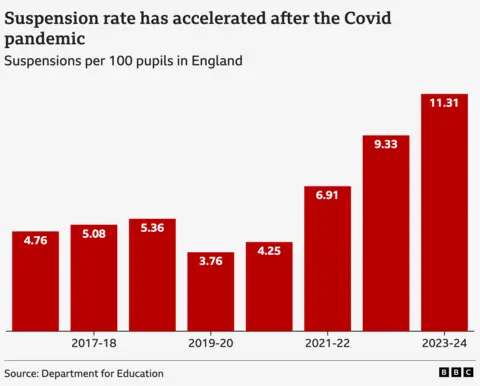
The impetus for this policy recalibration comes amid a notable increase in suspension rates across England. Data reveals a concerning acceleration in the number of suspensions since the COVID-19 pandemic. Between the academic years 2022-23 and 2023-24, the total number of suspensions surged by 21%, escalating from 787,000 to a staggering 955,000. Correspondingly, the rate of suspensions per 100 pupils also rose significantly, from 9.33 to 11.31 over the same period. Particularly striking is that primary schools experienced the largest percentage increase, suggesting a growing challenge in managing behaviour among younger students, possibly linked to disrupted early years socialisation and learning during pandemic lockdowns. Historically, suspension rates had been on an upward trajectory even before the pandemic, experiencing a temporary dip only during the periods of school closures and remote learning.
Education Secretary Bridget Phillipson underscored the rationale behind the new directive. She stated, "Suspensions will always play a critical role in helping heads manage poor behaviour, but time at home today can too easily mean children retreating to social media, gaming and the online world." This unsupervised time away from school, she argued, leads to "high levels of lost learning," which can be detrimental to a child’s academic progress and overall development. The government’s objective is to "restore suspensions as the serious sanction they should be, while keeping young people engaged in their education and reducing the time teachers spend helping pupils catch up." This perspective highlights a dual goal: maintaining discipline while prioritizing educational continuity.

Headteachers will ultimately retain the autonomy to decide the most appropriate form of suspension for their pupils, tailoring the response to individual circumstances and the nature of the misbehaviour. Richard Walkden, headteacher at Ecclesfield Secondary School in Sheffield, provided a nuanced perspective on the challenges. He affirmed that sending children home is typically considered a last resort, yet suspensions are sometimes necessary to establish "lines in the sand" regarding acceptable behaviour. "Suspensions are never easy. They cause harm," Walkden acknowledged, pinpointing "lost learning" as the most significant detriment. He stressed the irreplaceable nature of secondary education, stating, "Students get one chance at education in secondary. They’ve got five years and every day matters." Despite these concerns, he conceded, "I fundamentally understand running the schools I have done for many years, that suspensions sometimes are needed and required." His remarks encapsulate the difficult balance school leaders must strike between enforcing discipline and safeguarding students’ educational pathways.
The issue of suspensions is particularly acute for certain vulnerable groups. Data consistently shows that pupils with Special Educational Needs and Disabilities (SEND) and those eligible for free school meals (FSM) face significantly higher rates of suspensions and permanent exclusions compared to the general student population. This disparity often points to unmet needs, a lack of appropriate support, or socioeconomic factors that exacerbate behavioural challenges. The proposed changes, therefore, hold particular importance for these groups, with hopes that on-site provisions will offer more tailored support and prevent them from falling further behind.
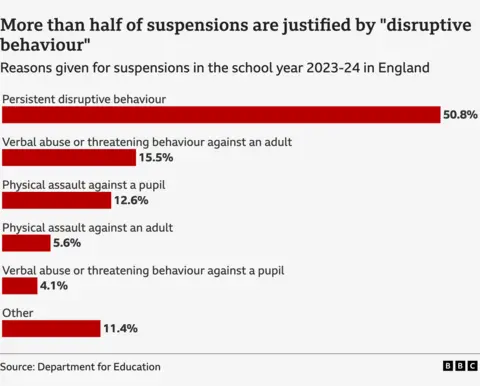
An analysis of the reasons for suspension in the 2023-24 academic year reveals that "persistent disruptive behaviour" accounted for more than half (51%) of all reasons given by schools. This broad category can encompass a wide range of actions, from defiance and refusal to follow instructions to low-level disruption that cumulatively impedes learning. Other significant reasons included "physical assault against a pupil" (13%) and "physical assault against an adult" (6%), alongside verbal abuse or threatening behaviour against both pupils and adults. The DfE has clarified that the new policy regarding on-site suspensions will not apply to the "most serious and violent behaviour," for which pupils will still be removed from school. Permanent exclusions will also continue to be an option for extreme cases.
The government plans to consult on a new "framework" that will offer schools greater flexibility to implement these on-site provisions, ensuring pupils suspended for non-violent behaviour continue learning in a separate, supervised setting. This measure is a key component of the forthcoming Schools White Paper, which is also expected to outline plans for reforming the SEND system. The delayed White Paper is anticipated to address the systemic issues contributing to the disproportionate suspension rates among vulnerable students, aiming for a more inclusive and supportive educational environment.

However, the proposed changes have not been met without reservations from educational leaders and unions. Pepe Di’Iasio, general secretary of the Association of School and College Leaders (ASCL), welcomed the prospect of greater consistency in managing suspensions but voiced concerns about implementation. "The fear for head teachers will be how will they be held to account for the data that they share [and] how can they make sure that they’ve got the resources and investment to do the best possible job for internal seclusions and internal exclusions – because all of that requires a lot of investment," he stated. This highlights a critical practical challenge: for on-site suspensions to be effective and genuinely offer "meaningful learning," schools will require adequate funding for dedicated spaces, additional staffing, and appropriate training.
Similarly, Matt Wrack, general secretary of the NASUWT teachers’ union, acknowledged the potential for "helpful clarity" but questioned the feasibility of these expectations "in the absence of any additional funding or resources to support these measures." Without proper investment, the policy risks becoming an unfunded mandate, placing further strain on already stretched school budgets and staff.
Marianne Lagrue, a policy manager at Coram Children’s Legal Centre, further elaborated on existing inconsistencies in internal suspension practices. She highlighted "worst-case scenarios" where children are kept in isolation for extended periods, sometimes for months, without being formally suspended or excluded. Such prolonged isolation, she warned, can be particularly damaging for pupils with certain types of SEND, who may struggle with sensory deprivation, lack of social interaction, or the absence of tailored educational support. Lagrue expressed hope that the Schools White Paper would seize the opportunity to ensure these children receive "better support rather than just being isolated in a room with no stimulation," advocating for a holistic approach that prioritizes well-being and targeted interventions over mere containment.
In essence, the government’s directive marks a significant policy evolution, aiming to strike a delicate balance between maintaining discipline and preserving educational opportunities for all pupils. While the intent to reduce lost learning and provide a more constructive alternative to sending students home is broadly welcomed, the success of these reforms will hinge critically on the provision of adequate resources, clear guidance, and a genuine commitment to addressing the underlying causes of behavioural challenges, particularly for the most vulnerable students within the system. The forthcoming Schools White Paper and subsequent consultation will be crucial in shaping how these ambitious goals translate into effective practice across England’s schools.




 Roy Suryo

 Nakalama John
 atisusanti
