Roy Suryo
It is now "very, very difficult" to see how the assisted dying bill could become law this year, a leading backer of the change has warned, stating that the legislation, which has already secured the backing of MPs, has "absolutely no hope" of passing the House of Lords without a "fundamental change" in their approach. Lord Falconer, a former justice secretary, is contemplating an unprecedented use of the Parliament Act to override any objections from peers if the bill is not passed before the King’s Speech in May, a move that would trigger a significant constitutional clash over this deeply sensitive issue.
The Terminally Ill Adults Bill, introduced by backbench Labour MP Kim Leadbeater, has become a focal point of intense debate. While it passed in the House of Commons with a substantial majority of 314 votes to 291 last summer, its journey through the House of Lords has been markedly slower and more contentious. Opponents of the bill express serious concerns about its safety, particularly for vulnerable individuals, and argue that extensive amendments are necessary before it could be considered for enactment. A government source indicated that many ministers now believe the bill is unlikely to clear the Lords and suggested that a compromise, potentially involving the formation of a Royal Commission to thoroughly examine the practical questions raised by Leadbeater’s proposal, might be a more viable path forward. The same source also highlighted that invoking the Parliament Act for a private member’s bill would be "deeply controversial" and suggested the Prime Minister would need to intervene before such a stage is reached.
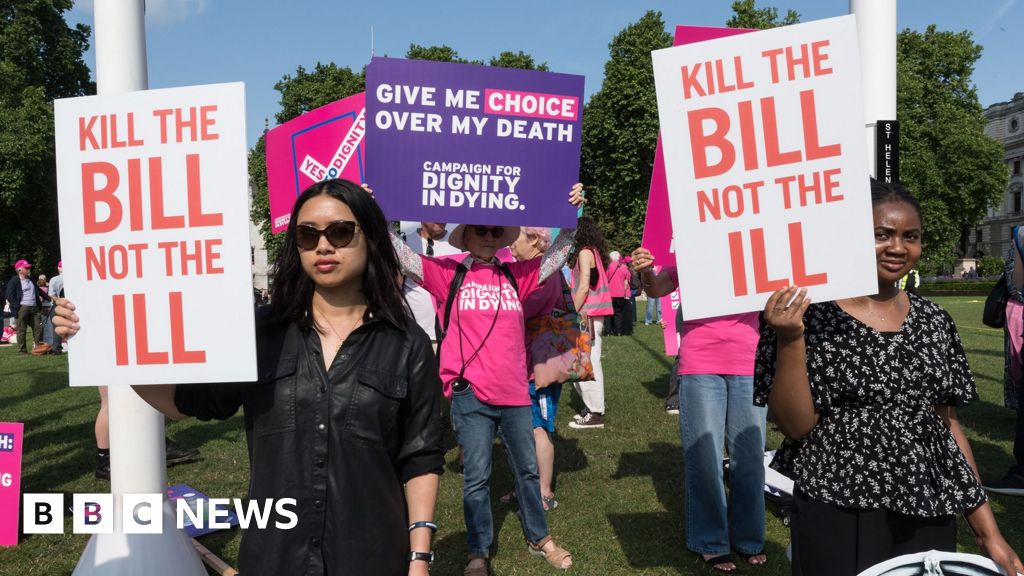
A source close to Labour MPs and peers who oppose the bill characterized the threat of using the Parliament Act as "the act of a bully who knows they are losing the argument." They argued that the nature of the Parliament Act, which requires the bill to be identical, would effectively force a flawed piece of legislation into law without any possibility of amendment. Lord Falconer, however, defended the Parliament Act as an "established part of our constitution" and asserted that peers should not obstruct a bill that has been approved by elected Members of Parliament.
Private Members’ Bills, such as the assisted dying bill, typically fail if they are not passed by both the House of Commons and the House of Lords within a single parliamentary session. A parliamentary session concludes with prorogation, and a new one commences with the King’s Speech, which is anticipated in May. The House of Lords has seen a substantial number of amendments tabled to the bill, addressing a wide array of subjects, including concerns about individuals with eating disorders becoming eligible for an assisted death and proposals to strengthen restrictions on advertising for such services. Unlike the House of Commons, where amendments are often grouped and debated more efficiently, peers generally debate every tabled amendment individually, significantly slowing the bill’s progress.
Nikki Da Costa, a former Downing Street adviser and a vocal opponent of the bill, refuted accusations that a group of peers were employing delaying tactics. She maintained that they were "doing their best to patch the holes" in what she described as an "unsafe, deficient bill which has no electoral mandate." Da Costa accused Lord Falconer of desiring the Lords to "stop doing work and just wave it through." In response, Lord Falconer characterized the actions of a "minority" of peers as "filibustering" – the act of deliberately delaying proceedings – and urged them to "stop all this smoke and mirrors and focus on making the bill better."

Kim Leadbeater, the bill’s proponent, expressed her welcome for refinements but stated that what she had witnessed was "a very clear attempt to talk the bill out." She emphasized that MPs in the Commons had engaged in "deep soul searching" before voting on the bill and were "extremely cross that the unelected in the chamber are trying to block it in this way." The House of Lords has not yet held a formal vote on the bill as a whole, making it difficult to definitively gauge the extent of peer support. However, supporters of the bill remain confident that they command the majority of support.
The Parliament Act, a rarely used constitutional mechanism, allows for a bill passed by the Commons but subsequently rejected by the Lords to be reintroduced in a new parliamentary session. If an identical bill is passed by the Commons a second time, the Lords are constitutionally precluded from blocking it again, and the legislation becomes law at the end of that second session, irrespective of the Lords’ approval. This power has been exercised only seven times since its inception in 1911.
However, supporters of the assisted dying bill face several significant hurdles. For the Parliament Act to be invoked, an identical bill would need to be successfully introduced and passed by the Commons again. This requires the bill’s sponsor to be drawn high up in the ballot of MPs eligible to introduce Private Members’ Bills, a process heavily reliant on luck. Lord Falconer acknowledged the formidable challenges, telling BBC News that while it was "very, very difficult," it was "not impossible if the Lords were to change the way that they were dealing with it." He expressed disappointment at the lack of any "sign" of such a change, stating that if the current situation persists, the bill has "absolutely no hope whatsoever of getting out of the Lords."

When pressed on the controversy surrounding the use of the Parliament Act to circumvent the Lords’ objections for a second time, Lord Falconer reiterated his stance. He argued that while assisted dying is a "very controversial" issue, ultimately, a decision must be made on whether the country should enact such a change. He firmly believes that this decision should rest with the "elected representatives in the Commons." He concluded that if the Commons makes a decision, and that decision is then "blocked in giving effect to that decision by a small number of peers," the constitutional remedy lies with the Parliament Act.
Lord Falconer has taken further action by writing to all peers, outlining a series of amendments he intends to table. These proposed amendments are designed to address specific concerns, including the eligibility of individuals with eating disorders for an assisted death and the enhancement of restrictions on advertising related to assisted dying services. Conversely, a source close to the opposition within the Labour party warned that invoking the Parliament Act to force the bill through would mean that "none of the known issues with the bill would be fixed." This source asserted that "Every MP who voted to force it through would bear responsibility for the inevitable suffering and deaths of vulnerable people."



 Nakalama John
 atisusanti
 Ramos Leo