Nana Banana
The ambition of Space Forge is to harness the unique environment of space to manufacture advanced materials that are impossible or incredibly difficult to produce with comparable quality on Earth. Their primary focus currently lies on creating material for semiconductors, critical components found in everything from advanced communication infrastructure like 5G towers, to high-performance computing, electric vehicle charging systems, and the avionics in cutting-edge aircraft. The demand for these sophisticated semiconductors continues to soar, making the pursuit of superior manufacturing methods a global imperative.
The cosmos offers an unparalleled laboratory for material science, particularly for processes requiring extreme purity and precise atomic arrangement. When manufacturing semiconductors, the ideal conditions involve aligning atoms in a highly ordered, three-dimensional crystalline structure. On Earth, gravity and atmospheric contaminants pose significant challenges to achieving this perfection. The molten materials used in semiconductor growth are subject to convection currents caused by gravity, which can introduce defects and impurities into the crystalline lattice. Furthermore, the presence of various gases and dust particles in terrestrial manufacturing environments makes it difficult to maintain the pristine conditions necessary for ultra-pure materials.

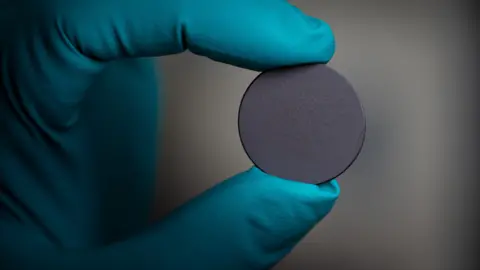
In stark contrast, the microgravity environment of space virtually eliminates convection, allowing molten materials to solidify into near-perfect crystal structures with minimal defects. Without the disruptive influence of gravity, atoms can arrange themselves precisely, resulting in a more uniform and ordered material. Coupled with the natural vacuum of space, which provides an inherently sterile environment free from atmospheric contaminants, the conditions are optimal for cultivating materials of extraordinary purity. This combination allows for the creation of semiconductors that are not just incrementally better, but orders of magnitude superior to their Earth-bound counterparts.
Josh Western, CEO of Space Forge, underscored the profound impact of this advantage, stating, "The work that we’re doing now is allowing us to create semiconductors up to 4,000 times purer in space than we can currently make here today." This astonishing leap in purity translates directly into enhanced performance, greater efficiency, and potentially entirely new capabilities for electronic devices. Such ultra-pure semiconductors would be instrumental in the next generation of technological advancements, powering everything from the rapid data transfer of 5G networks to the robust control systems of electric vehicles and the intricate components within advanced aerospace systems. The higher purity means less energy loss, faster processing speeds, and greater reliability, addressing critical bottlenecks in various high-tech sectors.
The journey to this orbital milestone began with the launch of Space Forge’s mini-factory aboard a SpaceX rocket in the summer. Since its deployment into orbit, the team at their mission control centre in Cardiff has been meticulously testing the satellite’s various systems. These tests involve remotely activating and monitoring the onboard furnace, ensuring it can achieve and sustain the target temperatures crucial for material processing. This rigorous in-orbit commissioning phase is vital for validating the integrity and performance of their proprietary technology in the harsh environment of space.
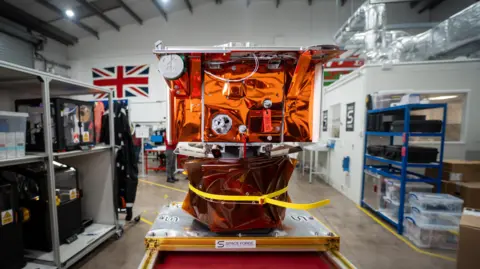
Veronica Viera, the company’s payload operations lead, shared the team’s exhilaration upon receiving crucial data and imagery from the orbiting factory. She vividly recalled one of the most exciting moments of her career: witnessing an image beamed back from space, captured from inside the furnace itself. The image displayed a mesmerizing, brightly glowing plasma – gas heated to approximately 1,000 degrees Celsius – confirming the successful activation and operation of the high-temperature furnace. "This is so important because it’s one of the core ingredients that we need for our in-space manufacturing process," Viera explained, highlighting the critical nature of this demonstration for their future manufacturing endeavours. The ability to generate and control such high temperatures in a vacuum is a significant engineering feat, paving the way for processing a wide range of advanced materials.
Building on this successful demonstration, Space Forge is now charting a course for even more ambitious undertakings. The company plans to develop and launch a larger space factory, significantly increasing its manufacturing capacity. This expanded facility aims to produce semiconductor material sufficient for an impressive 10,000 chips, moving beyond proof-of-concept to a more commercially viable scale of production. Such a development would not only validate the technical feasibility but also begin to establish the economic potential of space-based manufacturing.
However, the challenge of manufacturing in space is only half the equation; the other critical aspect is the safe and efficient return of these valuable materials to Earth. Space Forge is actively developing and testing the technology required for precise and protected re-entry. Their innovative solution includes a deployable heat shield, evocatively named Pridwen, after the legendary shield of King Arthur. This advanced heat shield is designed to protect the spacecraft and its precious cargo from the extreme temperatures and immense G-forces encountered during atmospheric re-entry. Ensuring a controlled, gentle descent is paramount to preserve the delicate, high-purity crystalline structures of the space-manufactured materials, which could easily be compromised by harsh re-entry conditions. Future missions will focus on rigorously testing Pridwen’s deployment and re-entry capabilities, a crucial step towards establishing a reliable space-to-Earth supply chain for these unique products.
Space Forge is not alone in recognizing the immense potential of in-space manufacturing. A growing number of companies and research institutions globally are looking skywards, exploring how the unique conditions of microgravity and vacuum can be leveraged to produce a diverse range of advanced materials. Beyond semiconductors, research is underway for manufacturing everything from pharmaceuticals with novel crystalline structures, artificial tissues for medical applications, advanced alloys with superior properties, and ultra-pure optical fibres for high-speed data transmission. The absence of gravity and convection can lead to materials with fewer defects, enhanced homogeneity, and entirely new microstructures, opening doors to unprecedented material properties and applications.
Libby Jackson, head of space at the Science Museum, emphasized the transformative nature of these developments. "In-space manufacturing is something that is happening now," she stated, acknowledging that while these are "early days" and current production is in "small numbers," the foundational work is being laid. The successful proof of concept by companies like Space Forge is vital, as it "really opens the door for an economically viable product, where things can be made in space and return to Earth and have use and benefit to everybody on Earth. And that’s really exciting." This vision extends beyond mere technological novelty, promising to create new industries, alleviate critical supply chain dependencies, and deliver materials with performance characteristics currently unattainable on Earth. The UK, through companies like Space Forge, is positioning itself at the forefront of this burgeoning space economy, transforming a futuristic concept into a tangible, beneficial reality for global industries and consumers alike.




 George Anjay
 Ramos Leo
 Nakalama John
 Roy Suryo
 atisusanti