
 Ramos Leo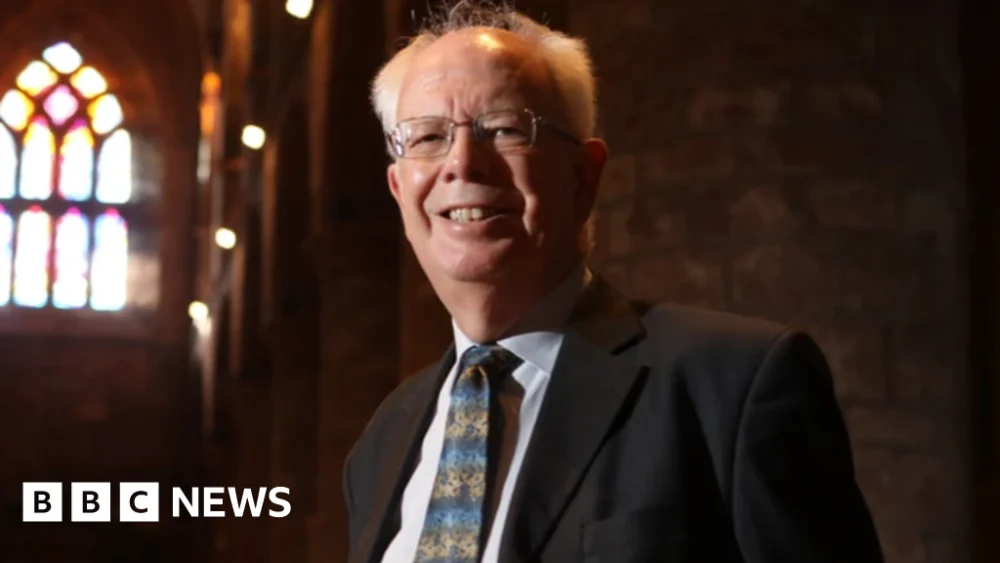
Lord Jim Wallace, a towering figure in Scottish politics and a beacon of liberal values, has passed away at the age of 71. His death occurred on Thursday following complications during a medical procedure at the Royal Infirmary of Edinburgh. The news sent shockwaves across Scotland’s political landscape, prompting heartfelt tributes from leaders across the spectrum who remembered him as a statesman, a mentor, and a genuinely decent individual.
His wife, Rosie Wallace, expressed the family’s profound shock and sorrow. "It was all so sudden," she said, highlighting his vibrant and active life right up to his final days. "He was still incredibly active in a whole host of areas." This sentiment was echoed by many who knew him, as Lord Wallace continued to engage in public life with characteristic vigour and commitment.
Born in Annan, Dumfries and Galloway, on 21 August 1954, James Robert Wallace received his early education at Annan Academy. His academic journey continued at Downing College, Cambridge, where he read law, followed by further studies at the University of Edinburgh. This strong educational foundation propelled him into a distinguished legal career, being called to the bar in 1979. He practised primarily in civil law cases, earning a reputation for his meticulous approach and keen intellect, before being appointed Queen’s Counsel (QC) in 1997.
Wallace’s entry into the political arena marked the beginning of a remarkable public service career. He was first elected to the House of Commons as the Liberal MP for Orkney and Shetland in 1983, a constituency he would represent for 16 years. During his time at Westminster, he quickly established himself as a thoughtful and principled voice, rising through the ranks of the Liberal Democrats.
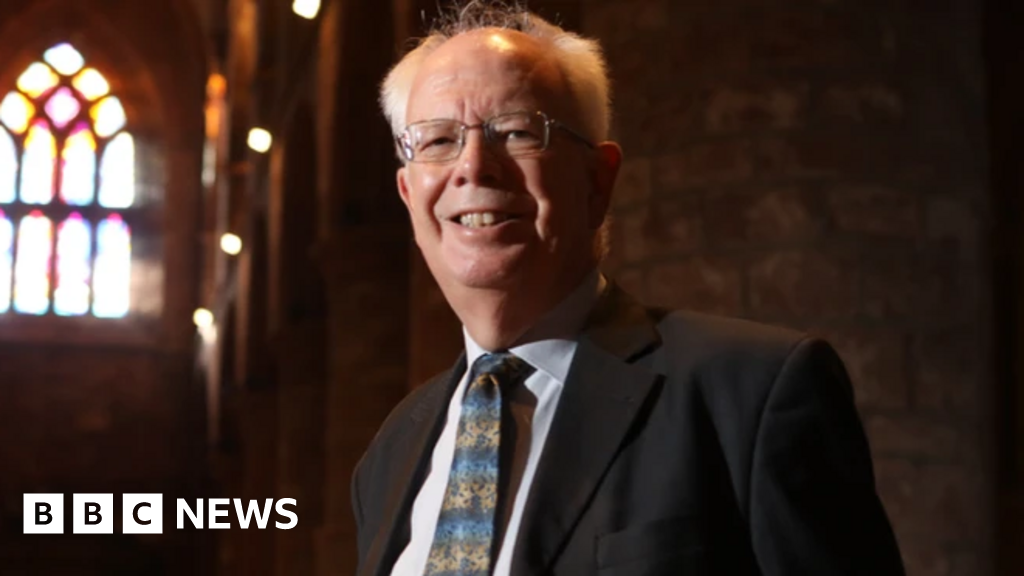
However, it was with the advent of devolution and the establishment of the Scottish Parliament that Lord Wallace truly etched his name into Scotland’s modern history. He successfully transitioned to Holyrood in 1999, becoming the Member of the Scottish Parliament (MSP) for Orkney. As leader of the Scottish Liberal Democrats, he played a pivotal role in the formation of Scotland’s inaugural coalition government with Labour. In this historic moment, he was appointed Scotland’s first-ever Deputy First Minister, a position he held with distinction from 1999 to 2005.
His tenure as Deputy First Minister was marked by stability and a steady hand, particularly during periods of unforeseen challenge. He famously stepped into Scotland’s top job on multiple occasions, providing crucial leadership and continuity. This included following the tragic death of the first First Minister, Donald Dewar, in 2000, and later, after the resignation of Henry McLeish in 2001. In these moments of national uncertainty, Wallace’s calm judgment and unwavering commitment to public service were invaluable, ensuring the nascent Scottish Parliament remained on course. He also served as Minister for Justice and later as Minister for Enterprise and Lifelong Learning during his time in government.
A committed champion of devolution, Lord Wallace continued to influence Scotland’s constitutional development even after leaving frontline politics. He stepped down as an MSP in 2007 and was subsequently appointed to the House of Lords, where he continued his work as a peer, Baron Wallace of Tankerness. His expertise in constitutional matters was widely recognised, leading to his involvement in Sir Kenneth Calman’s Commission on Scottish Devolution. The commission’s recommendations ultimately led to the Scotland Act 2012, which further extended the powers of the Scottish Parliament, a testament to Wallace’s enduring impact on the country’s governance. He also served as Advocate General for Scotland from 2010 to 2015, providing legal advice to the UK government on Scottish law.
Beyond his political achievements, Lord Wallace was deeply rooted in his faith. Raised in the Church of Scotland, where his accountant father served as an elder, religion and politics were interconnected influences throughout his life. In 2021, he embraced a significant new chapter, taking on the esteemed role of Moderator of the General Assembly of the Church of Scotland. This appointment underscored his profound commitment to public service in its broadest sense, bridging the worlds of secular governance and spiritual leadership. The current Moderator, the Rt Rev Rosie Frew, expressed her deep sorrow at his passing, describing him as "kind, accommodating, informative and entertaining." She added, "He served both church and state faithfully and well over many years. My thoughts and prayers are with Rosie and their family at this difficult time."
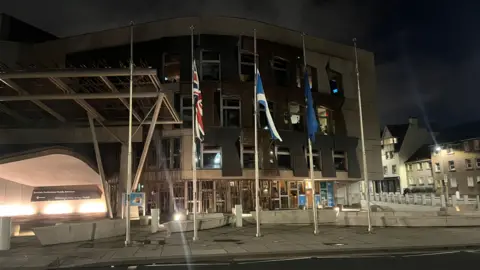
Tributes poured in from across the political spectrum, reflecting the immense respect and affection Lord Wallace commanded. Flags at the Scottish Parliament were lowered to half-mast, a solemn mark of respect that will remain until 20:00 on Friday.
Scottish Liberal Democrat leader Alex Cole-Hamilton hailed Wallace as "one of the architects of modern Scotland" and "one of the finest liberals our party has ever produced." Cole-Hamilton spoke movingly of Wallace’s personal impact, revealing, "For me personally, he was a mainstay of support throughout my adult life. Even as he went into hospital for the final time, he was still sending me words of advice and I will always try to live up to the standards he set." He further praised Wallace’s widely respected integrity, calm judgment, and deep belief in liberal values: fairness, the rule of law, and respect for communities, no matter how remote. "Scotland is a better country because of Jim Wallace, and the Liberal Democrats are a better party because of his example," Cole-Hamilton concluded. Indeed, Lord Wallace remained an active and popular figure, campaigning with his successor as recently as 2024.
First Minister John Swinney said he was "profoundly shocked" to learn of Wallace’s death, emphasizing that his contribution to Scotland is "demonstrated by the success and strength of the Scottish Parliament." Swinney fondly recalled a "warm personal friendship" and appreciated the "immense personal kindness he always showed to me and my family."
Scottish Secretary Douglas Alexander expressed his profound sadness, describing Wallace as "the kind of politician that gives politics a good name. Decent, thoughtful and dutiful he embodied much that is best in our national life." Alexander highlighted Wallace’s role in shaping the foundations of the devolved parliament and setting the tone for the institution.
Former First Minister Jack McConnell lauded Wallace as "the best of men." He asserted, "His contribution to securing a Scottish Parliament, being the best deputy to three first ministers that any of us could have hoped for, and a fantastic cabinet minister too, will never be matched." McConnell praised his honesty, reliability, and compassion, adding, "What a loss he is – but what a difference he made. I will miss him dearly."
Another former First Minister, Henry McLeish, told BBC News that Scotland had lost "not only a great politician and public servant but one of the finest colleagues I’ve ever worked with." McLeish spoke of Wallace’s vision and his enormous contribution to ensuring the Scottish Parliament functioned as imagined. "Jim was just a very faithful, committed Scot wanting the best for his country and working in so many different forums to achieve that," McLeish stated. "Across party lines, across country, he will be sadly missed… Politics can be a gruesome business… but nobody, I think, disliked Jim. And he put his heart into every effort he was involved in. Great Scot, great politician, and in that sense will always be remembered."
In a poignant reflection, Rosie Wallace shared that her husband had recently sung in the Dunblane Cathedral choir over the festive period and was eagerly anticipating spending more time with his grandchildren. She found comfort in the knowledge that he had been "surrounded by those he loved most when he died." She also expressed gratitude that the entire family, including one of their two daughters, Clare, and her family, who had travelled from New Zealand, had been together in Scotland over Christmas.
Lord Jim Wallace’s legacy is one of unwavering dedication to Scotland, marked by integrity, intellect, and a profound sense of public duty. He was a statesman who helped lay the foundations of modern Scotland, a respected legal mind, and a devoted servant of his faith. His passing leaves a significant void, but his contributions to the nation will undoubtedly endure.



 George Anjay
 Nana Banana
 Nakalama John