Ramos Leo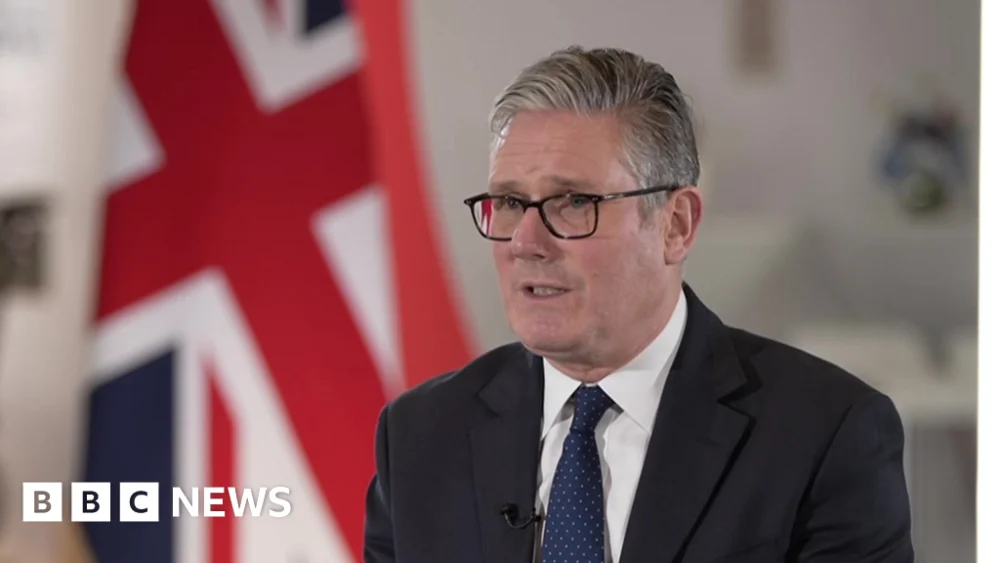
Prime Minister Sir Keir Starmer has announced that China has removed "all restrictions" on a group of six current members of the British Parliament following extensive discussions with President Xi Jinping. Speaking to the BBC from Shanghai during his inaugural visit to China as Prime Minister, Sir Keir confirmed that a travel ban and associated sanctions "no longer apply" to these parliamentarians. The group includes four Conservative Members of Parliament and two peers from the House of Lords, all of whom had been targeted by Beijing’s punitive measures since 2021.
Sir Keir, leading the first visit by a British Prime Minister to China since 2018, heralded the outcome as a "vindication" of his diplomatic strategy. He suggested that his high-level engagement had "provided the opportunity for a leader-to-leader discussion on sensitive issues," thereby demonstrating the value of direct dialogue in de-escalating tensions. The announcement came as a significant development in the UK’s delicate balancing act between seeking engagement with the world’s second-largest economy and addressing profound concerns over human rights and national security.
However, the relief expressed by the Prime Minister was met with a defiant rejection from the very individuals whose sanctions were lifted. In a joint statement, the targeted MPs and peers declared their unwillingness to be "used as a bargaining chip," asserting a preference to "rather remain under sanction indefinitely than have our status used as a bargaining chip to justify lifting sanctions on those officials responsible for the genocide in Xinjiang." They further insisted that they would "not accept any reprieve that applies only to sitting lawmakers while others, including civil society organisations, remain sanctioned," underscoring their commitment to broader human rights advocacy.
The sanctions, initially imposed by Beijing in March 2021, were a direct retaliation for the UK government’s decision to sanction four Chinese officials and one entity over alleged human rights abuses against the Uyghur Muslim minority in Xinjiang. The list of British parliamentarians targeted included prominent Conservative MPs such as Sir Iain Duncan Smith, Nusrat Ghani, Tom Tugendhat, and Neil O’Brien, alongside peers Baroness Kennedy of The Shaws and Lord Alton of Liverpool. Another MP, Tim Loughton, was also sanctioned at the time, though he is no longer a sitting Member of Parliament following the recent general election. These individuals, all vocal critics of Beijing’s human rights record and members of the Inter-Parliamentary Alliance on China (IPAC), faced bans from entering mainland China, Hong Kong, and Macau. Their assets in China were frozen, and Chinese citizens and institutions were prohibited from conducting business with them.
At the time of their imposition, the then-Prime Minister Boris Johnson had publicly supported the sanctioned parliamentarians, stating they were "shining a light" on "gross human rights violations" in China. The allegations against China concerning Xinjiang are severe, including claims of mass internment, forced labour, cultural suppression, and coercive birth control policies against the Uyghur population and other predominantly Muslim ethnic groups in the region. Numerous international bodies, human rights organizations, and Western governments have described these actions as crimes against humanity, with some, including the UK Parliament, even using the term "genocide." Beijing has consistently and vehemently denied all allegations, branding them as politically motivated fabrications designed to smear China’s image and hinder its development.
Sir Keir’s three-day diplomatic mission to China – a landmark visit by a British Prime Minister – was widely seen as an attempt to navigate the complex and often fraught relationship between London and Beijing. His agenda included not only sensitive human rights issues but also discussions on trade, climate change cooperation, and regional stability. Speaking after his meeting with President Xi at the Great Hall of the People in Beijing, Sir Keir stated that the UK’s relationship with China was in a "good, strong place," signalling a desire for a more stable and predictable bilateral relationship. This sentiment contrasts sharply with the more confrontational rhetoric that had characterised the relationship in recent years, particularly under previous Conservative administrations.
The visit and the subsequent announcement have ignited a fresh wave of debate within the UK. Critics of China, including many within the Conservative Party, have accused Sir Keir of "kowtowing" to Beijing, arguing that engagement without firm conditions risks legitimising an authoritarian regime with a questionable human rights record and aggressive foreign policy. Some pointed to the fact that the UK has not reciprocated by lifting any sanctions on Chinese individuals or entities, highlighting a perceived asymmetry in the diplomatic gestures. The Conservatives, now in opposition, were quick to criticise, suggesting that the Prime Minister’s approach lacked the necessary steel to confront Beijing on its transgressions.
Domestically, the lifting of sanctions on the British parliamentarians is a highly symbolic move. It represents a potential easing of personal restrictions for those targeted, but it also casts a spotlight on the broader ethical and strategic dilemmas facing Western democracies in their dealings with China. The sanctioned individuals’ strong rebuke of the move underscores a significant divide between the pragmatic diplomatic approach favoured by the current government and the principled stance of those who have been at the forefront of criticising China’s policies. Their refusal to accept the reprieve as a victory, instead demanding broader justice for civil society organisations and those affected by human rights abuses, complicates the narrative of a diplomatic success.
The UK’s relationship with China has undergone significant shifts in recent decades. From the "golden era" championed by former Prime Minister David Cameron, which prioritised economic ties, to a more cautious and critical stance under Theresa May and Boris Johnson, marked by concerns over Huawei’s involvement in 5G infrastructure, Hong Kong’s autonomy, and the situation in Xinjiang. Sir Keir Starmer’s government appears to be seeking a middle ground – one that acknowledges China’s indispensable role in global affairs and its economic power, while also attempting to uphold British values and national security interests.
The broader implications of this development extend beyond the immediate relief for the six parliamentarians. It sets a precedent for how future disputes and retaliatory measures might be addressed through high-level diplomatic engagement. However, the deep-seated concerns over China’s human rights record, its actions in the South China Sea, its stance on Taiwan, and its increasing assertiveness on the global stage remain formidable challenges for the UK and its allies. While the lifting of sanctions on British parliamentarians may represent a small step towards thawing frosty relations, the path to a truly stable and mutually respectful UK-China relationship is undoubtedly long and fraught with complex geopolitical and ethical considerations. The coming months will reveal whether this diplomatic overture signals a genuine shift in Beijing’s approach or merely a tactical concession to facilitate broader engagement.


 Roy Suryo