Ramos Leo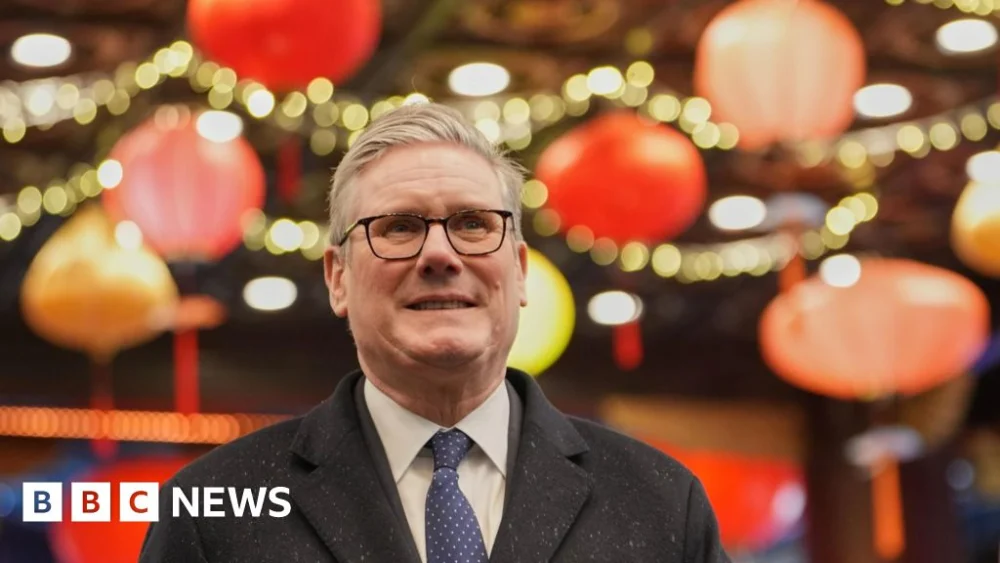
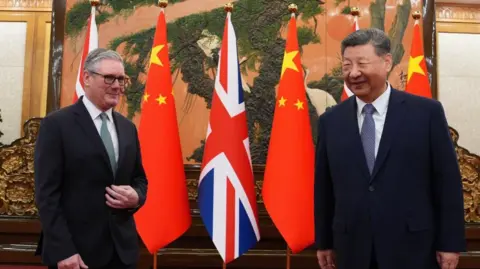
At the heart of the strategy behind Prime Minister Sir Keir Starmer’s high-stakes visit to China this week is a shrewd understanding of what some political observers and economists refer to as China’s "looking up economy." This term encapsulates the tightly controlled, top-down nature of the Chinese state, where the pervasive influence of the Chinese Communist Party (CCP) means that significant policy shifts and changes in outlook are almost invariably initiated from the highest echelons of power. For any substantial re-engagement or recalibration of international relations to occur, the message from the very top must be unequivocally clear, trickling down through the vast bureaucratic and commercial apparatus. Downing Street, acutely aware of this dynamic, harboured a profound hope that Sir Keir Starmer’s intensive three-day diplomatic foray, which included pivotal meetings with President Xi Jinping and Premier Li Qiang in Beijing, followed by a strategic visit to the economic powerhouse of Shanghai, would indeed be noticed at the highest levels and catalyse a positive shift.
The initial indications, from Sir Keir’s perspective, appear remarkably positive. The visit was characterised by an extensive programme of political and corporate glad-handing, designed to signal a genuine desire for renewed engagement. As our astute China correspondent Laura Bicker reported, the depth of attention from Chinese state media, the influential mouthpiece of the Communist Party, was particularly telling. On the day Sir Keir met President Xi, the flagship 30-minute evening news bulletin dedicated an unprecedented 18 minutes to discussing the British prime minister’s visit. This level of coverage is not merely a courtesy; it is a powerful directive, indicating to state-owned enterprises, regional governments, and the broader populace that a more open stance towards the UK is endorsed from above.
The British delegation accompanying the Prime Minister, a diverse mix of prominent business leaders, sporting federations, and cultural organisations, mirrored this cautiously optimistic sentiment. Many expressed a fervent hope that this visit could mark an "important moment," unlocking previously elusive opportunities for them in the vast Chinese market. "As long as this isn’t a one-off," one delegate cautiously put it to me, articulating a common apprehension that such high-level engagement needs sustained follow-through. Sir Keir’s official spokesman was quick to address this, assuring us emphatically that this was not intended to be a "one and done" visit, but rather the beginning of a more consistent dialogue.
For China, meanwhile, the parade of Western leaders through its capital and commercial hubs serves as a powerful validation of its growing geopolitical and economic significance. Each such visit allows Beijing to revel in the reality that it remains an indispensable global player, even amidst increasing geopolitical tensions and Western efforts to "de-risk" supply chains. However, the path of engagement is fraught with delicate geopolitical balancing acts. Starmer’s predecessor, then-Chancellor George Osborne, learned this lesson during the ‘Golden Era’ of UK-China relations under David Cameron, facing scrutiny from Washington. This sentiment was echoed in the Starmer trip when, as I witnessed, a hypothetical query regarding how such a visit might be perceived in the White House, particularly if President Donald Trump were in office, elicited a response that underscored the tightrope walk involved. The short answer: "not very well," as the previous administration had demonstrated a clear aversion to allies getting "too close" to Beijing.
However, Sir Keir’s team largely viewed this rhetorical Richter scale admonishment as relatively minor, especially given that later in the same exchanges, Trump himself had described Xi as a "friend." For Starmer, the calculus is clear and pragmatic. In an interview with me, he underscored his conviction: "it would be foolhardy to simply say we would ignore" China. He expressed a profound belief, cultivated over the long flights and even longer days of this tour, that the eight-year gap since the last visit by a British Prime Minister (Theresa May in 2018) represented "wasted years." He is determined to make up for lost time, advocating for a policy of robust engagement rather than isolation.
This stance also creates a clear dividing line with the current Conservative opposition, a distinction Sir Keir appears eager to highlight. Conservative leader Kemi Badenoch recently stated that, were she Prime Minister, she would not have undertaken this trip, signalling a more hawkish approach to China. This ideological divergence sets the stage for a broader debate on Britain’s future foreign policy direction, with Starmer betting on a pragmatic engagement that prioritises British interests across various dimensions.
So, what tangible achievements can be attributed to Sir Keir’s efforts? Beyond the significant schmoozing and warm diplomatic words—which, in China’s "looking up economy," are themselves a crucial form of political capital—there was one headline announcement: the Prime Minister declared that the requirement for British visitors to obtain a visa for stays under 30 days in China would be scrapped. This move, if fully implemented, would be a significant step towards boosting tourism and business ties. However, the Chinese government’s immediate response was notably more circumspect, stating only that it was "actively considering" the measure. Sir Keir, while insisting to me that it "will happen," acknowledged the absence of an agreed start date, stating simply, "We are making progress." This discrepancy highlights the inherent complexities and the often-incremental nature of diplomatic negotiations with Beijing, where announcements are sometimes aspirational rather than immediately binding.
Ministers and officials involved in the intricate minutiae of these negotiations remain hopeful for a step-by-step ratcheting up of dividends from a closer, warmer relationship. Yet, this warmth is not without its critics, and indeed, its inherent risks. Many observers remain deeply queasy about closer ties, arguing that China is a state that cannot be fully trusted. Concerns range from documented Chinese cyber-attacks targeting British institutions to the recent MI5 alert to Parliament regarding alleged Chinese spying in Westminster. These issues underscore the profound tension between economic engagement and national security.
The pervasive sense of caution was palpable throughout the British delegation. Everyone I encountered on this trip—from government officials and corporate executives to cultural representatives and journalists—took electronic security precautions far exceeding those on any other international trip I have experienced. Many operated on temporary phone numbers, and a significant number left their usual digital devices at home, opting for "burner" phones and laptops. This stark reality serves as a sobering backdrop to a relationship that the Prime Minister is actively seeking to warm up, a stark reminder of the underlying mistrust that defines modern Sino-Western relations.
Having followed the Prime Minister, both domestically and internationally, for the nearly 19 months of his tenure, it is clear that this China visit is not an isolated event but a critical articulation of his nascent foreign policy vision. "We have to engage with this volatile world," he summarised his approach when we spoke, adding, "I don’t think I have known a time when what is happening internationally is impacting what is going on back home so directly." This statement encapsulates his core philosophy: an outward-looking Britain that actively shapes, rather than merely reacts to, global events, precisely because these events have direct implications for the everyday lives of British citizens.
Sir Keir is visibly stung and irritated by the "never here Keir" label often lobbed at him by critics, who accuse him of spending too much time abroad. On this trip, he notably pushed back against this narrative, repeatedly drawing explicit links between international events and the domestic cost of living. He even made a point of referencing supermarket prices in the UK during his meeting with President Xi in the Great Hall of the People, a strategic move to demonstrate that his foreign engagements are directly tethered to the economic well-being of the British public.
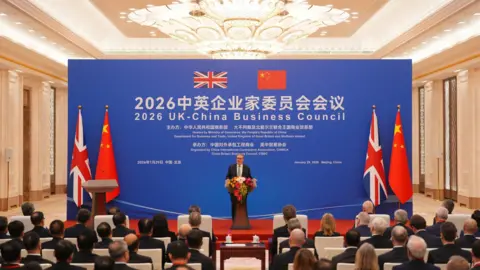
His foreign policy blueprint, as it emerges, is one of strategic recalibration and diversified engagement. He champions the "reset" of Britain’s relationship with the European Union post-Brexit, aiming for a more stable and cooperative partnership without rejoining the bloc. He has also successfully concluded a trade deal with India, a rapidly growing economic power. And now, his presence in China signals a deliberate move to re-establish a functional, if complex, relationship with the world’s second-largest economy.
Inevitably, this multi-directional approach involves significant trade-offs. Leaning too far in one direction can limit options in another. For instance, rejoining the EU’s customs union, a call sometimes heard from within his own Labour ranks, would effectively nullify the possibility of independent trade deals with other nations, as he frequently points out to his colleagues. Similarly, being perceived as getting "too close" to China risks provoking a "verbal hairdryer" from the White House, a potential challenge to the crucial transatlantic alliance. The trade-offs, in this complex geopolitical landscape, are indeed legion.
"I’m a pragmatist, a British pragmatist, applying common sense," the Prime Minister told us on the plane, articulating the guiding principle of his foreign policy. His overarching desire, he explained, was to "make Britain face outwards again." This outward gaze is not singular but multi-directional, executed with careful, incremental steps. Sir Keir Starmer’s China reset is therefore more than just a visit; it is a critical litmus test and a clear declaration of a foreign policy doctrine that prioritises pragmatic engagement, seeks to balance competing global interests, and attempts to navigate a volatile world by actively shaping Britain’s place within it, one careful step at a time.


 Roy Suryo